Suspected Cases Surge 14 Times in a Month... Record Highs for Two Consecutive Weeks
Spread May Shift from Children and Adolescents to Middle-aged and Elderly
Other Respiratory Infections Like COVID-19 and RSV Also on the Rise
As the influenza (flu) epidemic continues to spread at a record-breaking pace for the second consecutive week, health authorities have reiterated their recommendation that high-risk groups, including those aged 65 and older, pregnant women, and children under 12, must get vaccinated. In addition to the flu, cases of other respiratory infections such as COVID-19 and respiratory syncytial virus (RSV) are also on the rise.
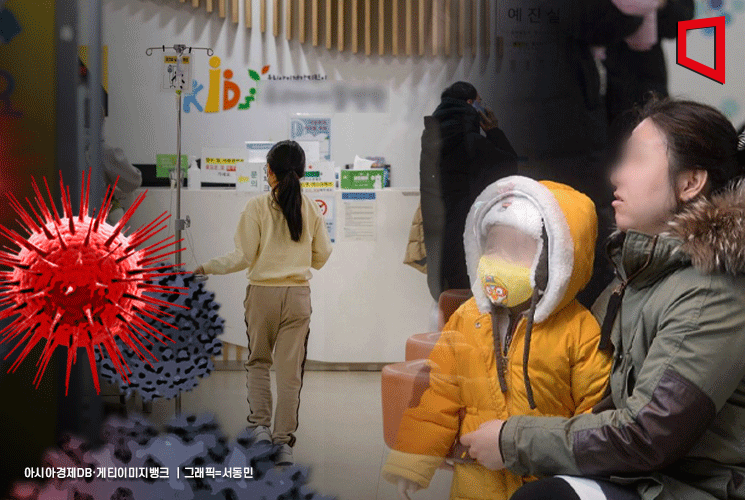
On the 13th, the Korea Disease Control and Prevention Agency (KDCA) stated, "Currently, one out of every ten outpatients visiting hospitals is a respiratory patient, and more than half of these are confirmed to have influenza," adding, "With influenza spreading significantly more than in previous years, concerns are growing about the possibility of simultaneous outbreaks of various respiratory infections."
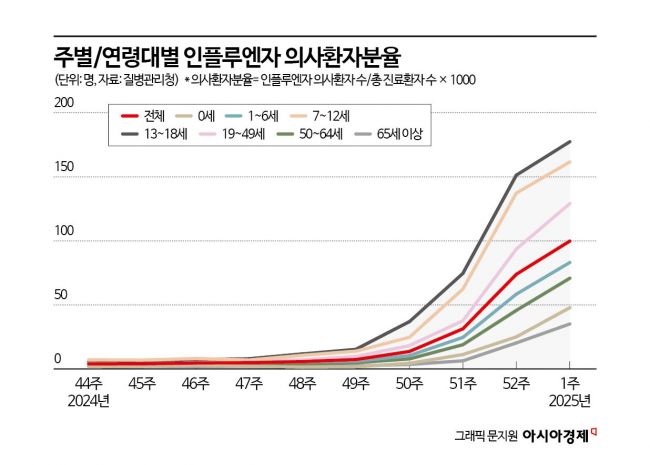
According to the KDCA, during the first week of January (December 29, 2024 ? January 4, 2025), the number of patients showing influenza-like symptoms (ILI patients) per 1,000 outpatients visiting 300 sentinel surveillance medical institutions nationwide was 99.8. This represents an approximately 1.4-fold increase compared to the previous week and is the largest scale in eight years since the respiratory sentinel surveillance system was established in 2016, when the figure was 86.2. The previous week, the last week of 2024, had already set a new record, marking the second consecutive week of historic highs. The epidemic is spreading very rapidly, with the number of ILI patients increasing 13.7 times in just four weeks, from 7.3 in the 49th week of last year.
Patient numbers are rising across all age groups, with the highest incidence among adolescents aged 13 to 18, who showed 177.4 ILI patients per 1,000, followed by children aged 7 to 12 with 161.6 per 1,000. Hospitalizations due to influenza have also increased significantly, nearly doubling from 795 patients (based on sentinel medical institutions) at the beginning of last year to 1,452 this year.
Experts attribute the rapid spread of influenza to the fact that during the COVID-19 pandemic, influenza did not circulate widely, resulting in many people lacking antibodies. Additionally, the relatively mild temperatures until the end of last year followed by a sudden cold snap at the beginning of this year are also considered factors contributing to the epidemic's expansion.
Typically, the influenza epidemic peaks just before the winter vacation and then gradually declines after the vacation begins in January. Considering this trend, the epidemic is expected to peak within the next one to two weeks. However, there are concerns that the upcoming Lunar New Year holiday, which involves increased population movement and contact, could further spread the epidemic.
Professor Eom Jung-sik of the Department of Infectious Diseases at Gachon University Gil Medical Center explained, "During the start and peak of the influenza epidemic, the number of child and adolescent patients increases, but later the main infection targets expand to middle-aged and elderly groups. Even if the elderly, who are high-risk, have been vaccinated, they may still develop pneumonia, sepsis, or respiratory failure, and the number of critically ill patients hospitalized due to complications such as stroke and myocardial infarction may also increase."
Not only influenza but also COVID-19 cases, which had been declining since August last year, are showing an upward trend again. The number of COVID-19 patients hospitalized in 221 sentinel surveillance medical institutions nationwide increased consecutively for four weeks, from 46 in the 50th week of last year to 66 in the 51st week, 113 in the 52nd week, and 131 in the first week of this year. Currently, the number of RSV infection hospitalizations is 578, which is 34% higher compared to the same period last year (431).
A KDCA official urged, "Since influenza type A circulates at the end of the year and type B in the spring, high-risk groups who have not yet been vaccinated must get vaccinated. In addition to following personal hygiene practices such as handwashing, workers and visitors at infection-vulnerable facilities such as medical institutions and nursing homes must wear masks."
© The Asia Business Daily(www.asiae.co.kr). All rights reserved.













