Due to Decreased Apple and Pear Production, Agricultural and Livestock Product Prices Rise 6.6% This Year
Ministry of Agriculture, Food and Rural Affairs to Fully Implement Supply Stabilization Policies from Next Year
Consumer prices for agricultural and livestock products in December rose by 2.9% compared to the previous month. The government assessed that the price stability of agricultural and livestock products is continuing and decided to strengthen supply and demand management to maintain this stability.
The Ministry of Agriculture, Food and Rural Affairs announced on the 31st that the December consumer price survey results showed that consumer prices for agricultural and livestock products increased by 2.9% compared to the previous month and by 2.4% compared to the same month last year. Processed foods and dining out rose by 0.8% and 0.2% month-on-month, and by 2.0% and 2.9% year-on-year, respectively. The ministry evaluated that consumer price stability is being maintained.
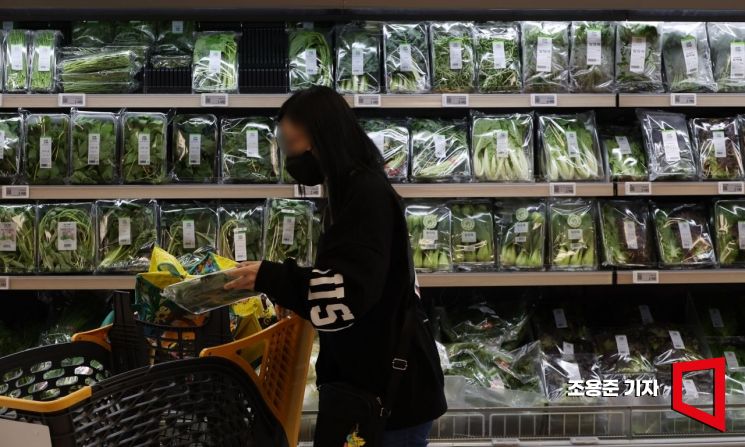
Agricultural products rose by 4.3% compared to the previous month and by 2.6% compared to the previous year. The supply of most fruits such as grapes and persimmons, as well as vegetables like cucumbers, pumpkins, and peppers, is stable, but radishes and tangerines are showing high prices due to decreased production. A ministry official said, "Winter radishes, mainly produced in the Jeju region, experienced poor germination due to heatwaves during the sowing period, leading to reduced production," adding, "It is also believed that tangerines, which are in season, were affected by heat damage causing fruit cracking, resulting in a decrease in marketable volume."
The ministry has secured 10,000 tons of winter radish stockpiles in preparation for peak seasons such as Lunar New Year to cope with supply imbalances caused by cold waves, and is working with Jeju Province to relax coloring standards for tangerines to expand distribution volume. It is expected that supply conditions will recover from February when radishes that were re-sown due to poor sprouting are shipped, and from January when mandarin varieties such as Cheonhyehyang, which have increased production, are shipped in earnest.
Livestock products saw a 0.7% increase compared to the previous month and a 2.1% increase compared to the previous year, with smooth supply across all livestock categories. However, considering that it is a season when livestock infectious diseases such as highly pathogenic avian influenza (AI) and African swine fever (ASF) frequently occur, the ministry plans to strengthen quarantine management and minimize supply and demand impacts through early detection and measures at affected farms.
Processed foods rose by 0.8% month-on-month and 2.0% year-on-year. The ministry noted that prices of cocoa, coffee, and palm oil have increased due to abnormal weather and reduced cultivation areas, and that some product price increases are inevitable due to unstable exchange rates. However, the food industry has secured about 2 to 3 months’ worth of raw materials before the exchange rate rise, and is pursuing diversification of import sources and technological development to reduce cost burdens. The ministry also plans to manage food prices stably by applying tariff quotas on major food raw materials and providing various tax and financial supports.
Consumer prices for agricultural and livestock products rose 6.6% this year, marking the highest increase since 9.9% in 2021. The ministry explained, "This is believed to be due to worsening climate change, which caused unstable supply conditions for agricultural products, including reduced apple and pear production from cold damage in 2023, poor growth of agricultural products due to continuous rainfall and lack of sunlight in February, and decreased production of open-field vegetables due to unusually high summer temperatures."
Accordingly, the government has been working to stably secure production by promoting projects such as the Apple Safety Project and securing shortfall volumes through tariff quota applications. Additionally, the ministry has prepared measures such as the 'Fruit Industry Competitiveness Enhancement Plan,' 'Distribution Structure Improvement Plan,' and 'Climate Change Response Horticultural Crop Supply Stability Plan' to respond to repeated supply instability, which will be actively implemented from 2025.
Park Soon-yeon, Director of Distribution and Consumption Policy at the Ministry of Agriculture, Food and Rural Affairs, evaluated, "This year, difficult weather conditions such as heatwaves and reduced sunlight continued, causing unstable agricultural product prices," and added, "We will treat abnormal climate events as a constant in policy and faithfully implement government measures to establish stable supply conditions for agricultural and livestock products."
© The Asia Business Daily(www.asiae.co.kr). All rights reserved.












