Last year, more than 6.33 million patients from other regions traveled to medical institutions in Seoul for "medical tourism."
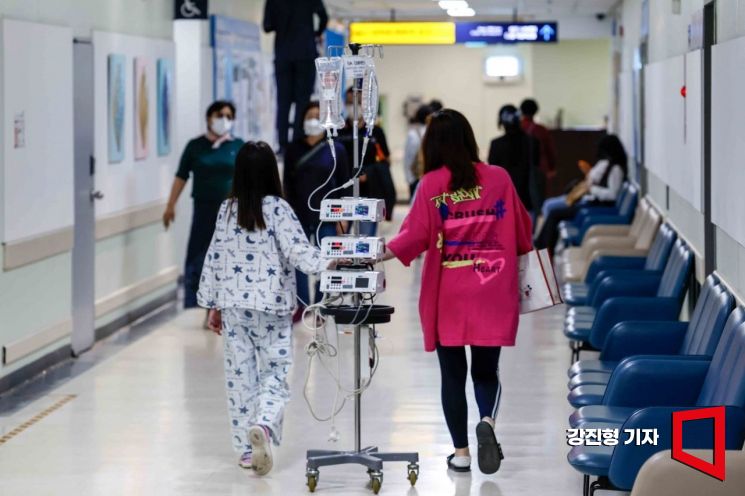 On the 30th, a patient is being moved at Seoul National University Hospital in Jongno-gu, Seoul, where professors working at Seoul National University Hospital and Severance Hospital, two of the 'Big 5' major hospitals in Seoul, have stopped outpatient treatment and surgeries. Photo by Jinhyung Kang aymsdream@
According to the "2023 Regional Medical Usage Statistical Yearbook" by the National Health Insurance Service on the 22nd, a total of 15,203,566 patients received treatment at medical institutions located in Seoul over the past year, of which 6,333,594 patients (41.7%) came from regions other than Seoul.
This means that more than 4 out of 10 patients treated at Seoul medical institutions visited Seoul for "medical tourism" from other regions. The medical expenses they incurred amounted to 10.9 billion KRW.
The number of provincial patients traveling to Seoul for medical treatment continues to increase. It rose by 27% over 10 years, from 4,986,509 in 2013.
The proportion of patients from other regions at Seoul medical institutions has also steadily increased, reaching 35.7% in 2013, 36.9% in 2015, 38.5% in 2017, and 40.0% in 2019. It temporarily decreased to 38.5% in 2020 due to COVID-19 but rose again to 41.7% in both 2022 and last year.
Along with this, "medical tourism surgeries" in Seoul are also on the rise. According to the "2023 Major Surgery Statistical Yearbook" by the National Health Insurance Service, 468,637 people underwent surgery at medical institutions in Seoul last year, of which 207,401 (44.3%) were patients residing in other cities and provinces.
Compared to 10 years ago in 2013, the number of patients traveling to Seoul for surgery increased by 31.5%, from 157,728, and the proportion of surgeries performed on patients from other regions rose by more than 4 percentage points from 39.9%.
The increase in medical tourism and surgeries is analyzed to be due to the persistent concentration of medical institutions, medical personnel, and medical equipment in Seoul.
As of last year, 28% of doctors nationwide and 24% of healthcare institutions were located in Seoul. Among 1,999 magnetic resonance imaging (MRI) machines, 478 (24%) were in Seoul, and among 174 positron emission tomography (PET) devices, 61 (35%) were located in Seoul.
© The Asia Business Daily(www.asiae.co.kr). All rights reserved.












