Ministry of Health and Welfare, 14 Primary Designated Sites + Additional Areas Needing Medical Capacity Enhancement
The government has designated 9 additional Regional Emergency Medical Centers to strengthen the emergency medical system in preparation for the winter season. With the addition of these centers to the existing 14, the total number of Regional Emergency Medical Centers focusing on the treatment of severe emergency patients has increased to 23.
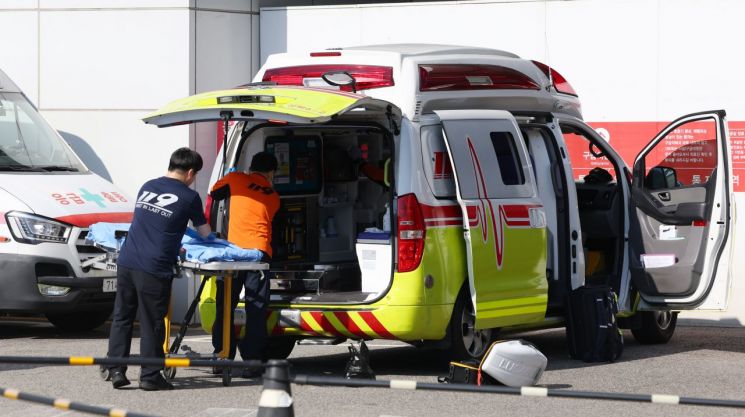
The Ministry of Health and Welfare announced on the 19th that it has secondarily designated a total of 9 centers: 4 in Daegu, Daejeon, Sejong, and Gangwon, where there were currently no Regional Emergency Medical Centers, including Keimyung University Dongsan Hospital, Younghoon Medical Foundation Yuseong Sun Hospital, Sejong Chungnam National University Hospital, and Gangwon National University Hospital; and 5 in Seoul, Incheon, and Gyeonggi, where Regional Emergency Medical Centers are operating but have many severe emergency patients, including The Catholic University of Korea Eunpyeong St. Mary's Hospital, Chung-Ang University Hospital, Catholic Kwandong University International St. Mary's Hospital, Eulji Foundation Uijeongbu Eulji University Hospital, and Hallym University Dongtan Sacred Heart Hospital.
Among these, Gangwon National University Hospital and Sejong Chungnam National University Hospital, designated as Regional Emergency Medical Centers in Sejong and Gangwon, are currently unable to operate their emergency rooms 24 hours a day, so their designation is conditional upon restoring normal emergency room operations within a month.
Regional Emergency Medical Centers are designated by the Ministry of Health and Welfare from among the existing Regional Emergency Medical Centers with strong capabilities to focus on the treatment of severe emergency patients. After 14 centers were designated in the first phase last September, additional centers were designated this time to prepare for the increase in emergency patients during the winter season. These institutions receive emergency medical fees equivalent to those of Regional Emergency Medical Centers for severe emergency patients treated during the operation period.
The Ministry of Health and Welfare plans to monitor the operation of Regional Emergency Medical Centers to ensure they align with the designation purpose of focusing on the treatment of severe emergency patients. It will also consider additional designations of Regional Emergency Medical Centers in the future, taking into account trends in the occurrence of severe emergency patients.
Jung Dong-ryong, Director of Public Health Policy at the Ministry of Health and Welfare, stated, "As the number of patients visiting emergency rooms is expected to increase with the arrival of winter, it is a necessary time to strengthen the emergency medical system. We will do our best to maintain emergency treatment and the emergency medical system so that the public can feel secure."
© The Asia Business Daily(www.asiae.co.kr). All rights reserved.

![Clutching a Stolen Dior Bag, Saying "I Hate Being Poor but Real"... The Grotesque Con of a "Human Knockoff" [Slate]](https://cwcontent.asiae.co.kr/asiaresize/183/2026021902243444107_1771435474.jpg)














