'Record-breaking heatwave' drives winter fruit prices up
Tangerines 47%, strawberries 24% more expensive than average years
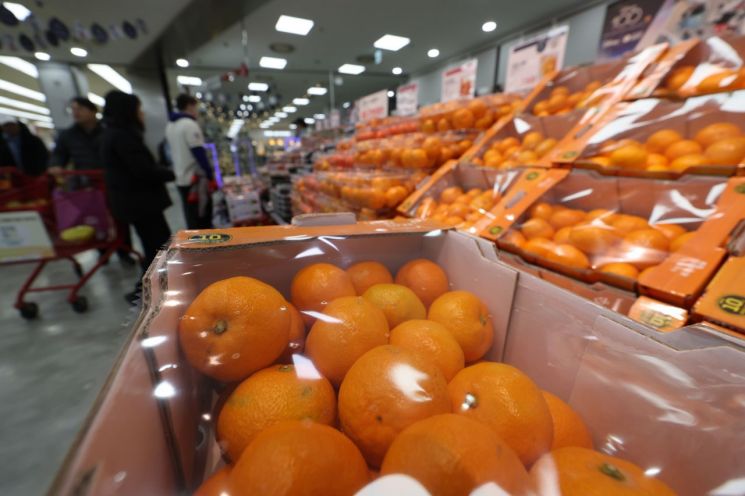 The prices of tangerines and strawberries, popular winter fruits, have risen by more than 10% compared to last year. Yonhap News
Prices of winter representative fruits, tangerines and strawberries, have risen by more than 10% compared to last year. This is due to the heatwave this year, which was record-breaking hot and affected their growth.
According to the Korea Agro-Fisheries & Food Trade Corporation (aT) on the 19th, the average retail price of tangerines (open-field) was 4,265 won for 10 pieces, an 18% increase from a year ago. It is 47% higher than the average price (2,907 won) over the past three years from 2019 to last year, excluding the highest and lowest prices. The average retail price of strawberries was 2,532 won per 100g, up 14% from a year ago and 24% more expensive than the average price.
Tangerines suffered significant damage from 'heat fruit,' where the skin cracks and bursts due to the summer heatwave. Also, high temperatures persisted in October and frequent rainfall increased pest and disease damage. Many tangerines did not turn yellow due to tropical nights. In response, Jeju Island relaxed the coloring standards and revised the ordinance to exclude the weight standards for citrus fruits to increase the volume distributed in the market. Earlier, the Korea Rural Economic Institute predicted that tangerine shipments this month would decrease by 8.6% compared to a year ago due to poor coloring and increased decay rates.
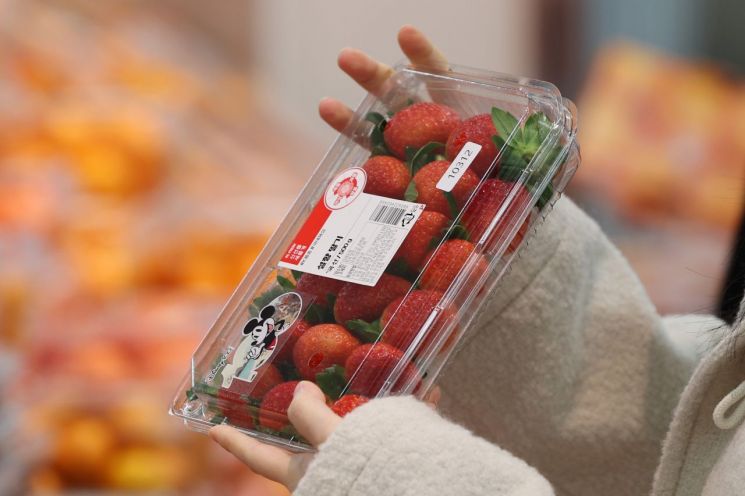 Prices of popular winter fruits, tangerines and strawberries, have risen by more than 10% compared to last year. This is attributed to the record-breaking heatwave last summer. Yonhap News
Strawberries experienced delayed planting times and slowed early growth due to high temperatures, resulting in reduced shipments. However, production has been recovering since this month. A Ministry of Agriculture, Food and Rural Affairs official said, "Tangerines and strawberries have maintained somewhat high prices due to poor production caused by this year’s unusually long heatwave. We plan to maximize distribution volumes, thoroughly manage growth, and expand the supply of alternative fruits."
Prices of processed foods are also continuing to rise. Orion raised prices of 13 products by an average of 10.6% this month, and Haitai Confectionery increased prices of 10 products by an average of 8.6%. Dongseo Foods raised the shipment prices of instant coffee, coffee mixes, and coffee beverages by an average of 8.9% starting from the 15th of last month. The price hikes seem inevitable due to rising raw material costs such as cocoa, coffee, and palm oil, as well as increased import prices caused by the depreciation of the Korean won.
Amid persistent high inflation, according to the '2024 Food Consumption Behavior Survey' released by the Korea Rural Economic Institute on the 13th, domestic households perceive that grocery prices have risen by an average of 19.6% this year compared to last year. This is higher than the perceived increase of 14.1% last year. The survey indicates that as the burden of grocery prices grows, consumers are reducing food purchases and opting for cheaper products.
© The Asia Business Daily(www.asiae.co.kr). All rights reserved.













