Agreement Reached Early Morning on the 6th After Starting at 4 PM on the 5th
Wage Increase to Follow Government Guidelines
2nd and 3rd Unions Reach Early Morning Labor Agreement
All three labor unions of Seoul Metro Corporation reached a dramatic agreement with management on wage and collective bargaining (wage and collective agreement) negotiations after talks that continued until dawn, alleviating concerns about a 'subway crisis' during the morning commute. Management accepted the unions' demands for additional staffing and the suspension of the single-operator system on Line 2.
The Seoul Metro Corporation Union 1 announced at 2 a.m. that day, "An agreement has been reached in the wage and collective bargaining negotiations with management." Union 1, which has the largest number of members (about 60%) among the corporation's three unions, withdrew its planned strike scheduled for that day following the negotiation settlement. This prevented the Seoul subway from stopping for the third consecutive year.
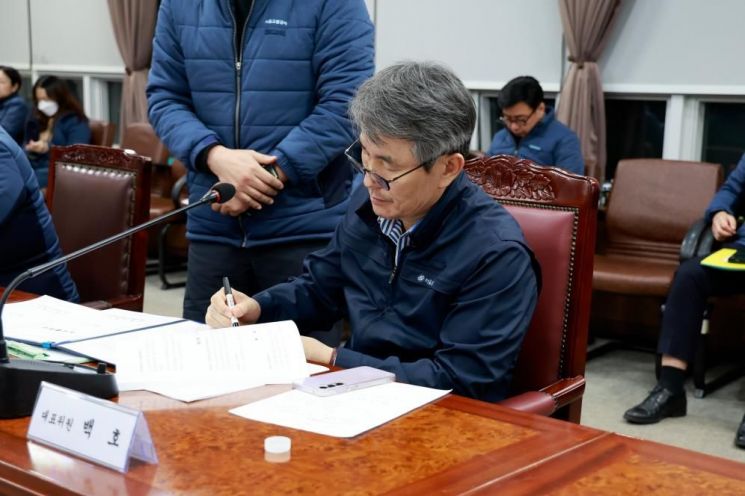
The union stated, "Regarding the key issue of staffing, we reached a consensus to promptly hire about 630 new employees through additional recruitment corresponding to vacancies along with replacing retirees." They also succeeded in halting the introduction of the single-operator system on Line 2, which had raised safety concerns. The union confirmed, "We have finalized the management representative's position to suspend the introduction considering the safety of workers and passengers."
However, regarding the wage increase rate, management agreed to follow the public institution's personnel cost guideline of 2.5%. Previously, the union expressed concerns that the corporation had exhausted funds to secure regular wage resources last year, making it unable to comply with government guidelines. According to the union, the corporation applied wage increase rates below government guidelines from 2021 through last year. A union official added, "The shortfall was compensated through policy personnel costs and cost-saving measures, effectively reaching an amount close to 2.5%."
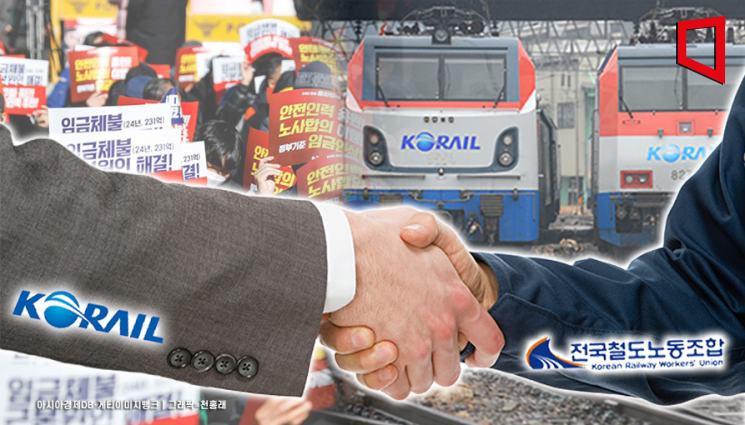
Union 1 began the final wage and collective bargaining negotiation with management at 4:10 p.m. the previous day at the Seoul Metro Corporation headquarters in Seongdong-gu, Seoul. As disagreements between labor and management remained unresolved, they held internal meetings with four recesses and resumptions, finally reaching an agreement at 2 a.m. the following day. The corporation also consecutively concluded wage and collective bargaining negotiations with the Seoul Metro Corporation Integrated Union (Union 2), affiliated with the Federation of Korean Trade Unions, at around 2:50 a.m., and the Correct Union (Union 3), known as the 'MZ Union,' at around 4:25 a.m. The core content was the same as Union 1, with differences in detailed working conditions. Union 2 voted against striking in a member vote on the 4th and did not proceed with a strike, but Union 3 had announced a general strike that day if negotiations with management failed.
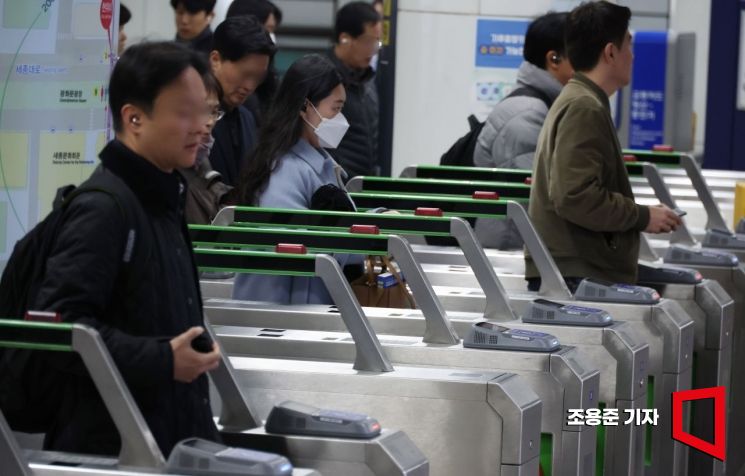 On November 20, when the Seoul Metro Workers' Union, operating lines 1 to 8 of the Seoul subway, began a compliance strike, citizens were using the subway at Gwanghwamun Station on Line 5 in Seoul. Photo by Jo Yong-jun
Lee Yang-seop, chairman of Union 2, said, "The corporation and Seoul City showed their sincerity, allowing us to reach an agreement," and added, "There was sufficient cooperation on wage increases that had been below the government average for five years." Song Si-young, chairman of Union 3, stated, "In addition to wages and staffing, we achieved many results related to work-family balance systems to address low birth rates," reporting agreements on a four-day workweek leave for pregnant employees and support for infertility treatment expenses.
Seoul Mayor Oh Se-hoon welcomed the news of the negotiations early in the morning. Mayor Oh said, "This is the result of patience in difficult circumstances, prioritizing citizens' safety and convenience," and expressed gratitude to both labor and management for their efforts to ensure normal subway operations and to the citizens who waited for the negotiation results in their daily lives.
However, as the strike by the Korea Railroad Corporation (KORAIL) union has been ongoing since the previous day, it is expected to take some time for the linked subway lines 1, 3, and 4 to return to normal. Mayor Oh emphasized, "We will minimize citizen inconvenience until normal operations resume through supplementary measures such as additional train operations and deployment of safety personnel within stations."
© The Asia Business Daily(www.asiae.co.kr). All rights reserved.