Selected 3 Each in Bundang, Ilsan, and Pyeongchon; 2 Each in Jungdong and Sanbon
One Additional Townhouse Each in Bundang and Ilsan... Considering Housing Diversity
"Considering Support Measures Such as Contribution Assistance... Establishing a Fund for Support"
The government has selected a total of 13 districts and approximately 36,000 households as integrated reconstruction pilot zones for the first-generation new towns. All five new towns exceeded the standard quota in the selection scale, and one additional townhouse complex equivalent to a pilot zone was designated each in Bundang and Ilsan.
The government plans to resolve school-related issues in advance and proactively introduce electronic consent methods starting in March next year to eliminate factors causing project delays. A Future City Fund worth 12 trillion won will also be established to support project costs. Additionally, from next year, the maintenance of the first-generation new towns will continue through resident proposals rather than public contests.
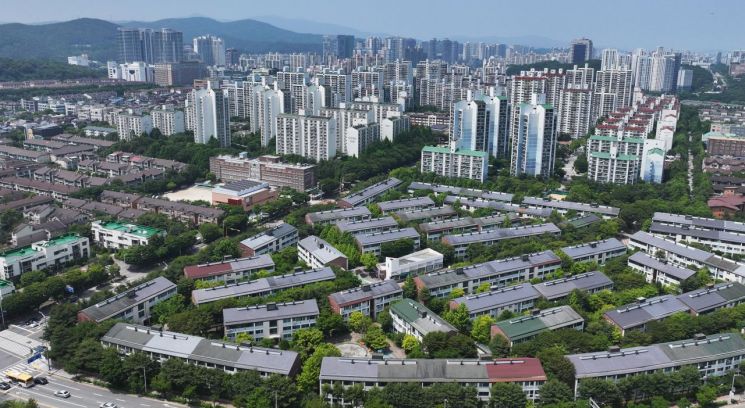
"Quantitative evaluation such as consent rate and public contribution ratio"... Additional townhouse complexes in Bundang and Ilsan
On the 27th, the Ministry of Land, Infrastructure and Transport announced the integrated reconstruction pilot zones for the first-generation new towns, selected based on resident consent rates and public contribution ratios. Lee Sang-joo, Director of the Land and Urban Office at the Ministry, said, "We previously set the standard quota considering housing stock and supply-demand forecasts for each new town, and local governments selected within the range through quantitative evaluation."
In Bundang, three districts (10,948 households) were named as pilot zones. These include Saetbyeol Village (Dongseong, Life, Sambu, Woobang, Hyundai) with 2,843 households; Yangji Village (Geumho 1 Complex, Geumho Hanyang 3 and 5 Complexes, Hanyang 5 and 6 Complexes, Cheonggu 2 Complex, Geumho Cheonggu 6 Complex) with 4,392 households; and the Pilot Complex (Woosung, Hyundai, Jangan Town Geonyeong 5th Phase) with 3,717 households. In Ilsan, three districts (8,912 households) were selected as pilot zones: Baeksong Village 1, 2, 3, and 5 Complexes with 2,732 households; Hugok Village 3, 4, 10, and 15 Complexes with 2,564 households; and Gangchon Village 3, 5, 7, and 8 Complexes with 3,616 households.
In Pyeongchon, the pilot zones include Kkum Village Geumho, Hanshin, Life, Hyundai with 1,750 households; Woosung, Geonyeong 5th Complex, Donga Geonyeong 3rd Complex with 1,376 households; and Saem Village Imkwang, Woobang, Ssangyong, Daewoo Hanyang with 2,334 households, totaling three districts and 5,462 households. Jungdong and Sanbon each have two pilot zones. In Jungdong, these are Bandal Village A (Samik, Donga, Seongyeong, Geonyeong) with 3,570 households and Eunha Village (Daewoo Dongbu, Hyosung Ssangyong, Jugong 1 and 2 Complexes) with 2,387 households. In Sanbon, the zones are Xi Baekhap, Samsung Rose, Sanbon Jugong 11 Complex with 2,758 households and Hanyang Baekdu, Dongseong Baekdu, Geukdong Baekdu with 1,862 households.
Additionally, the Ministry of Land, Infrastructure and Transport added one townhouse complex each in Bundang and Ilsan. This decision considered housing type diversification, local governments' requests for additional pilot zone selections, and the impact of relocation measures. The target districts are Daewon Villa in Mokryeon Village, Bundang with 1,107 households, and Jeongbyeol Village 2 and 3 Complexes in Ilsan with 262 households. Director Lee said, "Townhouse complexes will be supported and managed at a level equivalent to pilot zones," adding, "Including these, Bundang and Ilsan will have four districts with 12,055 households and 9,174 households respectively undertaking pilot projects."
According to relevant laws, the floor area ratio can reach up to 450% when public contributions are added to the standard floor area ratio. The standard floor area ratios are 300% for Ilsan, 326% for Bundang, 330% for Pyeongchon and Sanbon, and 350% for Jungdong. However, considering residential environments, the maximum floor area ratio is expected to be achievable only theoretically.
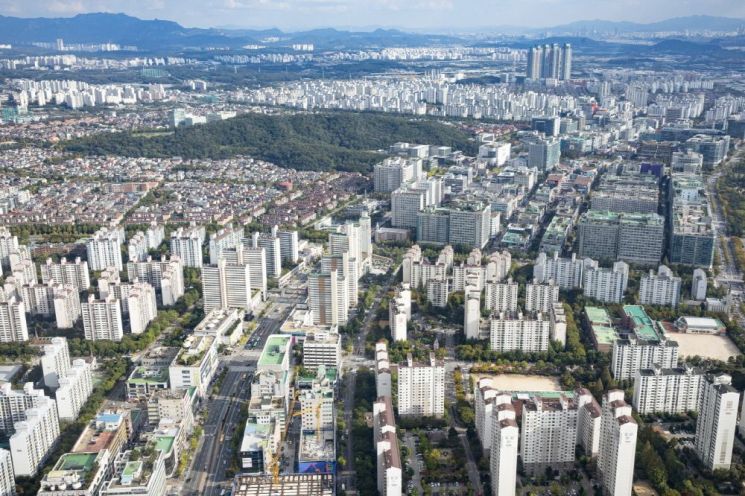
"Targeting move-in by 2030... Additional relocation measures to be announced next month"
The Ministry plans to promote integrated reconstruction of pilot zones aiming for project implementation approval in 2026, relocation and groundbreaking in 2027, and move-in by 2030. They emphasized that the prompt establishment of special maintenance plans is most important. They are also considering support measures for the burden charges that become problematic when moving from project implementation approval to management disposition.
Director Lee stated, "Many elderly residents in the first-generation new towns lack cash liquidity, which could be an obstacle during management disposition agreements," adding, "We are devising supplementary measures." He further said, "We will enhance the credibility of burden charge calculations through the Korea Real Estate Board."
School-related issues and the repetitive consent form preparation and verification processes, which are factors causing project delays, will be resolved through digital administration. Next month, a memorandum of understanding will be signed with the Ministry of Education and the Gyeonggi Provincial Office of Education, and from March next year, an automatic consent method will be introduced. Project costs will be covered by establishing a Future City Fund (12 trillion won). Specialized guarantees linked to the fund will also be prepared by next year. The Ministry plans to actively include construction costs in the total project cost calculation to ensure sufficient funding within the Housing and Urban Guarantee Corporation (HUG) guarantee limit (60% of total project cost). A public contribution securitization support program will also be operated to enable local governments to finance large-scale infrastructure costs without debt burden.
The Ministry will proceed with reconstruction of the remaining first-generation new towns, excluding pilot zones, through resident proposal methods and approve them within the annual maintenance quota. The basic plans currently being established for each new town do not specify maintenance timings by district, making it difficult to predict when each district will be maintained. This has caused anxiety that if a district is not selected as a pilot zone this year, maintenance will be difficult. To increase predictability, the Ministry plans to consult with Gyeonggi Province by the first half of next year and prepare a phased maintenance plan that sequentially presents the timing of district maintenance plans.
Park Sang-woo, Minister of Land, Infrastructure and Transport, said, "We will actively cooperate to ensure that the basic plans for each new town are approved by Gyeonggi Province within this year without delay," adding, "Next month, we plan to announce relocation measures such as development of idle land and cyclical maintenance of permanent rental housing, as well as plans to improve metropolitan transportation."
© The Asia Business Daily(www.asiae.co.kr). All rights reserved.













