Suspended Sentence for Imprisonment Reversed
Court: "Rapid Deterioration Was Difficult to Foresee"
An internal medicine doctor who was prosecuted for diagnosing enteritis in a sepsis patient and sending the patient home, resulting in death, was acquitted by the Supreme Court, overturning the judgments of the first and second trials.
On the 17th, the Supreme Court's First Division (Presiding Justice Shin Sook-hee) overturned the original ruling that sentenced Doctor A, who was indicted last month on charges of professional negligence causing death, to 10 months in prison with a 2-year probation, and remanded the case to the Changwon District Court, according to a report by Yonhap News Agency on the same day.
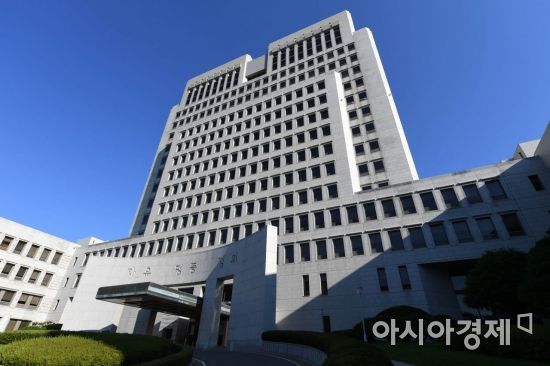
Doctor A, an internal medicine physician at a hospital in the Gyeongnam region, was indicted for giving only general treatment such as prescribing enteritis medication to patient B, who visited on the morning of October 4, 2016, complaining of abdominal pain, and sending the patient home, after which B died from septic shock the next day. At that time, Doctor A conducted blood tests and ultrasound examinations on B, but aside from an elevated white blood cell count, there were no notable findings. B returned to the emergency room that night, reporting worsening symptoms. He received only enteritis-related treatment from another doctor and was sent home, but was brought back to the emergency room in cardiac arrest the following afternoon and eventually died. The cause of death was multiple organ failure due to septic shock.
The prosecution judged that Doctor A was negligent in properly assessing the patient's condition and brought the case to trial. Both the first and second trials found medical negligence and sentenced Doctor A to 10 months in prison with a 2-year probation. However, the Supreme Court's judgment differed. The Supreme Court did not find medical negligence in the diagnosis of enteritis. The Court explained, "It is difficult to see that the defendant's diagnosis of the victim's gastrointestinal symptoms and pain as acute enteritis exceeded the scope of diagnostic standards practiced in clinical medicine," and "It is hard to foresee that the victim's symptoms such as septic shock would manifest and rapidly worsen to the point of death within a day." Since the vital signs were stable when Doctor A treated B, there was no reason to suspect sepsis, and the expert opinion from the Korea Medical Dispute Mediation and Arbitration Agency stating that proper treatment should have been administered when B returned to the emergency room on the night of the 4th also contributed to the acquittal.
© The Asia Business Daily(www.asiae.co.kr). All rights reserved.












