Microplastics Detected in Artificial Tears
Researchers Recommend "Discarding More Than Two Drops Before Use"
A study has found that removing the first two drops of artificial tears before use can reduce the absorption of microplastics into the human body through the eyes.
Researchers from Korea University College of Medicine and the Korea Institute of Analytical Science and Technology (KIAST) presented these findings at the American Academy of Ophthalmology. The paper was published online on the 11th.
The research team analyzed five types of hyaluronic acid-containing artificial tears widely used in Korea (three single-use and two multi-use) using Raman spectroscopy, a laser-based technique that analyzes molecular information of substances.
The analysis detected microplastics in 80% of the first drops of all five artificial tears. Most were transparent fibrous plastic fragments, with the most common size being 10?20 μm (micrometers, 0.001 mm).
Microplastics in fibrous form smaller than 10 μm can be absorbed through the eyes and penetrate major organs, including the brain. Although the harmfulness of microplastics has not been fully proven, long-term exposure causes inflammation in the human body. Additionally, microplastics can act as carriers of organic pollutants, allowing toxic substances to infiltrate various parts of the body, according to research findings.
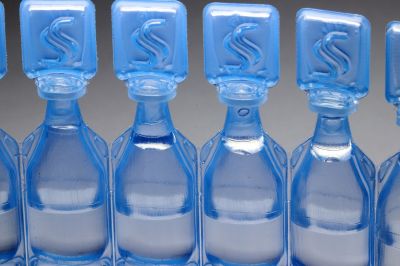
The number of microplastic particles detected in the first drop of artificial tears averaged 0.5 per 30 mL (margin of error ±0.65). In the remaining solution after discarding the first drop, the average was 0.75 (±0.72). After discarding up to the second drop, the number of microplastic particles in the residual artificial tears solution significantly decreased to 0.14 (±0.35) per 30 mL.
The researchers estimated that if artificial tears are used four times a day without discarding the first drop after opening the product, approximately 730 particles would be directly exposed to the eyes annually. Discarding two drops before use reduces the number of microplastic particles exposed to the eyes in one year to 204.4. Furthermore, when about half of the solution is discarded and the remaining solution is measured, no microplastics were detected, the researchers reported.
The research team explained, “Currently, the Ministry of Food and Drug Safety recommends discarding the first one or two drops after opening artificial tears, but this study shows that discarding more than two drops is safer.”
The researchers pointed out that the government should inform domestic consumers, who use large amounts of artificial tears, about the risks of microplastics in artificial tears and provide proper usage guidelines to prevent misuse.
They also urged, “While regulating the concentration of microplastics in artificial tears, manufacturers should change container materials and manufacturing processes to minimize microplastics.”
© The Asia Business Daily(www.asiae.co.kr). All rights reserved.












