Urgent Need to Strengthen Research Function for Cultural and Arts Policy Alternatives
Hong Gi-wol, Gwangju City Council Member, "Set to Match Regional Characteristics"
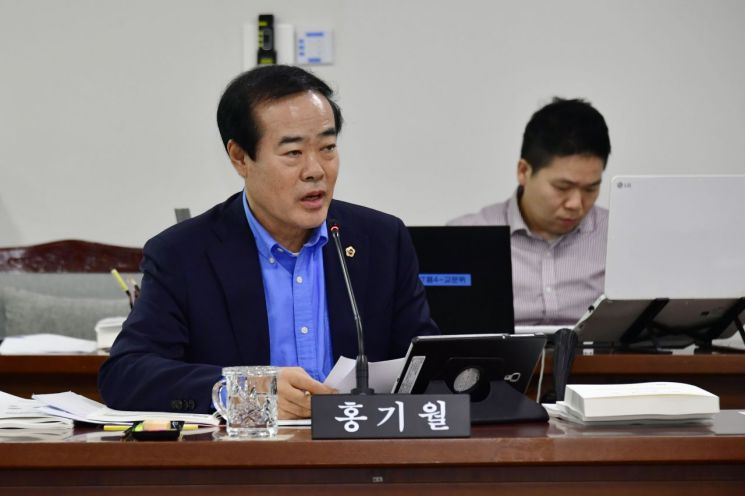
There has been a call to establish a research organization directly under the representative of the Gwangju Cultural Foundation in order to develop policy alternatives that align with the cultural and artistic scene in Gwangju.
On the 12th, Hong Gi-wol, a member of the Gwangju City Council (Democratic Party, Dong-gu 1), stated during the administrative audit of the Gwangju Cultural Foundation, “Gwangju promotes itself as an Asian cultural hub and a city of artistic excellence, but its competitiveness is minimal,” adding, “It is necessary to seek precise directions through independent policy research that reflects the characteristics of local culture and arts.”
The Gwangju Cultural Foundation is currently organizing and operating a ‘Policy Governance’ group and a ‘Cultural Arts Advisory Committee’ to strengthen its own policy research capabilities.
The Policy Governance consists of 45 experts from various sectors including civil society, government, politics, industry, and academia, who identify regional cultural agendas in response to government policies and conduct meetings by subdivided themes reflecting municipal trends. The Cultural Arts Advisory Committee is divided into four groups to carry out 12 strategic tasks of the foundation, such as ▲vitalizing everyday cultural arts, ▲supporting artists’ welfare and enhancing their rights, and ▲establishing governance for future value creation.
Substantive policy research is conducted within the Policy Governance, while the advisory committee mainly focuses on advisory meetings aimed at institutional growth and development. Moreover, although experts from diverse fields are conducting research on topics such as ▲conceptualizing a future cultural city and ▲innovative methods for art support within the Policy Governance, Hong argues that it operates as a temporary research system and thus has inherent limitations.
Councilor Hong emphasized, “Among city-affiliated institutions, those with expertise and specificity in culture, welfare, and employment must secure their own research capabilities,” and added, “The Cultural Foundation should establish a research function system directly under its representative to conduct regional cultural and artistic policy research that responds to the diversifying environment.”
He further stated, “The Cultural Foundation’s policy research system should serve as a model case, and affiliated institutions within the city should strengthen their research functions to systematically prepare for Gwangju’s future.”
© The Asia Business Daily(www.asiae.co.kr). All rights reserved.












