Purchased Philopon 11 Times Using Throwing Method
Court Considers First Offense and Grants Suspended Sentence
A woman in her 20s, who questioned the judge on the day of sentencing by asking, "Why is drugs illegal?" was given a suspended sentence by the court's leniency.
On the 30th, Newsis reported, "Judge Kang Ji-yeop of the Criminal Division 4, Namyangju Branch, Uijeongbu District Court, sentenced A (24), who was indicted for violating the Narcotics Control Act, to one year in prison with a two-year suspension." The court also ordered A to pay a fine of 6.27 million won and placed her under probation.
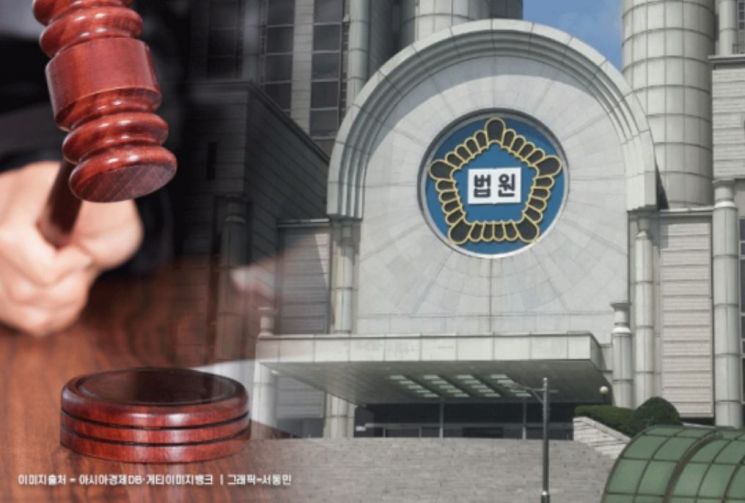 On the 30th, Newsis reported that the Uijeongbu District Court Namyangju Branch Criminal Division 4 (Judge Kang Ji-yeop) sentenced A (24), who was indicted for violating the Narcotics Control Act, to one year in prison with a two-year probation. The court also ordered A to pay a fine of 6.27 million won and placed him under probation.
 [Photo by Seo Dong-min, Asia Economy]
According to Newsis, A is accused of purchasing 5.6 grams of methamphetamine 11 times in Seoul and other areas from July 2022 to February 2023 using a so-called 'throwing' method via Telegram. Originally, A's sentencing was scheduled for July, but when she appeared in court, she demanded a retrial by saying to the judge, "I don't understand why drugs are illegal. Why are you the one to judge that?" It is reported that other defendants present in the courtroom at the time also reacted with disbelief to A's remarks.
Afterward, A delayed the trial several times and was absent, and the hearing was only held last week. Even then, A expressed dissatisfaction and disappointment with the current punishment and management methods for drug offenders and continued to say that she did not understand what was wrong with her crime. Considering that A had no prior criminal record and was a first-time offender, the court showed leniency by suspending the sentence.
The court stated, "Although the number of methamphetamine purchase offenses is not small and the amount of drugs handled is considerable, so the guilt is not light," it added, "Since the purchases were for personal use with no evidence of separate distribution, and the family petitioned for leniency, promising to prevent recidivism, the execution of the prison sentence is suspended on the condition of probation."
Drug Offenders' Treatment Orders at 0.78%... Inadequate Post-Management
As the number of drug offenders increases every year, it was found that only about 0.7% of drug offenders who received suspended sentences last year were ordered to undergo treatment. Given the high risk of recidivism due to addiction in drug crimes, it is pointed out that post-management of drug offenders is insufficient, as addiction treatment should be combined with punishment rather than simple penalties.
According to data submitted by the Supreme Court to the office of Jang Dong-hyuk, a member of the People Power Party, on the 23rd, among 2,544 drug offenders who received suspended sentences in the first trial last year, only 0.78% were given treatment orders. A treatment order is a system where the court, when issuing a suspended sentence or probation, mandates the offender to live in society for a certain period under the supervision of a probation officer and receive regular treatment. This system was introduced in December 2016 and differs from treatment detention, which requires a prosecutor's request, in that the court can impose a treatment order ex officio.
 As drug offenders increase every year, it has been revealed that only about 0.7% of drug offenders who received a suspended sentence for drug-related crimes last year were ordered to undergo treatment.
 [Photo by Seodongmin, Asia Economy]
Looking at the statistics by year, the proportion of drug offenders receiving treatment orders with suspended sentences has decreased compared to five years ago. It was 3.48% (60 people) in 2019, 3.34% (56 people) in 2020, 1.05% (23 people) in 2021, and 0.72% (15 people) in 2022. Last year, it was 0.78% (20 people), still below 1%. During the same period, the number of drug offenders receiving suspended sentences increased: 1,726 in 2019, 1,678 in 2020, 2,182 in 2021, 2,075 in 2022, and 2,544 in 2023.
Although related ministries such as the Ministry of Justice, Ministry of Health and Welfare, and the Ministry of Food and Drug Safety declared in June last year that they would "strengthen inter-ministerial cooperation to expand treatment and rehabilitation infrastructure and work with the courts to increase the imposition of treatment orders on drug offenders," the rate of imposition remains low compared to 2019-2020.
© The Asia Business Daily(www.asiae.co.kr). All rights reserved.













