'High Learning' Continues to Expand... Used by Over 2,500 Schools
Advanced AI Essay Diagnosis Service, Chatbot, and Content
Utilizing Various Teaching Materials... Increase in High Learning Users
"Realizing Future-Oriented Classrooms and Personalized Student Education"
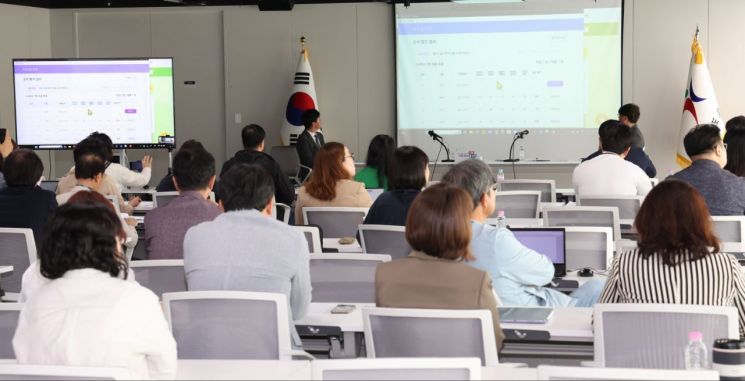 Gyeonggi Provincial Office of Education is advancing the Hi-Learning service and expanding it to all schools to provide student-tailored education by supporting future-oriented integrated teaching and learning.
 The Gyeonggi Provincial Office of Education (Superintendent Lim Tae-hee) announced on the 8th that it will enhance the Hi-Learning service and expand it to all schools to strengthen student-tailored education by supporting future-oriented integrated teaching and learning.
Hi-Learning is an AI-based teaching and learning platform developed by the Gyeonggi Provincial Office of Education that supports the teaching and learning processes of students and teachers.
As of October 2024, it supports teaching and learning for 491,607 students (33.4%) and 38,613 teachers (40.2%) across 2,581 schools (including alternative education institutions). Since its pilot operation began in 162 schools in September last year, the number of users has continuously increased, and utilization rates have significantly risen.
Reflecting the results of last year’s Hi-Learning pilot operation and the demands from schools, the Office of Education expanded the service to all schools in 2024.
The AI learning diagnostic service, which analyzes learning situations and recommends content, is provided for Korean, Social Studies, Mathematics, Science, and English subjects from 4th grade in elementary school to 2nd grade in high school. The class design, integrated learning window, and class board functions are available for all grades and subjects.
Along with this, the Office has advanced Hi-Learning to further strengthen AI-powered student-tailored education.
Through regular consultations with teacher-centered field advisory groups, the Hi-Learning customer center, and a 1:1 bulletin board, field opinions are collected, and the following features have been enhanced: AI essay-type diagnostic service, AI chatbot for learning mentoring, educational resource repository (content library), and the Content Hall of Fame function.
Teachers can directly create essay-type questions and provide diagnostic services that incorporate AI analysis as a reference for final feedback, which helps improve students’ critical thinking skills and reduces teachers’ workload.
Additionally, the AI chatbot for learning mentoring has been enhanced to provide real-time individualized learning guidance based on analysis of learning status.
Teachers can use various embedded teaching materials to communicate about curricula and lessons both inside and outside the school, and actively share excellent teaching materials such as questions, textbooks, and videos in the newly established Content Hall of Fame.
In a regular public opinion survey conducted in September, 62% of residents expected Hi-Learning to be effective in reducing learning gaps among students. Furthermore, 34% responded that fostering students’ proper digital citizenship is the most important task to activate AI-based student-tailored education.
Accordingly, the Office of Education is strengthening Hi-Learning utilization capabilities by organizing contests for teaching cases and experience essays, raising awareness and providing training linked to digital education leading districts, and sharing teacher-created content. It is also focusing on developing digital citizenship education materials and distributing diagnostic tools.
In 2025, to generalize future-oriented classroom lessons through Hi-Learning-based tailored education, plans include operating representative teachers for each school, expanding lead teachers, increasing on-site training and capacity-building programs, and strengthening the authority and role of education support offices to support the field.
To this end, the Office plans to continuously evolve the service by reflecting school field demands through ongoing operation of field advisory systems, consulting, the customer center, and 1:1 bulletin board feedback.
Kim Tae-seok, Director of Future Education at the Gyeonggi Provincial Office of Education, said, “Gyeonggi education will guarantee educational opportunities for students and realize individualized education through ‘Hi-Learning.’ We will strive to help students grow as digitally responsible citizens with autonomy and actively work to create schools where teachers and students communicate and learning flourishes in future-oriented learning environments.”
© The Asia Business Daily(www.asiae.co.kr). All rights reserved.

















