Professor Choi Hyung-jin of Seoul National University (Basic Medical Science Award), Professor Mok Jeong-ha of Pusan National University (Clinical Medical Science Award), and Professor Yoon Seung-yong of Ulsan University (Translational Medical Science Award) have been selected as the recipients of the 22nd Pfizer Medical Science Award, organized by the Korean Academy of Medical Sciences and sponsored by Pfizer Korea.
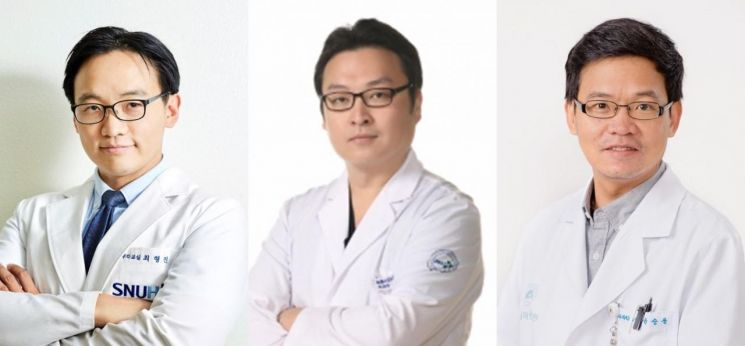 The recipients of the 22nd Pfizer Medical Award are Professor Hyeongjin Choi of Seoul National University (Basic Medical Science Award), Professor Jeongha Mok of Pusan National University (Clinical Medical Science Award), and Professor Seungyong Yoon of Ulsan University (Translational Medical Science Award) (from left).
The Pfizer Medical Science Award was established in 1999, the 30th anniversary of Pfizer Korea’s founding, to support the advancement of the domestic medical community and fulfill corporate social responsibility. Each year, the award recognizes the most outstanding papers published within the past two years in three categories: basic medical science, clinical medical science, and translational medical science. The evaluation criteria include excellence, creativity, scientific merit, and contribution. This year, the Basic Medical Science Award went to Professor Choi Hyung-jin of the Department of Anatomy at Seoul National University College of Medicine, the Clinical Medical Science Award to Professor Mok Jeong-ha of the Department of Internal Medicine at Pusan National University College of Medicine, and the Translational Medical Science Award to Professor Yoon Seung-yong of the Department of Brain Science at Ulsan University College of Medicine. With the selection of the 22nd awardees, the total number of Pfizer Medical Science Award recipients has reached 55.
Professor Choi Hyung-jin, the recipient of the Basic Medical Science Award, elucidated the central nervous system mechanism of glucagon-like peptide (GLP)-1 obesity treatments. Recently, as the weight loss effects and cardiovascular risk reduction benefits of GLP-1-based obesity treatments have been demonstrated, demand for GLP-1 therapies has increased. Professor Choi’s team confirmed that GLP-1 amplifies satiety neurons in the hypothalamus to regulate food intake. Their paper was published in the prestigious journal Science. In addition, Professor Choi has actively conducted research on the neurobiological causes and treatments of metabolic diseases such as obesity and diabetes, publishing papers in world-renowned journals including Science and Neuron. This research was recognized for its academic value and medical impact, leading to his selection as the Basic Medical Science Award recipient.
Professor Mok Jeong-ha of Pusan National University, awarded the Clinical Medical Science Award, was the first to demonstrate the non-inferiority of a 9-month short-term regimen compared to the conventional 20-month long-term regimen including injectable drugs for multidrug-resistant tuberculosis treatment. This study, published in the world-renowned medical journal The Lancet, was incorporated into the tuberculosis treatment guidelines published in February by the Korean Academy of Tuberculosis and Respiratory Diseases and the Korea Disease Control and Prevention Agency, and is currently used in the treatment of multidrug-resistant tuberculosis patients, highlighting its significant clinical impact. Notably, South Korea has ranked first in tuberculosis incidence among OECD member countries for 26 years, underscoring the urgent need for tuberculosis eradication efforts. Professor Mok’s research team’s work greatly contributes to public health improvement and tuberculosis eradication in Korea. Their achievement, which opened a new chapter in the treatment of refractory respiratory diseases that had been overlooked, earned them the Clinical Medical Science Award.
Professor Yoon Seung-yong of Ulsan University College of Medicine, recipient of the Translational Medical Science Award, newly discovered a monoclonal antibody, ‘Adel-Y01,’ targeting tau protein, which plays a key role in inducing tauopathy, a major cause of neurodegenerative diseases such as Alzheimer’s dementia. The therapeutic function of Adel-Y01 was verified through cell and animal models. The new antibody was shown to prevent the progression of tauopathy and enhance neuronal survival, indicating its potential usefulness in treating neurodegenerative diseases. Furthermore, Professor Yoon founded the biotech company Adel and has received approval from the U.S. Food and Drug Administration (FDA) to conduct a Phase 1 clinical trial targeting dementia using Adel-Y01, which is currently underway. The research team’s paper was published in the Clinical Research Journal, an international journal published by the American Association of Clinical Research. Professor Yoon has consistently conducted various translational studies on dementia treatment, and this research, which discovered substances that could provide clues for treating Alzheimer’s disease and tauopathy, was recognized with the Translational Medical Science Award.
The 22nd Pfizer Medical Science Award ceremony will be held on November 6th in the afternoon at the Yonsei University Alumni Hall’s main banquet hall. Each awardee will receive a prize of 50 million KRW per category, totaling 150 million KRW, along with a plaque.
Wang Gyu-chang, President of the Korean Academy of Medical Sciences, stated, “The awarded research provides answers to diseases with unmet needs such as obesity, tuberculosis, and dementia, not only in Korea but globally, advancing medical science to a new level and establishing an important turning point for discovering new treatments. We hope that through the Pfizer Medical Science Award, we will continue to discover and support domestic medical scientists who contribute to the promotion and advancement of Korean medicine and the improvement of public health, fostering innovation that addresses unmet needs. We will also strive to create an environment where medical scientists can devote themselves to research.”
Odongwook, CEO of Pfizer Korea, also said, “We consider it very meaningful to continuously support the Pfizer Medical Science Award, which discovers excellent research achievements by domestic medical scientists that contribute to medical advancement and improvement of treatment environments, and to encourage ongoing innovative research activities. Based on our corporate goal of ‘Innovation that changes patients’ lives,’ we are constantly striving through science to enable everyone to enjoy a healthier world. We will continue to carry out various activities to lead medical innovation together with globally recognized domestic medical scientists, grounded in social responsibility.”
© The Asia Business Daily(www.asiae.co.kr). All rights reserved.












