Italy Plans to Raise Tourism Tax Up to 25 Euros
Travel Industry Warns "Tourists May Decline, Causing Losses"
The Italian government is pushing for an increase in the tourism tax. This is to quell internal dissatisfaction with so-called 'overtourism' and to resolve financial difficulties.
On the 29th (local time), the Financial Times (FT) reported that Daniela Santanch?, Italy's Minister of Tourism, plans to discuss the tourism tax increase with the tourism industry in September.
Minister Santanch? stated on social media (SNS), "In the era of overtourism, we are discussing measures to raise the tourism tax to improve services and encourage tourists to be more responsible."
Overtourism refers to the phenomenon where excessive numbers of tourists flock to tourist destinations, causing negative side effects.
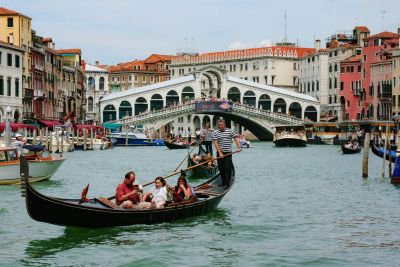
In the case of Venice, a representative tourist city of Italy, it faced a backlash after the COVID-19 pandemic due to so-called 'revenge tourism.' The number of tourists surged as people who had been unable to travel sought to make up for lost time.
As tourists exceeded the city's capacity, Venice residents suffered from soaring housing prices, living costs, and noise. Unable to endure this, residents moved away, and the population within Venice's historic district, which was over 130,000 in 1961, has now dropped to less than 50,000.
Because of this, 1,200 local governments in Italy impose a tourism tax of 1 to 5 euros per person when domestic and foreign tourists stay in hotels or guesthouses. The tourism tax revenue they earned last year reached 775 million euros (approximately 1.1457 trillion KRW). Last year, after the government allowed the most popular travel destinations to raise the tourism tax up to 10 euros (about 14,783 KRW), revenues increased significantly.
This time, the Ministry of Tourism is reportedly considering raising the tourism tax to 5 euros (about 7,400 KRW) per night for rooms under 100 euros (about 148,000 KRW) and up to 25 euros (about 37,000 KRW) for rooms priced at 750 euros (about 1.11 million KRW) or more.
FT also reported that the Italian government is actively in favor of raising the tourism tax. According to the International Monetary Fund (IMF), Italy's debt is expected to reach 140% of its gross domestic product (GDP) this year.
However, the tourism industry is concerned about the side effects of the tourism tax increase. A hotel industry official pointed out, "Raising the tourism tax could discourage travelers and cause losses."
Meanwhile, Venice is not the only place suffering from overtourism. The Swiss Alps, Tokyo in Japan, and others are also showing movements to impose various taxes to limit tourists.
Domestically, Jeju Island, Bukchon Hanok Village and Itaewon in Seoul, and Jeonju Hanok Village are representative places experiencing overtourism. Jeju Island faced controversy after proposing an environmental conservation fee called the 'entry tax' due to a significant increase in waste disposal costs caused by tourists.
© The Asia Business Daily(www.asiae.co.kr). All rights reserved.












