Indication of Additional Interest Rate Hike
"Market Still Unstable... Monitoring for the Time Being"
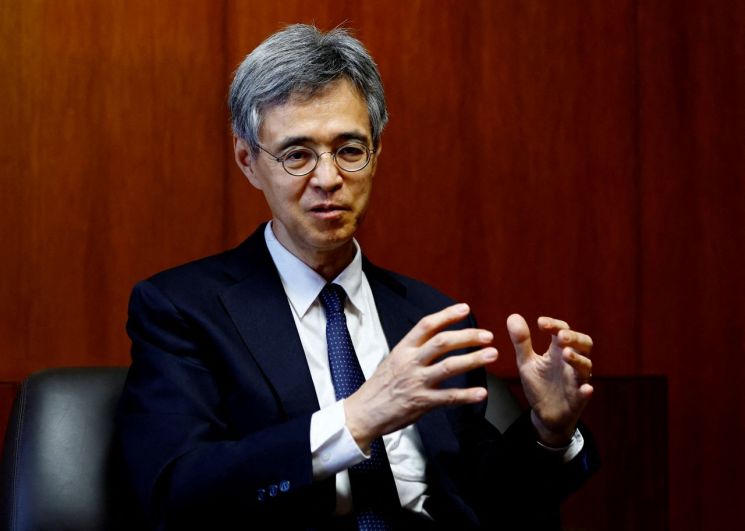
Himino Ryozo, Deputy Governor of the Bank of Japan (BOJ), hinted at the possibility of additional interest rate hikes, stating, "If the likelihood of achieving the economic and price outlook increases, we will adjust the degree of monetary easing."
According to the Nihon Keizai Shimbun (Nikkei) and other sources on the 28th, Deputy Governor Himino made these remarks during a financial and economic briefing held in Kofu City, Yamanashi Prefecture. Foreign media, including Bloomberg News, interpreted this as a message that further interest rate hikes could follow.
However, Deputy Governor Himino also confirmed that the timing of additional rate hikes is not imminent. He said, "The financial and capital markets remain unstable, and we will closely monitor these trends with very high vigilance for the time being." This aligns with the remarks made by Governor Ueda Kazuo on the 23rd when he appeared before the House of Representatives, stating, "The financial markets are still unstable," and "We intend to watch with very high vigilance."
After the BOJ raised rates again at the end of July, global stock markets plunged earlier this month amid large-scale unwinding of yen carry trades and growing concerns about a U.S. economic recession. The Nikkei 225, Japan's leading stock index, experienced significant volatility, plunging 4,451 points on the 5th before rebounding 3,217 points the following day, the 6th.
Regarding the 2% price stability target, Deputy Governor Himino assessed, "From around next year, we may finally be able to realize the long-standing target we have aimed for."
He also drew a line on the policy approach of setting a neutral interest rate and conducting rate hikes based on it, saying, "I do not think so." He explained that the results vary depending on the method of estimating the neutral rate, and since Japan's short-term interest rates have been near zero for the past 30 years, caution is needed when using this data to determine future paths. He added, "It is necessary to draw the path without thinking mechanically."
Regarding the recent yen appreciation and stock price decline, he said, "Generally, when the yen depreciation is corrected, the risk of price increases due to import prices decreases, which can positively affect household consumption prospects," but also noted, "Yen appreciation may impact inbound demand, and stock price declines may affect consumption of high-priced products."
At around 2:20 p.m. that day, the dollar-yen exchange rate was moving around 144 yen per dollar.
© The Asia Business Daily(www.asiae.co.kr). All rights reserved.












