'Gangnam 3 Districts and Mayongsung' Lead Price Increases
Seongdong-gu Apartment Prices Rise Most in 11 Years
Seoul Jeonse Prices Increase for 65 Consecutive Weeks
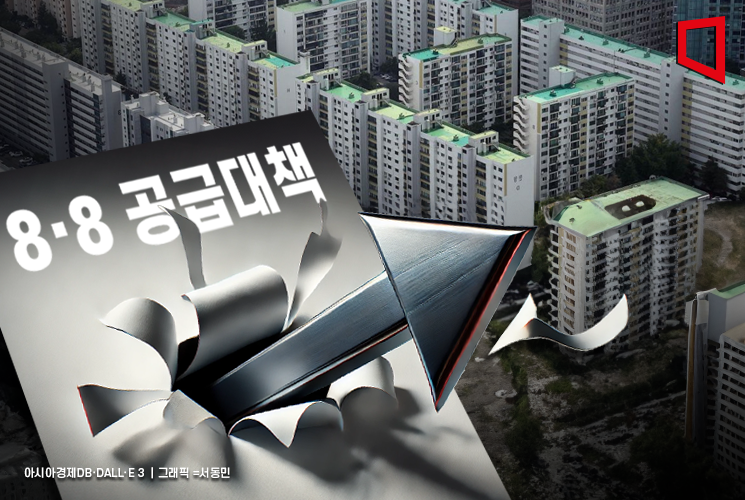
Although the government announced the 8·8 Supply Plan, which includes a large-scale housing supply strategy, apartment prices in Seoul continued to rise for the 21st consecutive week. Apartment prices in Seongdong-gu, one of the major areas with rising housing prices this year, showed the largest increase in nearly 10 years and 11 months. Despite the government's announcement last week to expand housing supply, concerns about supply in the market remain. It is expected that the upward trend in housing prices will continue for the time being.
Seoul Housing Prices Rise Further
According to the 'Weekly Apartment Price Trends for the Second Week of August (as of the 12th)' released by the Korea Real Estate Board on the 16th, apartment prices in Seoul rose by 0.32% this week compared to the previous week. This is the largest increase in about 5 years and 11 months since the second week of September 2018 (0.45%). The second week of August is typically a low season due to summer vacations, and it was shortly after the government announced the '8·8 Housing Supply Expansion Plan,' yet the upward trend in housing prices did not subside.
The Korea Real Estate Board explained, "The high level of transaction volume compared to the beginning of the year supports the rise in apartment sale prices," adding, "Prices of listings in preferred complexes are rising, and the continued chasing buying demand has increased the rate of price growth."
The Gangnam 3 districts and Mayongseong (Mapo, Yongsan, Seongdong-gu) led the rise in Seoul apartment prices. Apartment prices in Seongdong-gu (0.63%) showed the largest increase. For example, an 84㎡ (11th floor) unit in Geumho Daewoo Apartment in Geumho-dong, Seongdong-gu, was sold for 1.14 billion KRW in March, but a unit of the same size (15th floor) changed hands for 1.445 billion KRW last month. This represents an increase of about 300 million KRW in just over four months.
The Gangnam 3 districts?Songpa-gu (0.58%), Seocho-gu (0.57%), and Gangnam-gu (0.46%)?also showed high rates of increase. Gwangjin-gu (0.45%), Dongjak-gu (0.41%), Mapo-gu (0.39%), Gangdong-gu (0.37%), Yongsan-gu (0.36%), and Yeongdeungpo-gu (0.36%) also recorded increases above the Seoul average. This week, the apartment price increase in the metropolitan area also grew from 0.16% to 0.18%.
In contrast, apartment prices in provincial areas maintained a decline of -0.02%. Areas with many unsold units such as Daegu (-0.11%), Jeju (-0.06%), Gwangju (-0.05%), and Busan (-0.03%) saw decreases. The nationwide weekly apartment price increase rate was recorded at 0.08% this week.
In the jeonse (long-term lease) market, Seoul apartment jeonse prices continued to rise for the 65th consecutive week. The rate of increase grew from 0.17% last week to 0.19% this week.
However, unlike last week when jeonse prices rose across all 25 districts of Seoul, this week saw a 0.06% drop in jeonse prices in Gangdong-gu compared to the previous week. The metropolitan area's jeonse price increase rate remained steady at 0.14%.
Jeonse prices in provincial areas recorded a 0.0% change, marking a stabilization after 12 weeks since the fourth week of May.
The Korea Real Estate Board stated, "Jeonse price increases continue due to a shortage of listings mainly in newly built complexes with high residential preference and good living conditions," adding, "The continued demand for jeonse waiting also expanded the overall rate of increase in Seoul."
"Prices Will Rise Further for the Time Being"
Experts predict that the upward trend in housing prices will continue. Ji-yeon Kim, Senior Researcher at Real Estate R114, said, "While deregulation of redevelopment and the lifting of the Greenbelt may have a demand dispersion effect, these are matters to be considered in the long term." She added, "Visible effects of government policies are expected to appear in non-apartment sectors in the short term." She further predicted, "Since the shortage of apartment supply in Seoul remains, prices will continue to rise for some time."
Won-gap Park, Chief Real Estate Specialist at KB Kookmin Bank, said, "From today, interest rates on Didimdol and Beotimok loans have increased, and from next month, the second stage of the Debt Service Ratio (DSR) stress test will be implemented," adding, "As a result, Seoul housing prices will maintain their upward trend, but the rate of increase will not be as large as it is now."
He emphasized, "While it is important for the government to introduce supply measures to stabilize housing prices, demand suppression measures should also be implemented simultaneously," adding, "Considering that 25% of apartment transactions in Seoul last year were made by non-residents, expanding land transaction permission zones would help stabilize housing prices."
When designated as a land transaction permission zone, approval from the local government head is required to trade land. For apartments, a real residence requirement is imposed, making it difficult for outsiders to invest. As demand decreases, the upward trend in housing prices may also ease.
© The Asia Business Daily(www.asiae.co.kr). All rights reserved.












