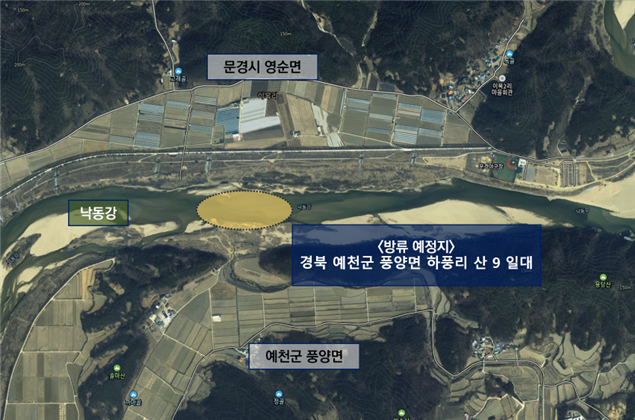
The Release Site is Hapung-ri, Gyeongbuk, along the Nakdong River
"Restoration of White Spotted Char through Population Reinforcement Method"
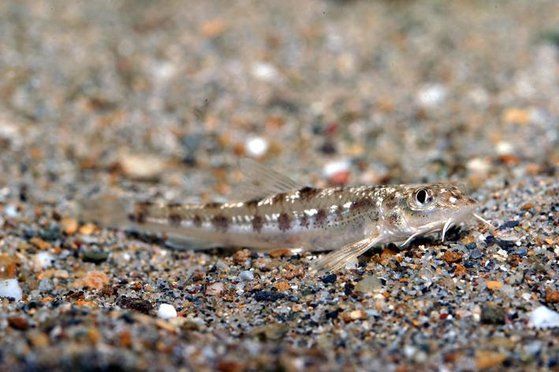 The white-spotted barb, an endemic species of Korea and a first-class endangered wild animal. Photo by Ministry of Environment
The government will release 1,000 native freshwater fish called ‘Huinsumaja,’ which have been driven to the brink of extinction due to reckless development and the Four Major Rivers Project.
According to a comprehensive report by Asia Economy on the 8th, the National Institute of Ecology has decided to artificially release Huinsumaja in the Nakdong River area around Hapung-ri, Pungyang-myeon, Yecheon-gun, Gyeongbuk Province. This artificial release is the first in four years since 5,000 Huinsumaja were released into the Nakdong River in 2020. On the 28th of last month, 200 individuals were already released on a trial basis, and considering rainfall conditions, an additional 800 individuals are planned to be released on the 17th.
Huinsumaja belong to the carp family and are a native species of Korea, classified as a first-class endangered wild animal. When first discovered, they were believed to inhabit only the Nakdong River, but they have also been observed in the Imjin River, Han River, and Geum River. It is known that they inhabit areas where three conditions are met: shallow riffles with a depth of 10 to 50 cm, flat areas covered with fine sand, and clean water.
Huinsumaja populations are declining due to habitat destruction caused by environmental pollution and reckless development. In particular, they were severely affected by the Four Major Rivers Project, which began in 2010. The National Institute of Ecology’s Endangered Species Restoration Center released a research report on Huinsumaja last December, stating, “The flow velocity of the Nakdong River has slowed due to eight large weirs constructed on the main stream as part of the Four Major Rivers Project,” and “the accumulation of sediment on the riverbed is acting as a negative factor for the habitat of Huinsumaja, a sand-burrowing fish.”
Since 2021 until last month, the National Institute of Ecology has been collaborating with the Biodiversity Research Institute to breed Huinsumaja for restoration purposes. The parent fish used to breed the 1,000 Huinsumaja were captured from Namgang River in Yongbong-ri, Jinju-si, Gyeongnam Province. Although the habitat and release sites differ, the National Institute of Ecology judged there is no problem as genetic diversity analysis confirmed they belong to the same population.
Monitoring will begin after the release. The Huinsumaja released into the Nakdong River are implanted with individual identification devices (PIT tags). Monitoring will be conducted three times during the first month after release, once a month for the following two months, and then quarterly thereafter. The main focus will be on growth, size changes, health status, and feeding behavior.
The National Institute of Ecology plans to continue restoring Huinsumaja through a ‘population reinforcement’ method by releasing artificially bred individuals. The institute stated, “Although the planned site has confirmed Huinsumaja habitats, their appearance frequency is not high,” and “since the population is also not large, continuous releases are deemed necessary to improve the success rate of restoration.”
© The Asia Business Daily(www.asiae.co.kr). All rights reserved.













