The Indonesian government is considering imposing tariffs of up to 200% on certain Chinese products, while China has responded by saying it will have "little impact" and is managing its public stance.
On the 7th, China's state-run Global Times (GT) cited experts saying that even if the Indonesian government imposes tariffs around 200% on Chinese products, it would have little effect on trade relations between the two countries. This is because the tariff-imposed items do not constitute a large proportion of the total export value.
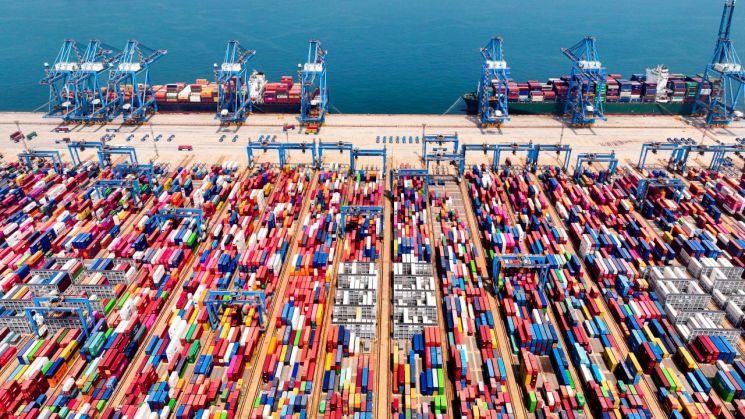
According to the Huajing Industrial Research Institute, China's total exports to Indonesia last year amounted to $65.2 billion (approximately 89.9368 trillion KRW), a 7.3% decrease compared to the previous year. GT evaluated that the export values of tariff-targeted items such as clothing, footwear, and toys were $2.5 billion, $1 billion, and $500 million respectively, accounting for only 7% of the total export value.
Zhao Gancheng, a researcher at the Shanghai Institute of International Studies, explained, "Although the tariff issue is receiving attention, considering the high complementarity of bilateral trade, it will not have a significant impact on overall trade relations," adding, "The impact on economic relations will also be minimal." Zhao further noted, "China is Indonesia's largest trading partner," emphasizing, "China accounts for more than 25% of Indonesia's trade, which is three times that of the second largest trading partners, Japan and the United States."
Indonesia has raised its export target to China this year to between $65 billion and $70 billion. Zhao stressed, "Trade between the two countries benefits from tariff reductions and exemptions through RCEP," and added, "Bilateral trade will continue to increase."
This comes amid efforts to strengthen market access to third countries such as Indonesia, as export routes have been restricted due to the recent US-China trade war and the European Union's (EU) involvement. Earlier, on the 4th, the EU Commission announced that, based on the results of an anti-subsidy investigation, provisional countervailing duty rates on Chinese electric vehicles would be set between 17.4% and 37.6%. The final tariff rates will be significantly increased to between 27.5% and 47.6%, applied in addition to the existing 10%.
© The Asia Business Daily(www.asiae.co.kr). All rights reserved.












