Bank of Korea '2024 Q1 Financial Flow (Provisional)'
Household Surplus Funds Increase by 47.8 Trillion Won... Expanded Financial Asset Management in Deposits and Bonds
Government Achieves Record High Net Fund Procurement through Rapid Fiscal Execution
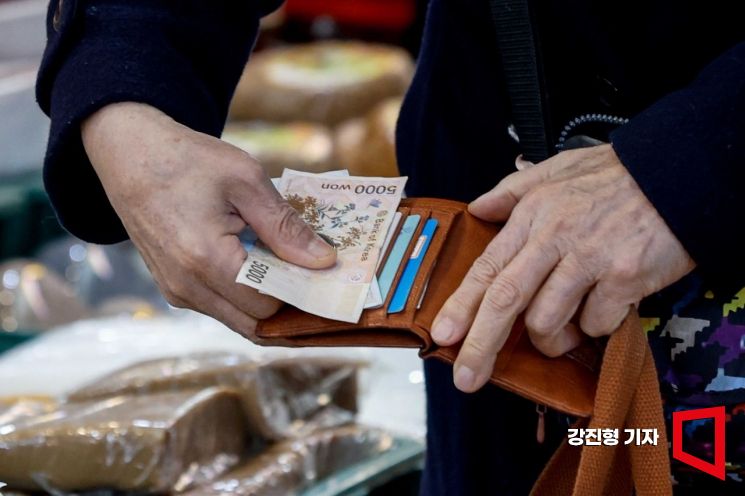
In the first quarter, South Korean households' surplus funds increased by 47.8 trillion won. Although household expenditures grew more than income, this was due to reduced investments in major tangible assets such as apartments and buildings. The amount of funds managed by households reached the highest level since the second quarter of 2022. The government's net fund procurement reached a record high due to rapid fiscal execution at the beginning of the year.
According to the "2024 Q1 Financial Flow (Preliminary)" statistics released by the Bank of Korea on the 4th, the net fund management scale of households and non-profit organizations in the first quarter of this year was 77.6 trillion won, an increase of 47.8 trillion won from the previous quarter (29.8 trillion won). Net fund management is calculated by subtracting financial liabilities transactions (fund procurement) from financial assets transactions (fund management), and can be interpreted as surplus funds of economic agents.
Households' fund management amount was 79 trillion won, marking the highest level since the second quarter of 2022 (82.8 trillion won). As surplus funds increased, the scale of management expanded across most financial products such as deposits, equity securities, and bonds. In particular, deposits at financial institutions surged to 58.6 trillion won from 18.4 trillion won in the previous month, influenced by year-end bonus inflows. Bonds also increased to 12.4 trillion won from 7.3 trillion won in the previous month due to growing expectations of interest rate cuts.
On the other hand, fund procurement amounted to 1.4 trillion won, down from 9.2 trillion won in the previous quarter. This was influenced by the government's household debt total volume management policy, a decrease in housing transactions, and a reduction in procurement scale due to year-beginning bonus inflows.
Jinwoo Jeong, head of the Financial Flow Team at the Bank of Korea's Economic Statistics Bureau, explained, "Generally, households tend to increase financial assets by using the money left after subtracting expenditures from income as surplus funds. Although the growth of household surplus funds itself is slowing, due to stagnant apartment prices, new apartment supply and net acquisition of buildings have decreased, resulting in an overall increase in surplus funds."
The general government shifted from net fund management to net procurement by promoting rapid fiscal execution at the beginning of the year to improve the perceived economic conditions, recording a record-high net fund procurement of 50.5 trillion won. In January, the government announced at the Emergency Economic Ministers' Meeting that it would push for the highest level of rapid fiscal execution in the first half of the year, significantly increasing the scale of fund procurement.
The government's fund procurement amounted to 78.8 trillion won, a significant increase from -26.9 trillion won in the previous quarter. This was due to a sharp rise in government bond issuance to 40.3 trillion won from -19.6 trillion won in the previous quarter, and an increase in borrowings from financial institutions to 29.2 trillion won from 5.1 trillion won in the previous quarter.
The government's fund management amount increased to 28.3 trillion won from -18.3 trillion won in the previous quarter. This was mainly due to a shift to net acquisition centered on deposits at financial institutions (12 trillion won) and government loans (8.4 trillion won).
The net fund procurement scale of non-financial corporations (general companies) was 1.6 trillion won, with a reduced decline compared to 6.9 trillion won in the previous quarter. This was due to increased net income and reduced investment in tangible and intangible assets.
Corporate fund procurement was 29.9 trillion won, slightly down from 31.3 trillion won in the previous quarter. Although bond issuance conditions improved due to expectations of domestic and foreign policy interest rate cuts, trade credit decreased due to domestic and international uncertainties.
Conversely, fund management increased slightly to 28.4 trillion won from 24.4 trillion won in the previous quarter. Despite a reduction in trade credit, deposits at financial institutions increased and bonds shifted to net acquisition.
© The Asia Business Daily(www.asiae.co.kr). All rights reserved.

![Clutching a Stolen Dior Bag, Saying "I Hate Being Poor but Real"... The Grotesque Con of a "Human Knockoff" [Slate]](https://cwcontent.asiae.co.kr/asiaresize/183/2026021902243444107_1771435474.jpg)














