Financial Supervisory Service Discloses Major Complaints on Debt Collection Cases
Self-employed individual Mr. Yoo recently faced debt collection from a credit information company due to long-term overdue mobile phone charges. Mr. Yoo filed a complaint with the financial authorities, claiming the debt collection was unfair. He argued that mobile phone usage is a contract with a telecommunications company and is unrelated to financial transactions such as loans.
However, the financial authorities deemed the debt collection legitimate. This is because the debts that a debt collection company can collect on behalf of the creditor include not only loans but also mobile phone charges arising from commercial transactions.
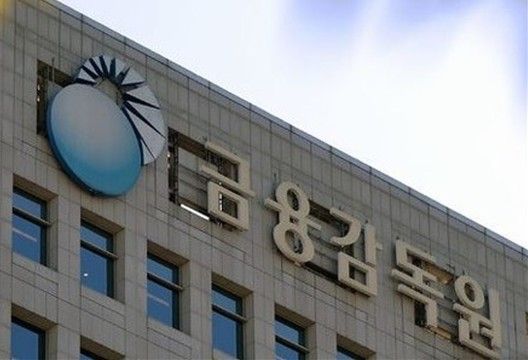
On the 27th, the Financial Supervisory Service disclosed major complaint cases arising during the debt collection process and consumer precautions.
If you receive debt collection demands from a company with which you have no financial transactions, you should verify whether the creditor has authorized the debt collection. Mr. Kim, a self-employed individual, is currently overdue on his car installment payments due to financial difficulties. He filed a complaint, arguing that it is unfair for a credit information company, not the financial institution (creditor) that issued the loan, to conduct the debt collection.
Debt collection companies licensed to operate are allowed to collect debts from debtors (complainants) if authorized by the creditor. Additionally, when non-performing loan claims of financial institutions are sold, the assignee (the new creditor) may directly conduct debt collection. When debt assignment occurs, you can check the debt transfer information registered with the Credit Information Center through CreditForU, a credit information inquiry site operated by the Korea Federation of Banks. If you suspect financial fraud such as impersonation of a financial institution (voice phishing, etc.), you should refer to this information to confirm whether the creditor has authorized the debt collection.
For repayment demands on loans that have not been subject to debt collection for a long time, you should verify whether the statute of limitations has expired before repayment. Mr. Lee took out several unsecured loans from multiple lending companies about 10 years ago. Having had no contact for a long time, he recently received debt collection on some forgotten loans and filed a complaint asking whether the repayment request is legitimate.
Long-term unpaid debts are not subject to repayment obligations once the statute of limitations is complete. However, even if the statute of limitations has expired, partial repayment (acknowledgment) can revive the statute of limitations. When partial repayment is induced on the condition of debt reduction, it is essential to verify whether the statute of limitations has expired. If you have received illegal debt collection or loans exceeding the legal maximum interest rate from unregistered lenders, you should actively use relief programs such as the “Debtor Representative Free Support Project.”
If the economic situation is difficult and you cannot repay your debts normally with your current income, you can use debt adjustment programs. Pre-default debt adjustment (Quick Debt Adjustment) is available if the overdue period is 30 days or less, allowing for interest reduction and extension of the repayment period. Interest rate debt adjustment (Pre-Workout) applies if the overdue period is between 31 and 89 days, allowing for extension of the repayment period with long-term equal principal and interest payments. Debt adjustment (Individual Workout) applies if the overdue period is 90 days or more, allowing for reduction of interest and principal. If you have no income, a high debt-to-income ratio, and many personal debts outside financial institutions, you may apply for personal rehabilitation or bankruptcy through the court, which adjusts or discharges total debts.
© The Asia Business Daily(www.asiae.co.kr). All rights reserved.












