Biden Administration Significantly Raises China Tariffs Ahead of November Election
NYT: "Trade War Expansion Reflects Concerns Over Trump"
The Biden administration in the United States plans to raise tariffs on Chinese electric vehicles (EVs) from the current 25% to 100% ahead of the November presidential election. In addition, tariffs on Chinese batteries, semiconductors, and solar cells will also be significantly increased. This move reemphasizes the "America First" policy aimed at protecting the U.S. manufacturing base and winning the support of workers ahead of the election.
On the 14th (local time), the White House announced that President Joe Biden instructed the U.S. Trade Representative (USTR) to increase these tariffs under Section 301 of the Trade Act in response to China's unfair trade practices and the resulting harm. The tariff hike targets $18 billion (24.651 trillion KRW) worth of Chinese imports annually.
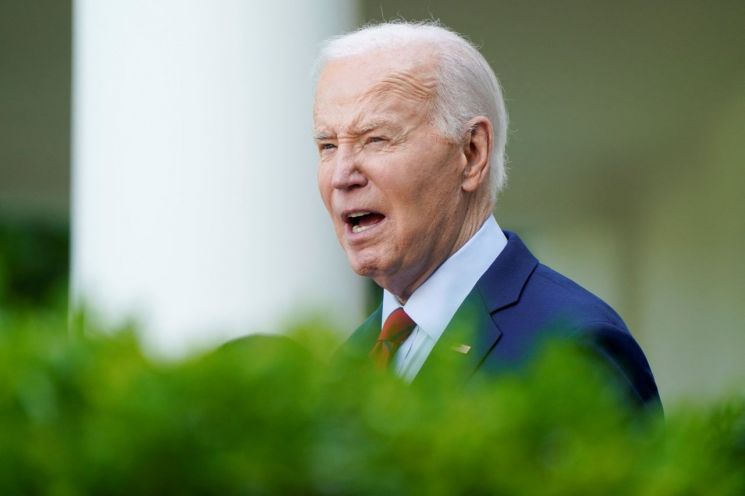
First, the U.S. will quadruple tariffs on Chinese EVs from the existing 25% to 100%. The New York Times (NYT) explained that this is intended to help the U.S. transition to a clean energy society and to protect the American automotive industry that receives federal subsidies. Currently, the Biden administration is focusing on allocating subsidies to create middle-class jobs and to win votes in regions where EV factories are located.
In a press release, the White House criticized, "Chinese electric vehicle exports increased by 70% from 2022 to 2023 amid extensive subsidies and non-market practices that lead to significant overproduction risks, threatening productive investments elsewhere."
Additionally, tariffs on lithium-ion EV batteries and battery components will be raised from 7.5% to 25% within this year. Core minerals, excluding natural graphite and permanent magnets, will see tariffs sharply increased from 0% to 25% this year.
Furthermore, tariffs on lithium-ion non-EV batteries, natural graphite, and permanent magnets will be raised from 7.5% to 25% by 2026. The White House explained the inevitability of these tariff hikes, stating, "China's concentration of core mineral mining and refining capabilities makes the U.S. supply chain vulnerable and jeopardizes national security and clean energy goals."
The U.S. government also plans to raise tariffs on Chinese semiconductors from the current 25% to 50% by 2025. Referring to domestic investments under the CHIPS Act, the White House added, "Increasing semiconductor tariffs is an important initial step to promote the sustainability of investments." Tariffs on solar cells will be uniformly increased from 25% to 50% this year, regardless of whether the solar cell modules are assembled in the U.S. or not.
The cited Section 301 of the U.S. Trade Act authorizes the president to take necessary actions against unfair trade practices that may negatively affect U.S. trade and investment. Former President Trump originally used this provision to impose high tariffs on Chinese products during his term. Trump has pledged to impose additional tariffs on China if he wins re-election in this election. The Biden administration’s sudden move to raise tariffs is believed to be related to this context.
The NYT noted, "President Biden initially promised to remove some of the tariffs imposed by the Trump administration, but now he is appealing to swing voters with a tough stance on China," adding, "The recent escalation in the trade war shows that he is unwilling to concede anything to his competitor (former President Trump)."
© The Asia Business Daily(www.asiae.co.kr). All rights reserved.












