The world's largest chemical company, ChemChina, originally formed from China National Chemical Corporation (ChemChina), is under investigation by Chinese authorities amid corruption allegations involving its former executives.
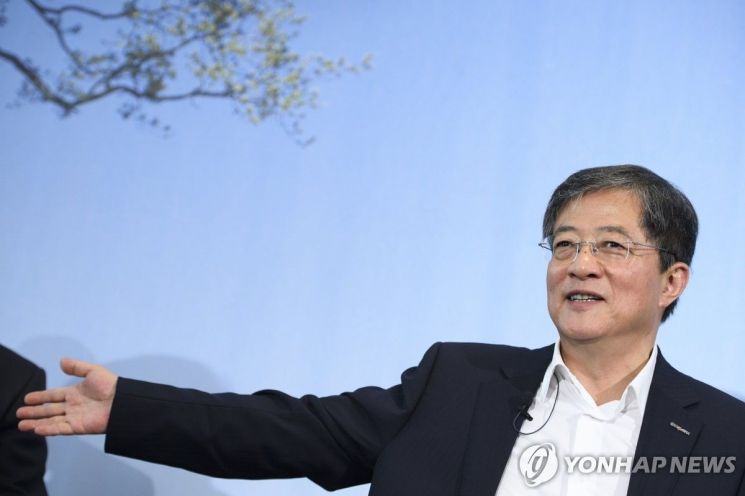
On the 12th, according to Chinese economic media Caixin, the Central Commission for Discipline Inspection of the Communist Party of China and the National Supervisory Commission announced that they are investigating former ChemChina Chairman Ren Jianshen and former CEO Yang Xingchang for serious violations of discipline and laws.
Previously, Ren Jianshen served as the secretary of the Communist Youth League at the Chemical Machinery Research Institute of the Ministry of Chemical Industry of the central government in 1984. Later, he borrowed 10,000 yuan (approximately 1.9 million KRW) from the institute to purchase a patent for chemical cleaning technology. Based on this, he founded the private enterprise 'Lansing Cleaning Group' (Bluestar), and in 1995, he listed Lansing Group on the stock market.
Ren Jianshen created ChemChina, a large state-owned enterprise, in 2004 by acquiring about 100 state-owned companies facing financial difficulties and served as its CEO. After the board of directors was formed in 2014, he became chairman. His friendship with Gu Shulian, who served as Minister of the Ministry of Chemical Industry of China for nine years from 1989, is also known to have influenced this growth trajectory.
He was also active in overseas mergers and acquisitions (M&A). In 2017, ChemChina acquired Syngenta, a Swiss agricultural biotechnology company famous for pesticides and genetically modified organism (GMO) seed technology, for $43 billion (approximately 59 trillion KRW), which was the largest overseas corporate acquisition by China at the time.
The problem was debt. At the time of the Syngenta acquisition, ChemChina's total assets were 370 billion yuan (approximately 70 trillion KRW), but its debt exceeded 300 billion yuan (approximately 57 trillion KRW). After Ren Jianshen retired in 2018, the merger of ChemChina and Sinochem created the world's largest chemical company, but the debt ratios of affiliated companies Syngenta, China National Agrochemical Corporation (CNAC), and ChemChina reached 53%, 72.2%, and 83.9%, respectively, as of the end of 2022.
Syngenta, which returned to losses last year, withdrew its application for listing on the STAR Market (Shanghai Stock Exchange's venture enterprise market) and also withdrew its application for a main board initial public offering (IPO) worth 65 billion yuan in March. Notably, it is known that senior authorities were angered by ChemChina's tax evasion involving hundreds of billions of yuan related to petroleum products in 2021, which also affected Syngenta's listing process.
Caixin reported that ChemChina, which grew by absorbing several private oil companies before 2010, faced setbacks when the authorities began rectifying refined oil taxation in 2021, leading to management difficulties such as Syngenta missing its IPO timing.
© The Asia Business Daily(www.asiae.co.kr). All rights reserved.

![Clutching a Stolen Dior Bag, Saying "I Hate Being Poor but Real"... The Grotesque Con of a "Human Knockoff" [Slate]](https://cwcontent.asiae.co.kr/asiaresize/183/2026021902243444107_1771435474.jpg)














