Royal Ceremony Honoring the God of Sericulture in the Joseon Dynasty
Seongbuk-gu Mayor Lee Seung-ro Serves as Chief Ritual Officer
Seongbuk-gu "Protecting Seonjamje and Seonjam Complex Cultural Heritage"
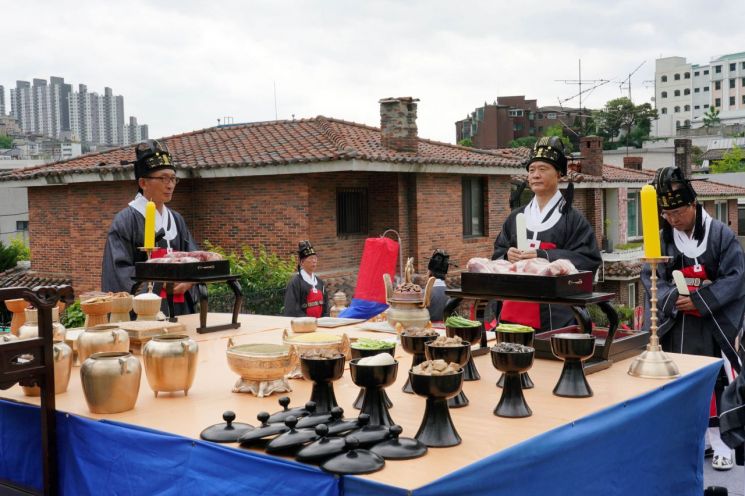 On the 11th of this month, the "28th Seonjamje Festival" was held in Seongbuk-gu, Seoul. Lee Seung-ro, the mayor of Seongbuk-gu, personally served as the chief ritual officer and conducted the ceremony, providing a rich spectacle. The mayor is seen performing a ritual in front of the pyebaek table. Photo by Seongbuk-gu Office.
Seongbuk-gu, Seoul (Mayor Lee Seung-ro) announced on the 11th that it held the ‘Seonjam Festival’ at the Seonjam Complex in Seongbuk-dong to pray for abundance and stability.
The Seonjam Festival was one of the royal rituals during the Joseon Dynasty, held annually to honor Seoreungssi, the god of sericulture, praying for the abundance of silkworm cultivation and the stability of the year. It was an important state ritual conducted on a scale next to the Jongmyo Daeje and Sajik Daeje. The festival began during the Goryeo period but was interrupted during the Japanese colonial era. It was revived in 1993 and is now celebrating its 28th edition this year.
This year’s Seonjam Festival was hosted by Seongbuk-gu Office, organized by the Seongbuk Seonjam Museum, and the ritual was jointly performed by the Seonjam Festival Preservation Committee and the Jongmyo Ritual Preservation Society. Starting at 10 a.m., a procession of ritual officials took place at the Seongbukcheon Fountain Square, followed by the ritual ceremony at the Seonjam Complex from 10:30 a.m.
The ceremony began with the Jeonpaerye, which involves offering a farewell ritual and a written prayer. Mayor Lee Seung-ro served as the primary officiant (Chohun-gwan) and performed the Chohunrye, the first offering of wine. This was followed by the Ahunrye and Jonghunrye ceremonies, concluding with the Cheolbyeondu and Mangyeui processes.
Mayor Lee Seung-ro said, “The Seonjam Festival, a proud cultural heritage of Seongbuk-gu, is a ritual that combines music, song, and dance, and it holds great significance as an important state ritual of the Joseon Dynasty. We will continue to hold the Seonjam Festival annually to reflect on its historical value and strive to preserve and pass it on.”
Meanwhile, Seongbuk-gu has built the Seongbuk Seonjam Museum to protect the Seonjam Festival and Seonjam Complex as cultural heritage passed down with the residents. Through the Cultural Heritage Administration’s ‘Future Intangible Heritage Discovery and Promotion’ project, efforts are underway to register the Seonjam Festival as an intangible cultural heritage.
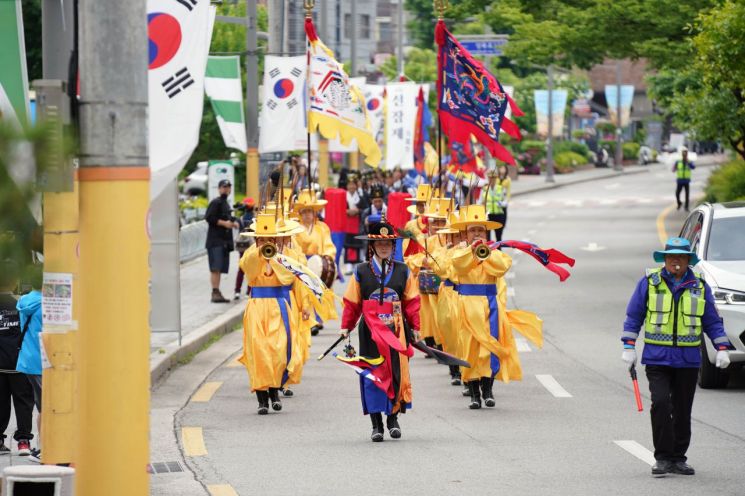 A ceremonial procession led by a traditional military band proceeded from Hansung University Entrance Station Fountain Square to Seonjam Danji (approximately 900m). The traditional military band leading the ceremonial procession. Provided by Seongbuk District Office.
© The Asia Business Daily(www.asiae.co.kr). All rights reserved.













