WMO Releases Climate Status Report
Asia Experiences More Severe Changes Than Global Average
The rate of climate change in Asia has been found to be faster than in other regions of the world. Consequently, the rise in sea surface temperatures has also reached record highs.
On the 23rd (local time), the World Meteorological Organization (WMO) announced these research findings through the "Asia Climate Status Report." According to the WMO, last year’s average annual surface temperature in Asia was 0.91℃ higher than the 1991?2020 average.
Compared to the average temperature from approximately 30 years between 1961 and 1990, the increase is 1.87℃, which is twice as large. This indicates that the temperature on the Asian continent has risen sharply.
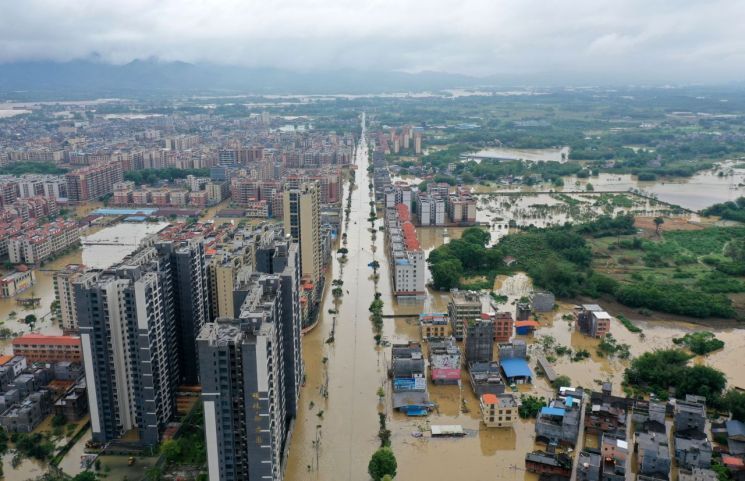
In particular, the WMO pointed out that "last year’s average annual surface temperature in Asia was the second highest on record." This means that the warming rate in Asia is faster than the global average. It also added, "Asia is the region where the greatest damage from climate-related disasters occurs."
As temperatures rose rapidly, sea surface temperatures also reached record highs. According to the report, the average annual sea surface temperature of the Northwest Pacific, closely connected to the Asian region, was the warmest on record last year. The temperatures in seas near the Asian continent, such as the Kuroshio Current, the Arabian Sea, the southern Barents Sea, and the southern Kara Sea, are rising at a rate three times faster than the global average.
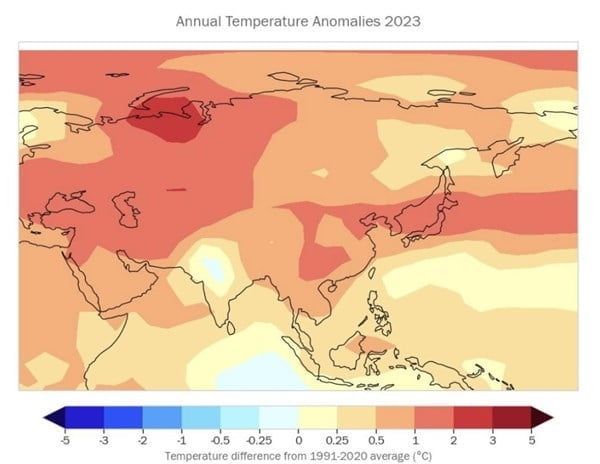 Warming status in the Asian region observed by the World Meteorological Organization (WMO) last year [Image source=WMO]
As sea surface temperatures increase, glacier loss accelerates. Consequently, sea levels inevitably rise further. Especially in the eastern Himalayas and the Tianshan Mountains of Central Asia, abnormal high-temperature phenomena have caused most glaciers to lose ice mass.
Rapid warming leads to floods and droughts. The WMO reported that "79 natural disasters caused by floods and droughts were recorded in Asia last year, with over 80% related to floods and storms," and "more than 2,000 people died, and 9 million people suffered direct damage."
It also stated, "Among WMO member countries in Asia, 80% provide climate services to prevent natural disasters, but less than half can manage risks according to regional characteristics," and recommended, "Investments must continue to ensure climate early warnings so that no country is left behind."
© The Asia Business Daily(www.asiae.co.kr). All rights reserved.













