Seoul Metropolitan Area Apartment Prices Remain Flat
Jeonse Prices Rise for 2 Consecutive Weeks
Ultra-High-End Apartments Set New Record Prices
Widening Price Gaps Expected Among Complexes
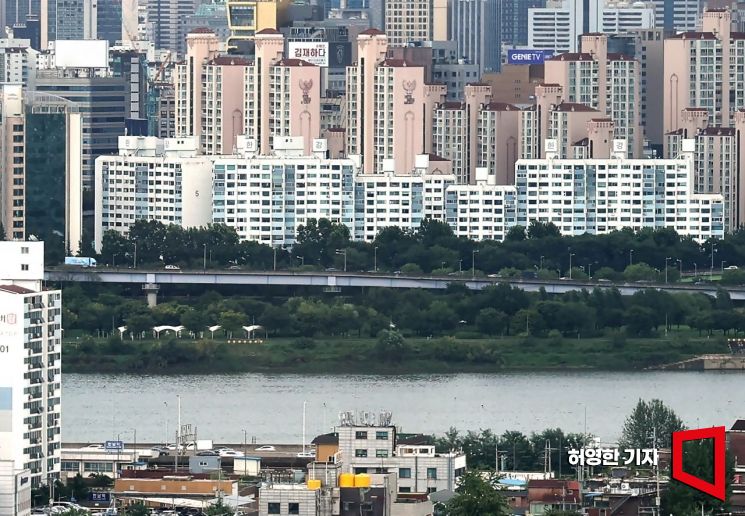
Seoul's jeonse prices rose by 0.03% compared to the previous week, marking the largest weekly increase since the first week of November last year.
According to Real Estate R114 on the 20th, among Seoul's autonomous districts, Nowon-gu, which saw the highest increase in jeonse prices last week (0.05% as of the 12th), continued its upward trend this week with rises ranging from at least 5 million to up to 35 million KRW in areas such as Wolgye-dong Grandville, Junggye-dong Jugong Complex 5, and Gongneung-dong Poonglim.
This trend is interpreted as a continued rise in jeonse prices due to high preference for small- to medium-sized apartments concentrated in mid- to low-priced areas, resulting in scarce listings.
Seoul apartment sale prices remained flat for the fifth consecutive week (0.00%). Both redevelopment and general apartments showed no significant price changes. New towns also recorded a flat rate (0.00%). Gyeonggi and Incheon have shown limited movement at a flat level for three months since the third week of January this year.
In Seoul, while the number of areas with price increases grew compared to the previous week, only one area experienced a decline. Prices rose mainly in large complexes with over 1,000 households, with individual areas increasing in the order of Seongdong (0.03%), Mapo (0.02%), Nowon (0.02%), Gangseo (0.02%), Seodaemun (0.01%), and Geumcheon (0.01%).
Gwanak fell by 0.05% as Sillim-dong Sillim Hyundai and others dropped between 5 million and 15 million KRW. New towns recorded flat prices (0.00%) across all areas, while in Gyeonggi and Incheon, Goyang (-0.02%), Siheung (-0.02%), Guri (-0.01%), and Hwaseong (-0.01%) declined, whereas Suwon (0.01%) and Incheon (0.01%) rose.
In the jeonse market, demand inquiries for small- to medium-sized units remain steady, with Seoul rising 0.03%, a larger increase than last week's 0.01%. New towns rose 0.01%, and Gyeonggi and Incheon also broke out of a three-week stagnation with a 0.01% increase.
Individual areas in Seoul that rose include Nowon (0.30%), Seongdong (0.06%), Gwanak (0.06%), Dongjak (0.04%), Gangseo (0.04%), Mapo (0.03%), Dobong (0.03%), Geumcheon (0.03%), and Guro (0.03%). In new towns, Dongtan rose 0.04%, while all other areas remained flat (0.00%).
In Gyeonggi and Incheon, individual areas that increased include Siheung (0.05%), Anyang (0.03%), Suwon (0.03%), Goyang (0.02%), Hwaseong (0.01%), Bucheon (0.01%), and Incheon (0.01%). Ansan (-0.03%) was the only area to decline.
A Real Estate R114 official explained, "Due to demand seeking to upgrade to higher-tier areas in Seoul by finding a smart single property, the highest prices are being renewed mainly in redevelopment project complexes and luxury apartments."
In February this year, Apgujeong Hyundai 1 and 2 were traded at 8 billion KRW (exclusive area 196㎡), recovering the highest price from two years ago. In March, Shin Hyundai (Hyundai 9, 11, 12 complexes) changed hands at 6.9 billion KRW (exclusive area 182㎡), about 800 million KRW higher than the previous transaction. Trimage in Seongsu-dong (exclusive area 136㎡) also joined the record-high price trend with a transaction at 5.7 billion KRW.
The official analyzed, "This contrasts with the average apartment price trend in Seoul, which shows a flat level of fluctuation within a box range due to continued buyer hesitation. The ultra-high-end apartment market is relatively less affected by the real estate market because the demand segment entering it has strong financial power."
He added, "Rather, when price trends slow down, demand considering future value appreciation may increase. As ultra-high-end high-end apartments show separate price movements, the polarization of housing prices within downtown Seoul is likely to intensify further."
© The Asia Business Daily(www.asiae.co.kr). All rights reserved.












