The Supreme Court has ruled that a woman in her 20s who followed her ex-boyfriend to his university three times and spoke to him cannot be punished for stalking.
The court reasoned that there was a possibility the woman approached him to reconcile, as they had exchanged multiple contacts before the incident day, and since there were no similar offenses committed on other days, it was difficult to view the acts as repetitive or continuous stalking behavior.
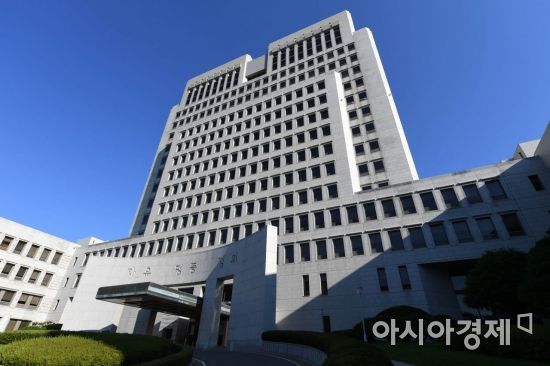
According to the legal community on the 26th, the Supreme Court's First Division (Presiding Justice No Tae-ak) upheld the lower court's acquittal of Ms. A, a woman in her 20s, who was charged with violating the Stalking Punishment Act.
Ms. A was indicted for following her ex-boyfriend Mr. B (24) three times and speaking to him at a university in Busan on December 1, 2022.
The two began dating in January 2022 and broke up around mid to late November of the same year. Although they broke up, they did not completely cut off contact, and Mr. B asked Ms. A to remain friends.
However, on November 30, 2022, Ms. A was asked by her ex-boyfriend Mr. B not to follow or contact him.
But on the next day, December 1, around 1:35 p.m., Ms. A went to a university in Busan where Mr. B was and approached him as he was avoiding her, walking around the 4th and 5th floors of Building C, speaking to him and following him.
Later that day, around 2:50 p.m., Ms. A again approached Mr. B as he moved from Building C to the 4th floor of Building D, where she worked, spoke to him, and followed him. When Mr. B entered his office, she waited in front of the office for about 10 minutes.
Also, at 5 p.m. that day, she waited in front of Mr. B's office and approached him as he was leaving, speaking to him and following him.
The prosecutor charged Ms. A with violating the Stalking Punishment Act for continuously or repeatedly approaching or following Mr. B without justifiable reason against his will, causing anxiety or fear.
The first trial court judged that Ms. A's stalking behavior was repetitive, sentenced her to a fine of 2 million won, and ordered her to complete 40 hours of a stalking treatment program.
During the trial, Ms. A and her lawyer argued that her attempts to talk to the victim, with whom she had been in a romantic relationship, after a dispute were not stalking behavior.
However, the court did not accept Ms. A's claim that the two were not completely separated at the time of the incident, based on text messages exchanged between them.
In particular, it was considered that on November 30, 2022, near midnight, Mr. B sent a text message to Ms. A saying, "Today, I felt very uncomfortable because I thought you were suspicious and following me behind my back. We have already broken up, and since we are no longer in a romantic relationship, I asked you to remain friends. I hope we can stay good friends. If you continue to obsess and be suspicious, it will be difficult for us to maintain even a friendship. I was very uncomfortable, and if this continues, I will block you." Also, regarding the incident day, Mr. B testified, "I expressed my refusal to Ms. A, but she kept following me and trying to talk to me, which was very scary and mentally exhausting."
However, the second trial court's judgment was different. The appellate court overturned the first trial's ruling and acquitted Ms. A.
The court first examined the conceptual elements required to recognize stalking crimes under the Stalking Punishment Act.
The court stated, "Article 2, Clause 1 of the Stalking Punishment Act defines stalking behavior as acts that cause anxiety or fear to the other party by approaching or following them without justifiable reason against their will. Clause 2 defines stalking crimes as continuously or repeatedly committing stalking behavior."
It further explained, "For acts to be considered 'repetitive,' there must be a close relationship among the stalking acts in terms of time and place proximity, similarity of methods, opportunity, and continuity of intent, so that the entire acts can be evaluated as a series of acts."
Additionally, the court added, "'Continuous' means that even a single stalking act can be considered continuous if it occurs over a considerable period at the same time and place."
Moreover, the court pointed out, "Since stalking behavior is defined somewhat broadly under the Stalking Punishment Act, which could lead to excessive application, it is necessary to carefully judge the applicability of the Act by considering various circumstances before and after the act, such as the relationship, status, temperament of the defendant and the victim, the circumstances leading to the act, the nature of the act, the behavior of the actor and the other party, and the surrounding situation, to determine whether the defendant's act objectively and generally causes sufficient anxiety or fear to the victim."
In other words, for stalking crimes to be established, there must be multiple stalking acts that can be viewed as a series of acts repeated over time, or if it is a single act, it must have been committed over a considerable period at the same time and place.
Based on this standard, the court judged, "It is difficult to conclude beyond reasonable doubt that the defendant's acts constitute stalking crimes punishable under the Stalking Punishment Act solely based on the evidence submitted by the prosecution."
The court cited as grounds for this judgment: ▲ The two had repeatedly broken up and reconciled due to personality issues even before the incident ▲ They continued to contact each other after breaking up, had meals together, and even showed physical affection in front of others, so people around them seemed unaware they had broken up ▲ On November 30, 2022, the day before the incident, they exchanged messages, and although Mr. B told Ms. A around 5 p.m. that he had a prior engagement, Ms. A misunderstood and thought Mr. B was suspiciously following her to the subway station, leading Mr. B to send a message around 11:13 p.m. ▲ Ms. A denied following Mr. B and then visited him the next day.
The court stated, "There is a possibility that Ms. A approached or followed Mr. B to talk for reconciliation or to justify her actions, so it cannot be said that the defendant had no justifiable reason."
Considering that Ms. A visited the university where Mr. B was on the incident day but did not continuously follow him and waited during class or work hours, the court found it difficult to see repetitive or continuous stalking behavior required for the crime.
The court concluded, "The defendant followed the victim during breaks between university classes, after classes ended when the victim moved to work, and when the victim finished work. There is no evidence that the defendant continuously approached or followed the victim during class or work hours. It is difficult to see these acts as continuous, and since the defendant followed the victim only three times on the incident day and there is no evidence of following the victim against their will otherwise (the defendant did not contact or message the victim after the victim reported to the police), it is also difficult to evaluate the entire acts as a series of repetitive acts."
Finally, the court judged it difficult to conclude that Mr. B felt anxiety or fear.
The court stated, "Although the victim claims to have felt anxiety or fear due to the defendant's acts as described in the indictment, there is no evidence that the defendant committed stalking acts causing anxiety or fear before this incident or threatened the victim. Rather, the victim contacted the defendant first and demanded an apology. Considering that the defendant followed the victim to talk for reconciliation or to justify her actions, it is difficult to evaluate that the defendant's acts caused sufficient anxiety or fear to the victim."
The prosecutor appealed, but the Supreme Court's judgment was the same.
Meanwhile, the Supreme Court Sentencing Commission (Chairman Lee Sang-won) at its 130th plenary meeting held the day before recommended that stalking crimes involving weapons be punishable by up to five years in prison without the option of fines, and that general stalking crimes be punishable by up to three years in prison, establishing and confirming sentencing guidelines for stalking crimes.
© The Asia Business Daily(www.asiae.co.kr). All rights reserved.












![The Special Connection Between the Statue of Martyr Lee Jun in Jangchungdan Park and Mayor Oh Sehoon ③ [Current Affairs Show]](https://cwcontent.asiae.co.kr/asiaresize/319/2026012110001599450_1768957215.jpg)