Power Grid Innovation Task Force Meeting
Implementation of Maintenance Schedule Adjustments and Demand Promotion Measures to Reduce Power Generation
As the lowest power demand in history is expected this spring, the government has decided to implement comprehensive measures such as adjusting maintenance schedules to reduce power generation and promoting demand stimulation policies. Despite these measures, output control will also be implemented if necessary to stabilize the grid.
On the 19th, the Ministry of Trade, Industry and Energy announced that it held a 'Power Grid Innovation Task Force (TF)' meeting chaired by Lee Ho-hyun, Director of the Energy Policy Office, and prepared special measures for power supply and demand this spring.
The ministry forecasted the lowest power demand this spring at 37.3GW, which is a record low compared to last spring's 39.5GW.
An official from the ministry explained, "Stable power grid operation starts with matching supply and demand, but recently, the difficulty of managing power supply and demand in Korea during spring and autumn has rapidly increased. This is because, compared to summer and winter, electricity usage decreases due to reduced heating and cooling equipment use in spring and autumn, while solar power generation is at its highest, intensifying supply-demand imbalance." In fact, the difference in power demand between clear and cloudy days last spring reached 11.1GW.
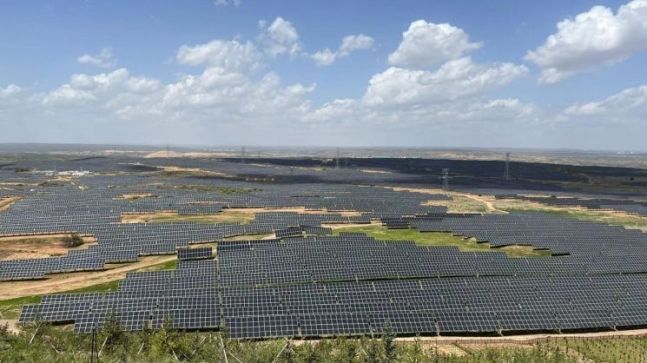
Accordingly, the power authorities have established a 2024 spring power grid stabilization plan and decided to extend the power supply and demand management period this spring (March 23 to June 2, a total of 72 days) by one week compared to last year. They plan to proactively implement power grid stabilization measures and, if unavoidable for grid stabilization, review and implement output control.
The pre-established stabilization measures include ▲adjusting major power plant maintenance schedules ▲minimizing coal complex operations considering fine dust reduction ▲minimizing operation of public institutions' private solar power ▲utilizing demand response (DR) resources. The ministry expects these measures to naturally reduce power supply and increase demand, thereby alleviating nationwide power supply-demand imbalances.
However, if grid instability worsens despite these measures, the cause of instability will be reviewed for effective response, and output control will be implemented. Output control will first target flexible power sources with relatively easy control and high fuel costs (coal and LNG), and if further output control is needed, all power sources including nuclear power, fuel cells, bioenergy, solar power, and wind power will participate in output control.
Director Lee said, "Through proactive measures, we were able to reduce the probability of output control occurrence in spring from 2.7% to 1.3% on a time basis," and added, "We ask for the cooperation of all power producers when unavoidable output control is implemented for grid stabilization." He further stated, "To respond more effectively to oversupply (low demand, high generation) in spring and autumn in the future, we will explore ways to utilize the power market during grid stabilization measures, such as opening a voluntary output control service market."
© The Asia Business Daily(www.asiae.co.kr). All rights reserved.












