The Supreme Court has ruled that fees received by a domestic corporation (a corporation established under domestic law and having its address in Korea) for providing payment guarantees to a Chinese corporation receiving a loan do not constitute 'interest income' under the Korea-China tax treaty but rather 'other income,' and therefore are not subject to the 'foreign tax credit.'
The ruling is based on the premise that since the taxation authority originally lies solely with Korea, the tax withheld at source in China cannot be credited domestically.
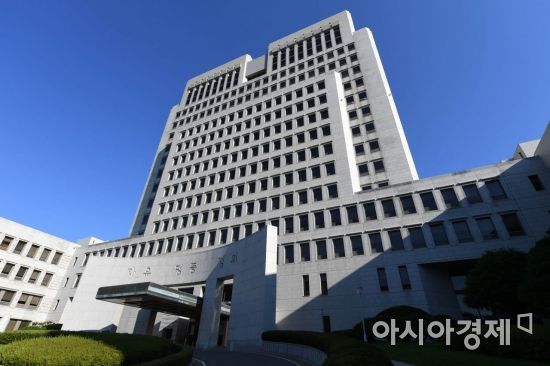
According to the legal community on the 3rd, the Supreme Court's Third Division (Presiding Justice Lee Heung-gu) overturned the lower court's ruling that had favored Hanwha Solutions in the appeal against the denial of correction by Namdaemun Tax Office and remanded the case to the Seoul High Court.
The court stated, "The payment guarantee fee in this case is merely compensation for the payment guarantee provided by the plaintiff and not compensation for the plaintiff itself providing funds, so it is reasonable to conclude that it does not fall under 'interest' as defined in Article 11 of the Korea-China tax treaty."
It continued, "In such cases, unless the payment guarantee fee falls under other income categories handled by other provisions, the taxation right lies solely with the resident country, Korea, according to Article 22, Paragraph 1 of the Korea-China tax treaty. Therefore, the withholding tax paid in China is not subject to the foreign tax credit under the Corporate Tax Act."
The court added, "Nevertheless, the lower court judged that the withholding tax in this case should be subject to the foreign tax credit under the Corporate Tax Act merely because it is difficult to find the withholding unreasonable. This judgment reflects a misunderstanding of the legal principles concerning foreign tax credits and a failure to conduct necessary investigations, which affected the verdict," explaining the reason for reversal and remand.
Hanwha Solutions received a payment guarantee fee of 1,067.1 million KRW in 2014 as compensation for providing a payment guarantee when its Chinese subsidiary, Hanwha Chemical Co., Ltd., took out a loan. Hanwha Chemical withheld and paid 106.71 million KRW in taxes to the Chinese government during this process.
This amount was calculated by applying a 10% withholding tax rate, considering it as 'interest income' under the "Agreement between the Government of the Republic of Korea and the Government of the People's Republic of China for the Avoidance of Double Taxation and the Prevention of Fiscal Evasion with respect to Taxes on Income (Korea-China tax treaty)."
Hanwha Solutions filed a correction claim with the tax authorities requesting a refund of the corporate tax paid in Korea, citing the foreign tax credit system since it had already paid part of the tax to the Chinese government.
The foreign tax credit system allows foreign corporations paying corporate tax in Korea to deduct the amount of tax paid abroad to avoid double taxation.
However, the tax authorities rejected Hanwha Solutions' claim, leading to litigation. The first-instance court sided with the tax authorities, but the appellate court ruled in favor of Hanwha Solutions.
The key issue was whether the payment guarantee fee qualifies as 'interest income' under the Korea-China tax treaty. If it is interest income, the Chinese government can tax it at 10% under the treaty, and the foreign tax credit is applicable. If it is 'other income' and not interest income, only Korea has the right to tax it, and the credit is not possible.
The Supreme Court, unlike the appellate court, held that the payment guarantee fee is not compensation for directly providing funds and therefore cannot be considered interest income under the Korea-China tax treaty.
The court stated, "Korea respects the taxing rights of the source country, China, by establishing the foreign tax credit system under the Corporate Tax Act. Therefore, the foreign tax credit for foreign-sourced income of domestic corporations applies only to taxes paid or payable to China within the scope of China's recognized taxing rights under the Korea-China tax treaty. Taxes paid beyond the scope of China's taxing rights cannot be considered for foreign tax credit."
This means that when both Korea and China have taxing rights, the tax withheld in China can be credited domestically. However, if China has no taxing rights from the outset and only Korea has taxing rights, the tax cannot be credited.
The court further explained, "Article 11, Paragraph 4 of the Korea-China tax treaty defines 'interest' as income from all types of debt claims regardless of mortgage status or participation in the debtor's profits, including income from government bonds, public bonds, or corporate bonds, as well as premiums and bonuses attached to such bonds. Considering the wording and context of this provision, for income to be regarded as interest under the Korea-China tax treaty, it must be compensation for the provision of funds by the recipient."
Finally, the court concluded that the fee Hanwha Solutions received for providing a payment guarantee when its Chinese subsidiary Hanwha Chemical Co., Ltd. took out a loan is not interest and therefore is not subject to the foreign tax credit under the Corporate Tax Act.
© The Asia Business Daily(www.asiae.co.kr). All rights reserved.












