"Making Gwangju a Hub City Comparable to Seoul and Busan"
Song Gap-seok, the Democratic Party preliminary candidate for Gwangju Metropolitan City Seo-gu (Gap), announced as his third pledge, "We will successfully create the Gwangju Seo-gu Urban Convergence Special Zone, the 'Second Pangyo Valley,' to make Gwangju a hub city comparable to Seoul and Busan."
The urban convergence special zone development project, modeled after the 'Pangyo Second Techno Valley,' is a national government-led balanced regional development project to establish high-density innovation hubs in the downtown areas of five metropolitan cities outside the Seoul metropolitan area, including Gwangju.
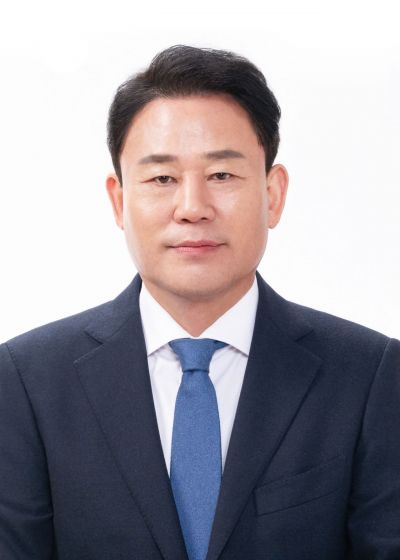
Candidate Song stated, "We will establish the urban convergence special zone in Gwangju Seo-gu with the complex infrastructure of industry, residence, culture, and leisure found in the Seoul metropolitan area," adding, "We will complete the already decided infrastructure on schedule and do our best to support the ongoing individual projects by removing minor obstacles to accelerate progress in the direction that best suits Gwangju's development."
He also said, "Based on outstanding advantages in transportation accessibility, corporate support infrastructure, and industry-academia-research cluster connectivity, we will devise differentiated strategies to create a large number of quality jobs for young people," and presented plans to build four major ecosystems: ▲Smart advanced manufacturing ecosystem ▲AI and healthcare convergence ecosystem ▲R&D and education innovation ecosystem ▲MICE industry and cultural convergence ecosystem.
He plans to promote legislation that specifies the government's role as a national government-led project. Unlike other urban development methods, the urban convergence special zone develops downtown areas at high density, resulting in relatively high land prices, making it difficult to attract private project operators. Therefore, there is a risk of project delays or suspension if only local governments and private operators are involved.
Candidate Song emphasized, "Since this is a national government-led project, the state must also bear the cost of installing infrastructure," and stated, "I will push for the re-enactment of the 'Special Act on the Creation and Promotion of Urban Convergence Special Zones' immediately after the opening of the 22nd National Assembly."
In the case of Pangyo Techno Valley, 16.4 billion KRW of national funds were invested based on the 'Act on Industrial Sites and Development' during its development.
The Gwangju Seo-gu Urban Convergence Special Zone began to gain momentum after the 'Special Act on the Creation and Promotion of Urban Convergence Special Zones,' which Song sponsored as the lead proposer, passed the National Assembly plenary session in October 2023. The project plans to be completed by 2031 on an 850,000㎡ (260,000 pyeong) site in Chipyeong-dong, including the vertical belt from Sangmu Sculpture Park to Sangmu Citizen Park, 5·18 Freedom Park, and Kim Dae-jung Convention Center, as well as nearby farmland.
Meanwhile, as his first pledge, Song announced the 'Mega City Special Act,' which grants authority, status, and administrative and financial special provisions to mega cities. As his second pledge, he announced the promotion of the 'Honam Super Metropolitan Economic Community (RE300)' to fundamentally solve the population extinction crisis in Honam and prepare future growth engines for Honam, along with the construction of energy expressways and arterial roads.
© The Asia Business Daily(www.asiae.co.kr). All rights reserved.











