Korea-Japan Zoos Promise Mutual Donation of Otters and Lesser Pandas
"If Approved, Korea's First Export Case of Natural Monument...
Careful Consideration Needed Including Genetic Preservation and Otter Utilization Plans"
Seoul Grand Park promised to exchange a pair of Eurasian otters, a first-class endangered wild species and a natural monument, with red pandas from Japan, but the permit was not granted.
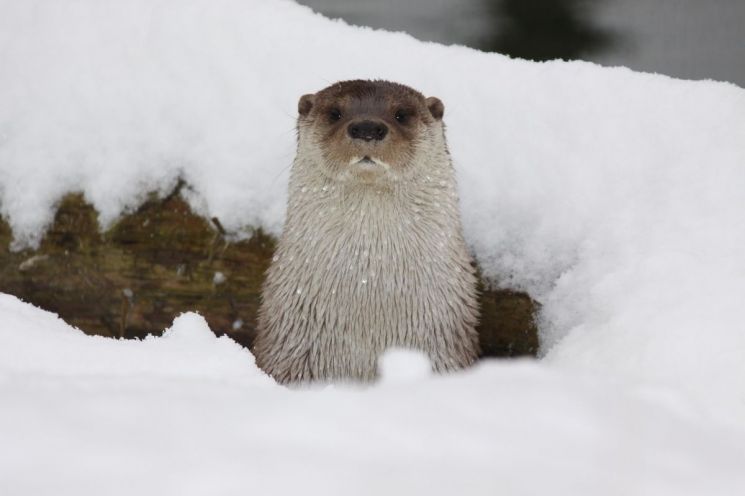 Natural Monument Otter. [Image source=Cultural Heritage Administration National Cultural Heritage Portal]
On the 13th, the Cultural Heritage Administration announced that the Natural Monument Subcommittee under the Cultural Heritage Committee recently rejected a proposal to allow Seoul Grand Park Zoo (Seoul Zoo) to export a pair of otters to Japan. According to the Cultural Heritage Protection Act, national treasures, treasures, and natural monuments cannot be exported or taken abroad. However, 'natural monuments bred for research or viewing purposes under specific circumstances' may be exported with the permission of the head of the Cultural Heritage Administration. Otters bred in zoos fall under this category.
However, the cultural heritage committee member who reviewed the proposal stated, "If this case is approved, it will be the first export case of a natural monument from Korea, so both the exporting and importing countries need to present detailed pre- and post-management plans." He added, "Seoul Grand Park should secure genetic samples such as blood from the animals to be exported and store them in long-term frozen storage, and the Japanese side should also provide plans for the utilization and management of the otters." This decision is expected to cause some setbacks in the mutual donation project between the two zoos in Korea and Japan.
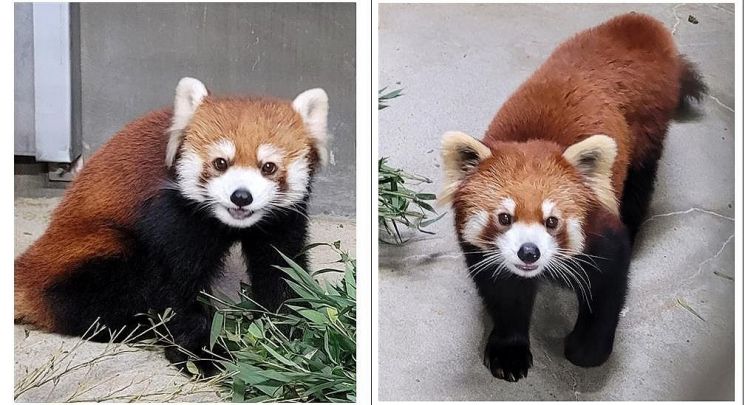
Previously, after the Korea Association of Zoos and Aquariums (KAZA) and the Japanese Association of Zoos and Aquariums (JAZA) signed a Memorandum of Understanding (MOU) for conservation cooperation beyond the habitat of red pandas in 2016, Seoul Grand Park has been discussing mutual animal donations with Tama Zoo. Seoul Grand Park has been preparing to donate otters through long-term consultations with the Japanese side.
Since signing this agreement, both sides agreed to exchange otters and red pandas, and at the end of last November, a pair of male and female red pandas arrived in Korea. The pair at Seoul Grand Park Zoo, a male born in July 2018 and a female born in June 2023, were scheduled to be sent to Japan this June. However, among the 13 cultural heritage committee members attending the meeting, seven judged that the export could not be permitted. Four other members suggested conditional approval for export, and two expressed a hold opinion.
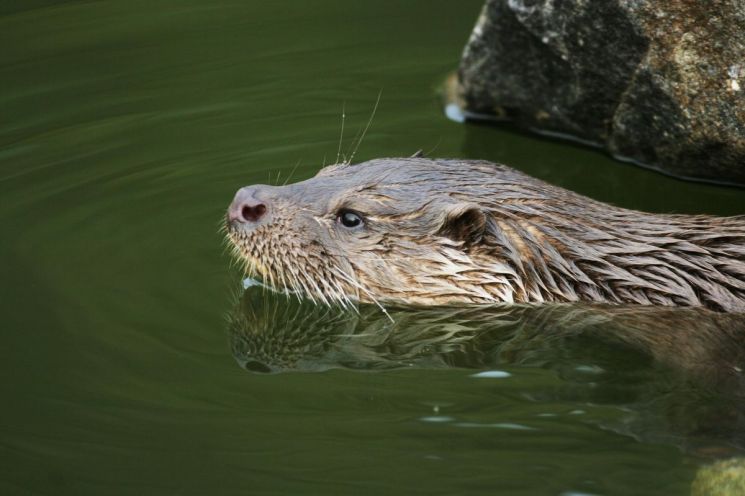 Natural Monument Otter. [Image source=Cultural Heritage Administration National Cultural Heritage Portal]
The Eurasian otter belongs to the Mustelidae family and is widely distributed across Europe, Africa, and Asia. Its body length ranges from 65 to 110 cm, tail length from 30 to 50 cm, and weight from 5 to 14 kg. It has a flat and rounded head shape. It mainly inhabits rivers and lakesides and is nocturnal, with well-developed vision, hearing, and smell. It is known to be extinct in Japan and is considered a rare species in Korea as well.
© The Asia Business Daily(www.asiae.co.kr). All rights reserved.














