Reinforcement of Completed Sections at Cultural Heritage Conservation Science Center
Unveiling the Secrets of 'Baekji' and Dark Blue Cover Paper
'Baekji Eun-ni Daebul Jeong Yeorae Milinsu Jeungyo-ui Jebosal Manhaeng Sun-eung Eomgyeong Volume 10 (Baekji Eun-ni Sun-eung Eomgyeong)' is a book that transcribes the last volume of the ten-volume Buddhist scripture Sun-eung Eomgyeong using silver-containing pigment. At the end, there is a note on the publication circumstances stating that Lee Bang-han wrote it in the 5th year of King Gongmin of Goryeo (1356) for his deceased mother. When designated as a treasure in 1963, it was called 'Maji Eun-ni Sun-eung Eomgyeong,' referring to hanji made from hemp. In 2010, the name was changed to the current one, which includes 'Baekji.'
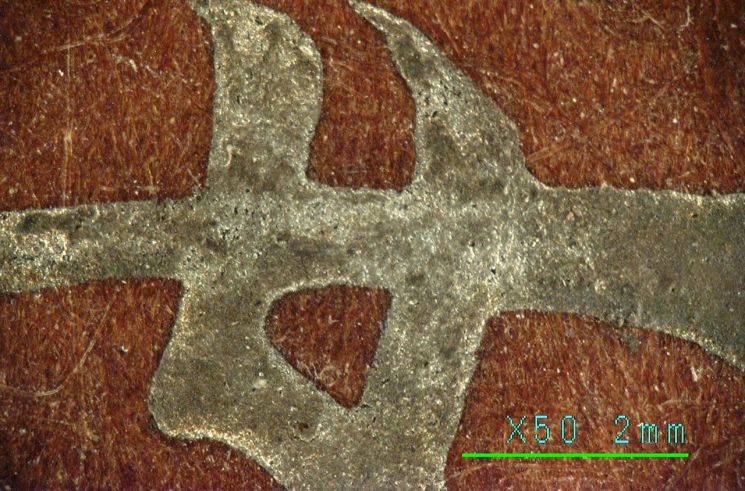
The Cultural Heritage Conservation Science Center conducted conservation treatment from 2021 until June of the following year and uncovered the secret of 'Baekji.' According to the report titled 'Conservation Treatment of Baekji Eun-ni Sun-eung Eomgyeong Volume 10,' published on the 18th, the paper used was not the hemp-made hanji known at the time of treasure designation but hanji made from dak tree bark. Analysis of the paper fibers' shape and mordant reaction revealed transparent film cross-weave patterns on the fibers of both the cover and inner pages. The fibers showed reddish-brown color in the C staining solution, confirming they were dak tree fibers.
The Cultural Heritage Conservation Science Center also discovered through a portable ultraviolet-visible spectrometer that the dark blue paper of the cover was dyed with indigo. Based on this, they reproduced the dyed paper and restored the damaged back cover. An official explained, "The back cover with silver-ni Bosanghwa patterns (idealized floral motifs) was worn, with silver lines flaking off, foreign substances adhering, and partial losses. We reinforced the damaged parts dyed with indigo (a herbaceous annual plant of the family Polygonaceae) and restored the damage while preserving the original form as much as possible."
Some silver-ni characters had turned black due to the combination of silver and sulfur. This discoloration was mainly prominent on the front (pages 1?4) and back (pages 55?56). Some characters near the edges of the folded inner pages also experienced blackening. The top and bottom corners of each volume were rounded and worn or torn along the folds. The Cultural Heritage Conservation Science Center removed dust and foreign substances and absorbed contaminants using blotting paper. They washed and reinforced the missing parts with color matching using pigments while maintaining the original state as much as possible.
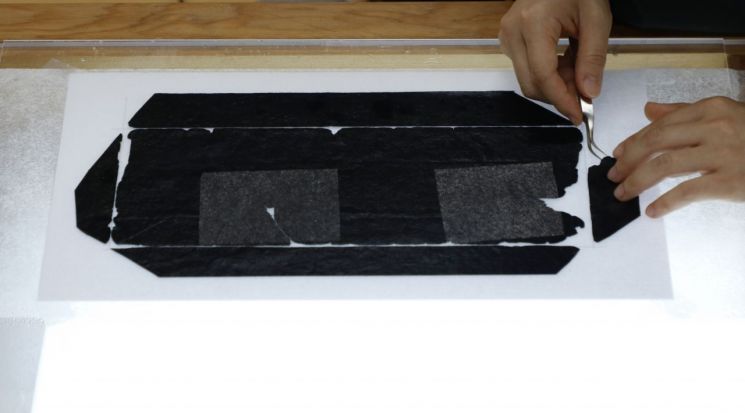
The series of processes are detailed in the report. Park Jong-seo, director of the Cultural Heritage Conservation Science Center, stated, "We endeavored to provide useful information to researchers of paper cultural heritage conservation by including various data such as the bibliographic characteristics and value of Baekji Eun-ni Sun-eung Eomgyeong, features of Goryeo Buddhist scripture printing paper, and organic analysis of the paper." He added, "We will continue to promote scientific conservation methods and technical research and publish materials introducing the results to raise public interest and understanding."
© The Asia Business Daily(www.asiae.co.kr). All rights reserved.













