Toshiba and Others Halt Operations... Disruption in Korean Parts Supply
Samsung Electro-Mechanics May Gain from MLCC Market
Tourism Industry Hit... "Regional Economy Crisis Until 2025"
Major factories of key 소재·부품·장비 (materials, parts, and equipment) companies such as Toshiba, which were based in the region, have all stopped operations due to a powerful earthquake that struck the Noto Peninsula in Ishikawa Prefecture, Japan. The sales damage alone is expected to reach 11 trillion won in Korean currency, and production disruptions are likely to affect South Korean companies as well.
On the 10th, Japan's Business Insider cited figures from the research agency Teikoku Databank, reporting that the sales loss in the Noto Peninsula, including Ishikawa Prefecture, caused by the recent earthquake, is estimated to reach 1.3018 trillion yen (11.9037 trillion won).
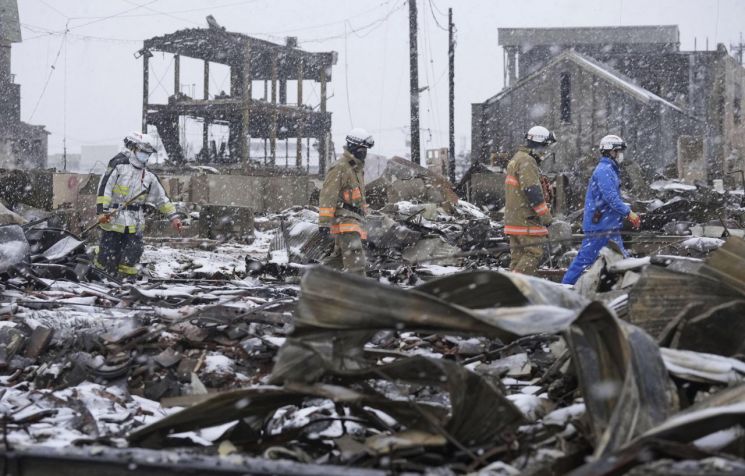
In particular, this region is famous for being home to electronic parts and machinery manufacturers, and Japanese media are concerned about disruptions to the supply chain. The Noto Peninsula hosts major factories of large corporations such as Toshiba, Murata Manufacturing, and Toyota. Due to the earthquake, Toshiba’s subsidiary Kaga Toshiba Electronics halted factory operations after damage to cleanroom exhaust piping and other facilities. This company produces power semiconductors used in electric vehicles (EVs) and railways.
Murata Manufacturing, which produces multilayer ceramic capacitors (MLCCs) essential for small electronic devices like smartphones and computers, also suffered earthquake damage. Murata Manufacturing, with a total of 13 factories in the Noto Peninsula including Ishikawa, Toyama, and Fukui Prefectures, is the world’s number one MLCC company, supplying parts to major global corporations including South Korea. Samsung Electro-Mechanics is the world’s second-largest MLCC company. There is analysis that Samsung Electro-Mechanics could benefit from this situation.
Additionally, Kokusai Electronics, responsible for the development and production of semiconductor manufacturing equipment, stopped operations after the earthquake due to damage such as cracks in the ceiling and walls of its Toyama factory.
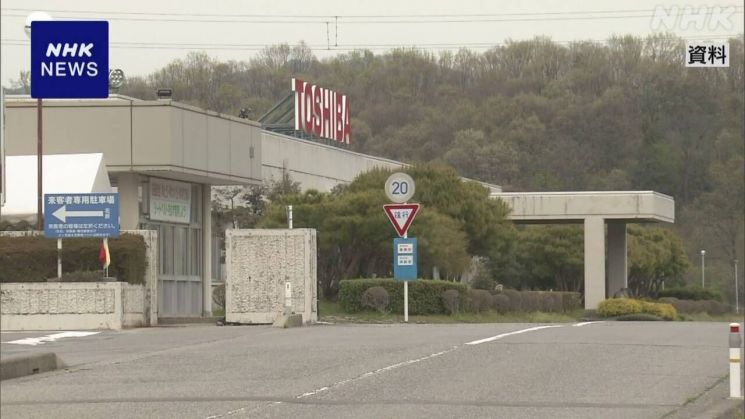 Exterior view of the Kaga Toshiba Electronics factory, which closed due to the earthquake impact. (Photo by NHK)
Other companies affected by the earthquake include Japan Display, which produces vehicle-mounted LCD panels; Suntech, Panasonic Holdings, Sharp, and Nippon Steel’s Noto Peninsula factories, which manufacture automotive and aircraft parts.
Most of these companies export parts or equipment to major South Korean corporations, so there is a possibility that parts supply and other aspects could be affected in South Korea in the future. Teikoku Databank analyzed that "blockages or delays in parts supply will gradually become more apparent," and that this could pose problems not only for Japan but also for global supply chains including South Korea.
Murata Manufacturing, Toyota, and Japan Display announced that they would resume line operations from this day, and Toshiba from the 10th. Although recovery has begun sequentially, it is difficult to predict when they will be completely free from the impact. It is known that at Murata Manufacturing’s Nanao factory in Ishikawa Prefecture, the whereabouts and safety of some employees are still unknown. In response, companies are considering emergency measures such as transferring production to other factories within their groups.
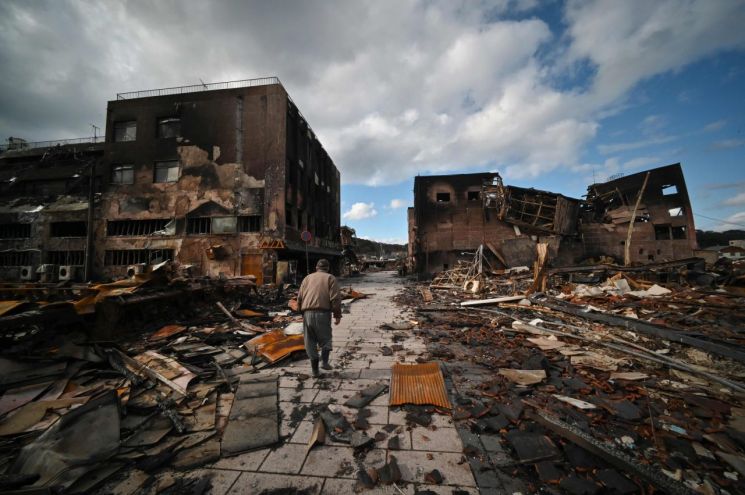
Meanwhile, damage to the tourism industry is also significant. Especially in areas famous for winter tourism such as Niigata Prefecture, many ryokans have declared business suspensions due to building damage from the earthquake, making it difficult to enjoy tourism benefits for the time being.
Kazuhiro Fujisawa, head of research at the private think tank Hokuriku Economic Research Institute, stated, "Although the exact scale of the damage has not yet been fully tallied, the manufacturing and tourism industries have suffered major blows, and the economy of the Hokuriku region, including the Noto Peninsula, is expected to remain difficult until 2025."
© The Asia Business Daily(www.asiae.co.kr). All rights reserved.














