KCC, Two-Person System Inevitable for Now Like During Lee Dong-kwan's Era
Opposition Criticism Ongoing... Related Bills Also Proposed
"Five-Member Composition Needed... No Agreement Due to Political Struggle"
With the inauguration of Kim Hong-il as the new chairman of the Korea Communications Commission (KCC), the two-member system of the KCC, as was the case during former chairman Lee Dong-gwan's tenure, is set to resume. Since it is currently impossible to add more commissioners, there are concerns that the KCC’s operations will face difficulties due to urgent matters that must be addressed by the end of this month.
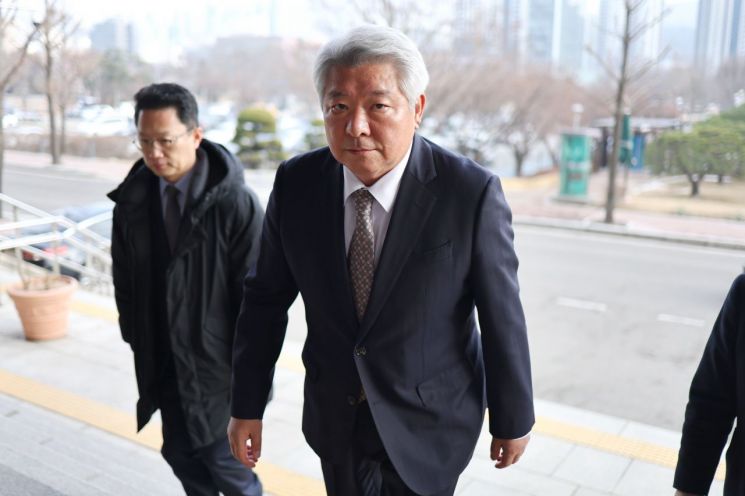
At the inauguration ceremony on the 29th, Chairman Kim stated that he would focus on establishing a foundation for innovative growth in broadcasting, telecommunications, and media, redefining public interest, and protecting user rights. The KCC, which had been operating under a single-member system with Vice Chairman Lee Sang-in alone, has now returned to a two-member system.
The KCC is composed of five commissioners according to relevant laws. Under the KCC Act, two of the five commissioners, including the chairman, are appointed by the president, while among the remaining three, one is recommended by the ruling party and the others by the opposition parties. Despite Chairman Kim’s inauguration, three commissioner positions remain vacant.
Attention following the appointment of the KCC chairman is focused on whether the two-member system can effectively push forward various issues with decisiveness. Urgent matters such as the reauthorization of terrestrial broadcasters must be handled promptly. On the 31st at 10 a.m., the KCC plans to hold its 46th committee meeting to review these agenda items.
However, the opposition parties argue that decisions should not be made with the current number of commissioners. A representative from the Democratic Party of Korea stated, "Regarding the reauthorization of terrestrial broadcasters, the Broadcasting Act allows for a grace period if reauthorization cannot be granted for some reason," adding, "It is more appropriate to handle this with a full five-member commission rather than rushing under a two-member system."
There is also an interpretation that the recent court ruling, which found that the dismissal of Kwon Tae-seon as chairman of the Korea Broadcasting Culture Promotion Foundation (KBCPF) and the appointment of his successor under the two-member system were inconsistent with the intent of the KCC Act, will pose a burden on Chairman Kim when making decisions on various issues.
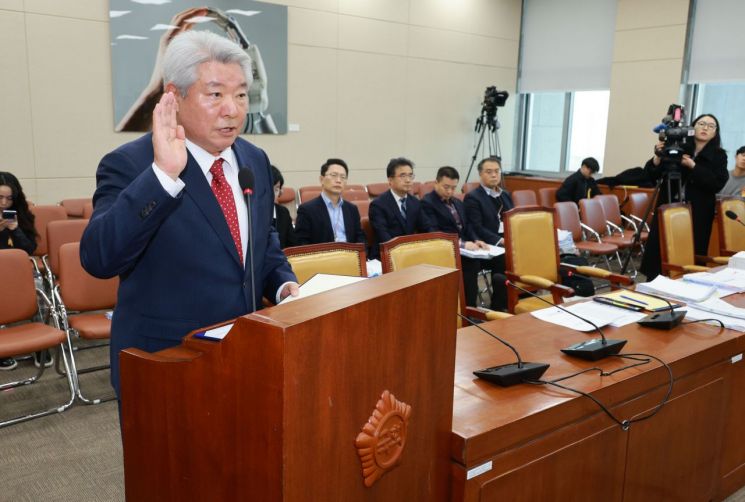
The opposition has also proposed legislation to prevent the KCC from operating under a two-member system. On the 7th, ten opposition lawmakers, including Heo Sook-jung of the Democratic Party of Korea (proportional representation), submitted a partial amendment to the Act on the Establishment and Operation of the Korea Communications Commission. The amendment specifies that a replacement commissioner must be appointed within 30 days of a vacancy. To prevent decisions being made by only two commissioners, the amendment requires that meetings be decided by a majority of attendees and a majority of those present. If the majority is fewer than three, at least three commissioners must be present.
Experts believe that without a full five-member commission, the KCC is likely to become embroiled in political conflicts. Moon Jae-wan, a professor at the Graduate School of Law at Hankuk University of Foreign Studies, said, "Although the commission was created to ensure the independence of broadcasting, complex issues such as mismatched terms between commissioners and the president, and the structure requiring recommendations from both ruling and opposition parties, have turned it into a political problem." He added, "Even if the system is changed, the problem will persist if factional conflicts are not resolved."
Yu Hong-sik, a professor in the Department of Media Communication at Chung-Ang University, said, "The necessary appointments of commissioners continue to be delayed," emphasizing, "Since the law requires a five-member consensus body, a proper composition is necessary." He further suggested, "Since there has been almost no proper consensus since 2008 due to political conflicts and disputes, it might be more efficient for the government ministries to manage this rather than having the ruling and opposition parties divided and only disputing."
© The Asia Business Daily(www.asiae.co.kr). All rights reserved.













