Positive Reviews for Childcare Consultation and Child Abuse Prevention via Home Delivery Service
Benchmarking by Local Governments Continues
In Japan, which has been implementing various measures to address low birth rates, a recently introduced 'free diaper subscription delivery service' has received positive reviews. This service involves delivery personnel with childcare experience regularly visiting households with young children to provide free diapers and other childcare supplies. It not only helps reduce the financial burden of childcare but also enables consultations with mothers who are solely responsible for childcare, prevents child abuse, and connects families with administrative support, drawing significant attention.
On the 29th, Nihon Keizai Shimbun (Nikkei) introduced the 'diaper subscription delivery' service in Akashi City, Hyogo Prefecture. Since October 2020, this service has been delivering childcare supplies worth a total of 3,000 yen (about 27,000 won), including diapers, wet wipes, and milk, free of charge every month to households raising children from 3 months old to 1 year old.
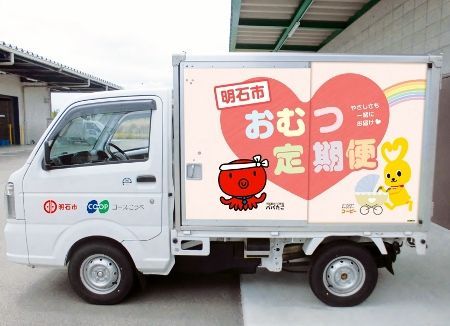 Vehicle in charge of 'diaper regular delivery' in Akashi City, Hyogo Prefecture. (Photo by Akashi City official website)
The items are delivered face-to-face by delivery personnel rather than by courier. The city recruits delivery personnel who have childcare experience, and they are required to undergo mandatory training from child consultation center staff on how to recognize signs of abuse.
If the delivery personnel encounter any childcare concerns during their visits, they provide consultations, and if they notice any changes in the child's condition, they contact the relevant city department to ensure support is provided. The service currently serves 2,200 households, and there have been cases where users expressed feeling overwhelmed by childcare to the point of being unable to do anything, prompting delivery personnel to connect them with the responsible department, leading to municipal support. An Akashi City official stated, "Because we meet regularly and observe, it is easy to notice even small changes and build trust."
As this diaper delivery service is gaining attention as a de facto 'one-stop' childcare support service, more local governments across Japan have started benchmarking it.
Since last month, Shinagawa Ward in Tokyo has been operating the 'Guardian Diaper Subscription Delivery.' Households with children born after April can select desired items from 60 childcare products and receive face-to-face delivery from a delivery person once a month. Shinagawa Ward requests, "Please let us know if you have any childcare concerns or difficulties when the delivery person visits."
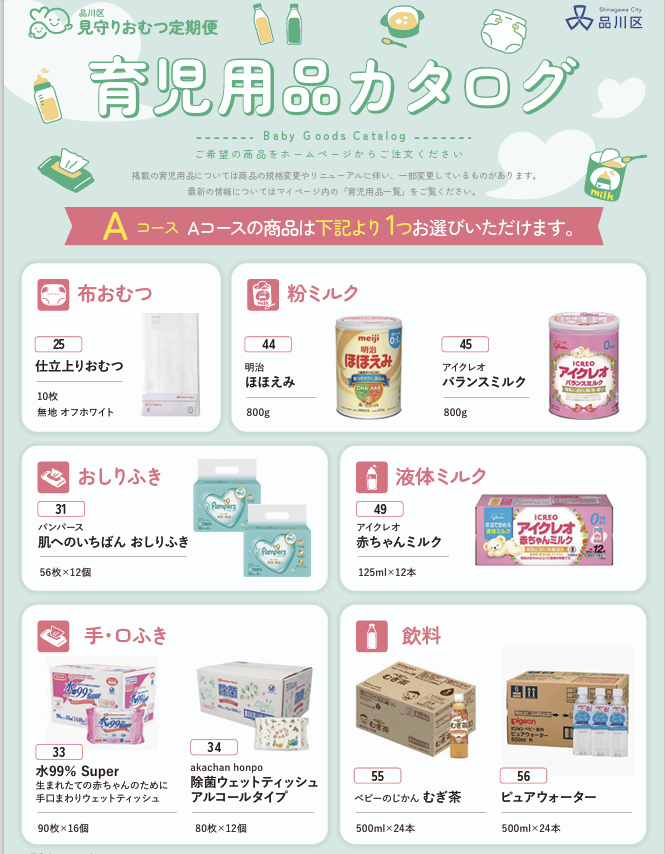 A diaper subscription delivery catalog in Shinagawa Ward, Tokyo. You can choose items such as formula, wet wipes, and beverages for children. (Photo by Shinagawa Ward official website)
Additionally, Onomichi City in Hiroshima Prefecture started a similar service in October, and Dondabayashi City in Osaka Prefecture plans to implement it from January next year. In Dondabayashi City, the system is being introduced as a measure to prevent recurrence of a child abuse death case that occurred last year. In June last year, a 2-year-old child was left at home and died of heatstroke. Despite frequent bruises on the child indicating signs of abuse, the local government failed to detect the situation and was heavily criticized.
Such free diaper delivery services are considered effective measures to alleviate 'Koso-date (孤育て),' a serious issue in Japan. This term refers to a state where the primary caregiver is isolated, unable to consult with a spouse, relatives, or anyone else about childcare concerns. In South Korea, this is known as 'Dokbak-yug-a' (sole childcare). Prolonged isolation can increase the risk of child abuse.
Experts emphasize that this service should not be perceived as 'abuse monitoring' by local governments but should naturally integrate into childcare households. Professor Fumiharu Yamagata of Kansai University’s Department of Child and Family Welfare advised, "Caregivers such as delivery personnel might be wary if they feel they are being monitored. For effective implementation, it is essential to consider how delivery personnel can naturally build trust and communicate with families."
© The Asia Business Daily(www.asiae.co.kr). All rights reserved.













