"ChatGPT, Major Impact on Scientific Development and Progress"
First Non-Human Ontology Selected in Nature 10
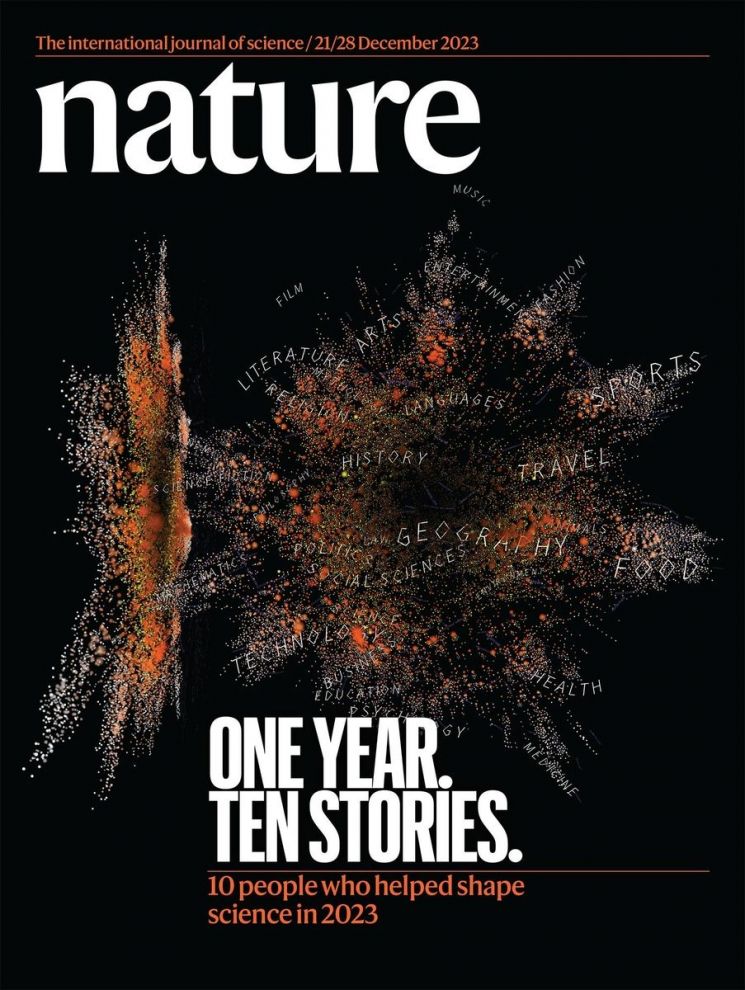
The renowned international scientific journal Nature has included the generative artificial intelligence (AI) 'ChatGPT' in its annual list of individuals who have made a significant impact in the global scientific community, known as 'Nature's 10'. This marks the first time that a non-human entity has been selected for 'Nature's 10'.
ChatGPT Developers Also Named in 'Nature's 10'
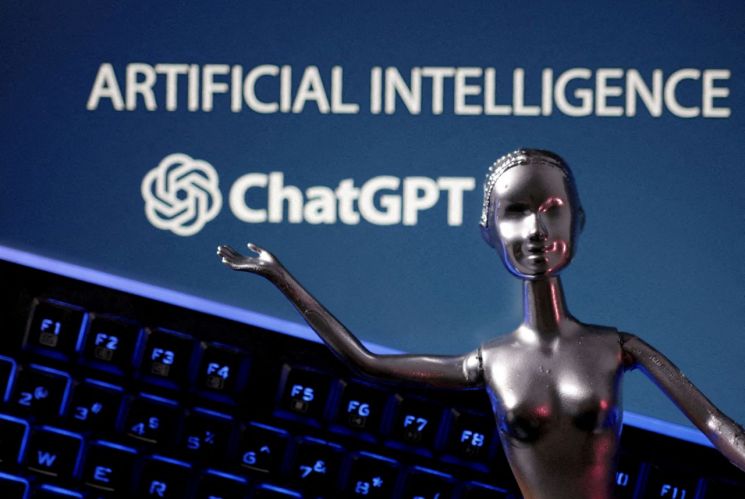
On the 14th, Richard Monastersky, senior feature editor at Nature, stated, "ChatGPT dominated the news this year, and its influence extends across science and society as a whole," adding, "Although ChatGPT is not a person and thus does not fit the typical criteria for 'Nature's 10', we included it in recognition of how generative AI has profoundly transformed scientific advancement and progress."
Illya Sutskever, chief scientist at OpenAI and a pioneer in AI, was also named in 'Nature's 10' for his key role in developing ChatGPT and the large language models (LLMs) that support it.
Scientists Who Made Significant Discoveries, Including Contributions to India's Moon Landing and Producing Offspring from Two Male Mice, Also Featured
Among 'Nature's 10' is Professor James Hamlin, a physicist at the University of Florida, who identified issues in a high-profile room-temperature superconductor paper published earlier this year.
In March, Hamlin raised concerns with Nature about the paper on 'nitrogen-doped lutetium hydride' (NDLH), published by Professor Ranga Dias's team at the University of Rochester. Subsequently, Nature decided to retract the paper last month.
Also included among this year's notable scientists is Dr. Kalpana Kalahasti from the Indian Space Research Organisation (ISRO). Nature highlighted Dr. Kalahasti's critical role as an engineer and manager on the Chandrayaan-3 project, which successfully landed the Chandrayaan-3 spacecraft on the moon, making India the fourth country to achieve a lunar landing.
Additionally, the list features Dr. Annie Kritcher, a physicist who achieved 'ignition'?the first successful production of more energy from a nuclear fusion reaction than was input?marking a major milestone in fusion research; and Dr. Katsuhiko Hayashi, a developmental biologist at Osaka University in Japan, who succeeded in producing offspring from the cells of two male mice.
Environmental efforts are represented by Marina Silva, Brazil's Minister of the Environment, and Eleni Milibili, the United Nations' first-ever global chief heat officer.
Furthermore, three scientists who made significant advances in biomedicine this year were named.
These include Dr. Halidou Tinto, who contributed to a vaccine expected to bring major changes in reducing malaria infections and deaths; Professor Thomas Powles, who heralded groundbreaking progress in treating bladder and other cancers; and Professor Svetlana Moisof, who laid the foundation for obesity treatment drug development.
"A List Reflecting Important Scientific Developments and Stories, Not Awards or Rankings"
Senior editor Monastersky remarked, "The stories of the ten individuals selected for 'Nature's 10' and the AI tool ChatGPT capture the most significant scientific developments of 2023."
Nature emphasized that the individuals chosen played crucial roles in the most important moments in science this year, clarifying that 'Nature's 10' is not an award or ranking but a list that reviews key scientific advancements and stories, along with the people who played important roles within them.
© The Asia Business Daily(www.asiae.co.kr). All rights reserved.













