Impact of No.1 Competition on Decline Forecast in Imported Car Industry
High Interest Rates and Economic Recession Lead to Increased Discounts
Year-end discount competition among imported car companies, including Mercedes-Benz Korea, BMW Korea, and Audi Korea, is heating up. Ahead of model year changes, high discounts are being offered mainly on cars with remaining inventory and those with new models about to be released.
According to the imported car industry on the 14th, imported car companies such as Mercedes-Benz Korea, BMW Korea, and Audi Korea have launched aggressive year-end discounts.
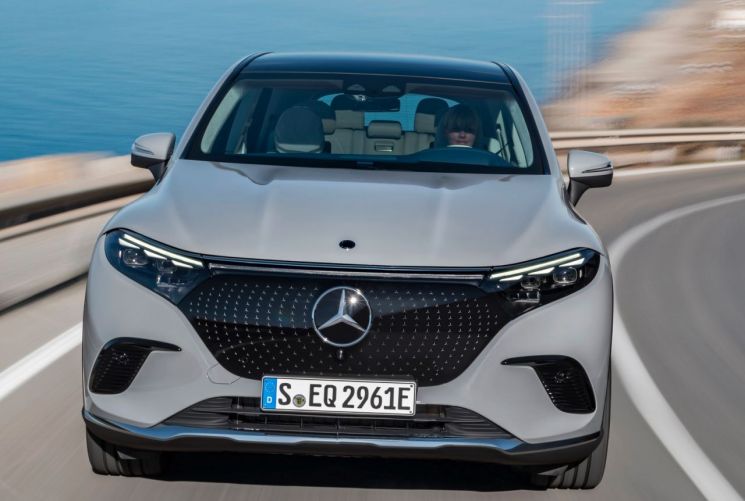
In particular, Mercedes-Benz, known for being stingy with discounts, has introduced a discount policy of about 21% off the price of the premium electric car EQS and is working to clear inventory ahead of the full change of the E-Class.
The EQS 450+ 4Matic, priced at 190 million KRW, can be purchased for 150 million KRW with a 40 million KRW discount when using financial services. The best-selling E-Class model, the 220d 4Matic priced at 82.3 million KRW, can be purchased for 68.3 million KRW with a 14 million KRW discount when bought through affiliated companies.
BMW responded to Mercedes-Benz's discounts. BMW is offering about a 10 million KRW discount on the best-selling 320i model. Small models such as the 1 Series and X2 are also reportedly offering discounts exceeding 10 million KRW.
Not to be outdone, Audi is discounting its main model, the A6, by about 20%. In particular, the S5 Coupe has the largest discount, reduced by 23.45 million KRW (26%) from the original price to 66.84 million KRW.
High interest rates and economic recession combined lead to increased discount rates amid shrinking new car demand
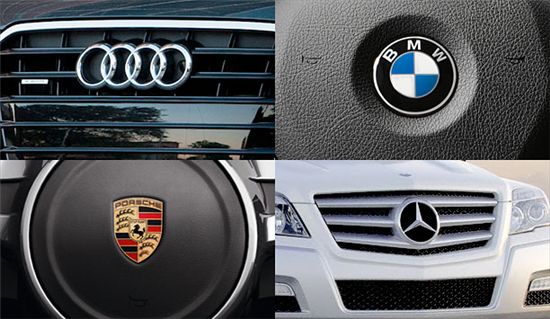 The reason imported car companies are increasing their discounts toward the end of the year is that new car purchase demand has weakened due to a combination of high auto loan interest rates and an economic recession.
 [Photo by Asia Economy DB]
The reason imported car companies have increased discount rates toward the end of the year is that new car demand has shrunk due to a combination of high auto loan interest rates and an economic recession. While it has been customary to offer large discounts at year-end to clear inventory of model year changes, this year discounts have been applied even to best-selling models, increasing the discount range.
According to the Korea Automobile Importers & Distributors Association (KAIDA), 219,071 imported cars were newly registered from January to October this year, a 2.9% decrease compared to the same period last year. Considering the average monthly sales volume this year is about 21,900 units, the imported car market is likely to experience negative growth for the first time since 2019.
Moreover, the share of imported passenger cars has also decreased. According to Kaizyu Data Research Institute, a car data provider, among the total 1,258,089 newly registered passenger cars with the Ministry of Land, Infrastructure and Transport from January to October this year, 226,602 were imported passenger cars, accounting for an 18.0% market share. Although two months remain until the end of the year, surpassing a 20% market share seems unlikely.
As the market share of imported passenger cars, which had been rising annually, has stalled, competition within the imported car market appears to have intensified. In particular, with Mercedes-Benz and BMW competing for the top spot in imported car sales this year, Mercedes-Benz's discount range has widened. From January to October, Mercedes-Benz sold 60,988 units, and BMW sold 62,514 units, putting Mercedes-Benz's seven consecutive years of maintaining the number one position in imported car sales at risk.
An industry insider said, "Since dealers conduct separate promotions, it is difficult to accurately grasp discount prices and policies," adding, "The fact that discounts exceeding 20% are being offered indicates how much the industry is struggling."
© The Asia Business Daily(www.asiae.co.kr). All rights reserved.











