UK Court: "Life Support Only Increases Suffering"
Parents: "It Also Takes Away the Dignity of Dying at Home"
A British baby who was denied life-sustaining treatment in the UK, citing increased suffering, and who tried to continue treatment after being granted emergency citizenship by the Italian government, has ultimately passed away.
On the 13th (local time), according to the Italian ANSA news agency, Yonhap News reported that Indi Gregory, a British baby suffering from a rare disease, died after a short life of eight months.
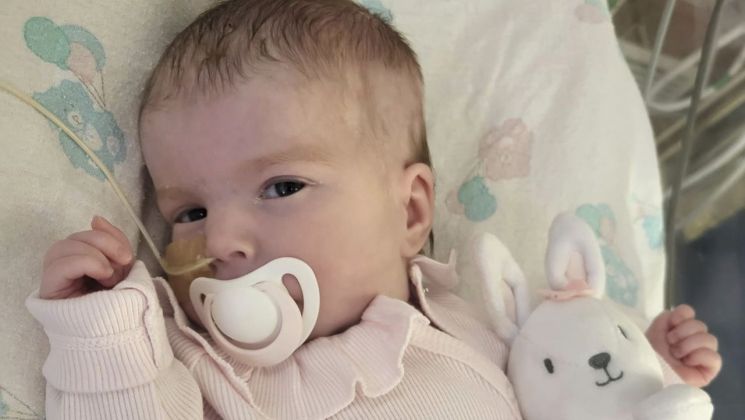
Born last February, Gregory suffered from a rare degenerative mitochondrial disease. Gregory was hospitalized immediately after birth at Queen's Medical Centre in Nottingham, UK, where she received intensive care. However, in September, the hospital diagnosed her with an incurable disease and recommended stopping life-sustaining treatment, judging that further treatment would only cause the baby pain and be meaningless.
However, Gregory’s parents refused to give up their daughter's life and demanded treatment, engaging in a legal battle against the hospital. Last month, the UK court sided with the medical staff, stating that there was no possibility of treatment.
The parents appealed the ruling, but the appellate court upheld the same decision. They also filed a case with the European Court of Human Rights (ECHR), but the ECHR indicated that it would not prohibit the withdrawal of life support and that the UK court’s ruling could not be appealed.
Then, on the 30th of last month, the Bambino Ges? Hospital, a pediatric specialty hospital in Rome operated by the Vatican, offered to assist with Gregory’s treatment. Subsequently, on the 6th, the Italian government convened an emergency cabinet meeting and issued Italian citizenship to Gregory within minutes.
At the time, Italian Prime Minister Meloni said on X (formerly Twitter), "They say there is little hope for Gregory, but we will do our best to protect the baby's life until the end," adding, "We will uphold the parents' right to do everything possible for their baby."
With the granting of Italian citizenship, the Italian consulate, which became Gregory’s legal representative, requested the UK court to allow Gregory to receive treatment at the hospital in Rome.
However, on the 10th, the UK Court of Appeal ruled that transferring Gregory to Italy was not in the baby’s best interest, and that additional treatment would only increase the child’s suffering, thus life-sustaining treatment should be stopped. The court also stated that withdrawal of life support could only be done in a hospital or hospice ward, rejecting Gregory’s parents’ request to allow her to die at home.
On the 11th, Gregory was moved to a hospice ward where life support was removed, and she passed away about a day later.
Gregory’s father, Dean, released a statement that day saying, "Indi passed away at 1:45 a.m. Claire and I are angry, heartbroken, and ashamed," adding, "The National Health Service (NHS) and the courts took away not only Gregory’s chance to live longer but also the dignity of dying at home."
In 2018, a similar controversy arose in the UK over life-sustaining treatment for 23-month-old Alfie Evans. At that time, when Bambino Ges? Hospital in Rome expressed willingness to support life-sustaining treatment, the Italian government granted Evans citizenship and took measures to prepare for his transfer. However, the UK court did not allow Evans’ transfer. Ultimately, Evans’ life support was withdrawn, and he died five days later.
© The Asia Business Daily(www.asiae.co.kr). All rights reserved.