Hundreds of Billions of Dollars Invested by Air India and Others... Expecting Future Demand
Advantage of 1.4 Billion Population... Usage Still Low
The aviation industry is rapidly growing in India, which has emerged as the "Next China." India's transportation network, previously centered around roads and railways, is expanding into air routes alongside economic growth. With the middle-class population, which will become the core users among the 1.4 billion people, rapidly increasing, both the Indian government and the aviation industry are preparing for the future amid expectations of rising demand.
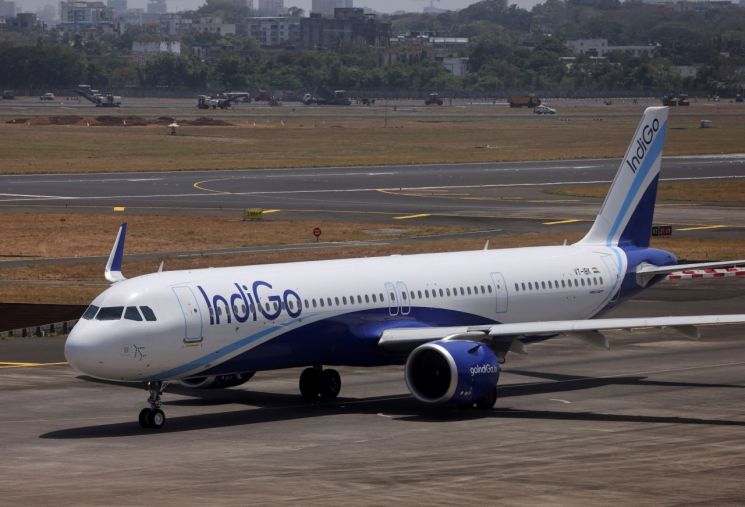
The New York Times (NYT) reported on the 2nd (local time), "No country in the world is purchasing as many airplanes as India. India's major airlines have ordered nearly 1,000 aircraft this year alone, investing tens of billions of dollars in the aviation industry."
Indian airline Air India decided in February to invest $70 billion (approximately 93.5 trillion KRW) to purchase 250 aircraft from manufacturer Airbus and 220 from Boeing. Another Indian airline, IndiGo, also placed a new order for 500 Airbus A320 models in June.
Indian airlines are placing these new aircraft orders to respond to future demand growth. Currently, only 3% of India's population regularly flies. Most passengers using Indian airlines are domestic citizens rather than foreigners.
However, India's status as the country with the largest population in the world increases its future growth potential. Considering India's total population of 1.4 billion, the current number of air travelers reaches 42 million. The main users are corporate executives, students, and engineers traveling for business trips or vacations.
Furthermore, as the economy grows rapidly, the expanding middle class with strong consumption intentions is expected to seek transportation options that minimize travel time. Based on these projections, airlines are pouring investments into the sector, according to the NYT.
Kapil Kaul, CEO of aviation consulting firm CAPA India, said, "The next 2 to 3 years are crucial to achieving the quality growth India desires," adding that the surge in consumption will impact the Indian economy, accompanied by increases in air passengers, cargo demand, and foreign investment.
Before the aviation industry expands, Indian Prime Minister Narendra Modi has taken proactive measures by continuously building airports across the country. Since Modi took office, the number of airports in India has doubled from 74 to 148 over nine years. Jyotiraditya Scindia, India's Minister of Civil Aviation, also announced plans to expand the number of airports in India to 230 by 2030.
However, buses and trains are still more commonly used than airplanes in India. According to CAPA India, in 2019, India's per capita passenger seat availability was 0.13, significantly lower than China's 0.52 and the United States' 3.03. The NYT reported that Indian airlines and government officials see this as an opportunity based on these figures.
© The Asia Business Daily(www.asiae.co.kr). All rights reserved.












