Kia to Introduce Chinese Hybrid Engines Domestically
New Small SUV-Class Hybrid Model Also Added
Applied to 2025 Seltos Successor
Battery Electric Vehicle Adoption Slows... First Sales Decline This Year
Renault Korea and KG Mobility to Launch After Next Year
Kia will import engines made at its Chinese factory to produce cars domestically. As demand for hybrid vehicles increased, there was a shortage of engines, but since there was a surplus of engines produced at the Chinese factory, they decided to bring them to Korea for use. While developing a new hybrid engine, they also plan to launch new vehicle models. This is because hybrid demand continues to grow amid calls to slow down the spread of electric vehicles.
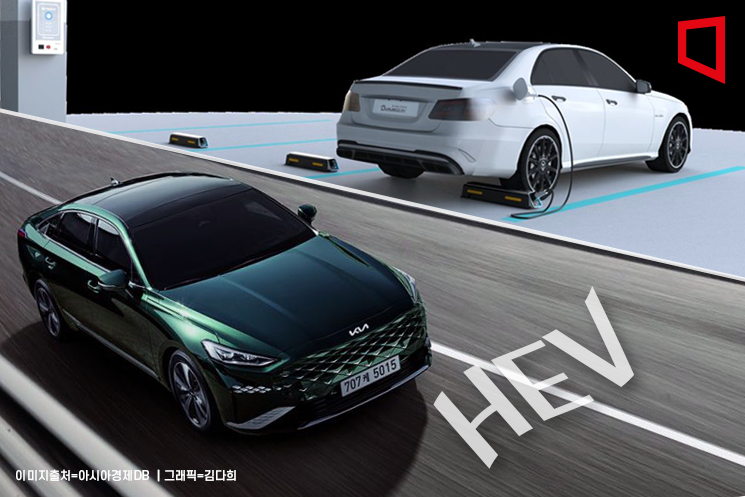
According to a summary of our coverage on the 3rd, Kia's labor and management held a meeting of the Employment Stability Committee the day before and agreed on this plan. Kia and Hyundai Motor go through such discussions when promoting new projects to gauge jobs such as on-site workforce. What stands out is the multifaceted agreement to increase hybrid production volume.
First, they decided to temporarily import the Gamma 2 engines produced at Kia's China plant (KCN) to Korea. These engines, made at Kia's Hwaseong plant, are used in hybrid models of mid-size vehicles such as the Sorento and K8. It is rare for the company to bring products made at overseas factories into Korea. The labor union also rarely agrees, arguing that it undermines domestic job security.
Even when agreeing to import Chinese engines this time, the agreement included the clause "to ensure that it does not affect the employment of employees on the relevant line (Hwaseong engine plant)." An industry insider said, "If engine supply becomes smoother, complete vehicle production can increase accordingly, so it seems the union judged it positively."
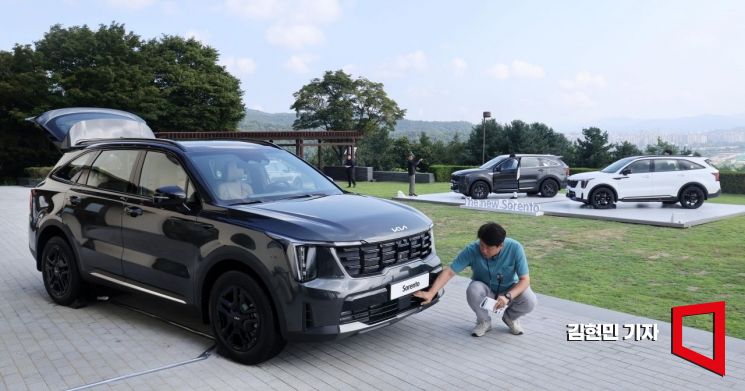 Mid-size SUV Sorento upgraded model. Sorento is the best-selling model in the domestic market, and the hybrid model requires nearly a one-year wait after ordering.
 Photo by Hyunmin Kim kimhyun81@
While developing the turbo direct injection method of the Theta 3 engine used in high-performance or high-priced vehicles, they also decided to release it for hybrid vehicles. It is currently under development with mass production targeted for 2025. They also finalized new hybrid vehicle models. They plan to release the successor model to the currently available small sport utility vehicle (SUV) Seltos in 2025, adding a hybrid model. Currently, only gasoline models are available. Both Hyundai and Kia have dedicated eco-friendly lineups (Kona and Niro) in the small SUV segment, so they had not released hybrid models citing sales interference.
The electrification transition advocated by automakers has mainly focused on battery electric vehicles. Recently, as electric vehicle sales have slowed, the trend has changed. Car prices remain high, but subsidies have decreased. Although charging infrastructure has increased, it is still inconvenient compared to internal combustion engine vehicles. There is also criticism that those who could afford electric vehicles have already purchased them. Hybrid vehicles were expected to serve as a stepping stone in the transition to more environmentally friendly electric vehicles, but the industry expects this role to last longer than anticipated.
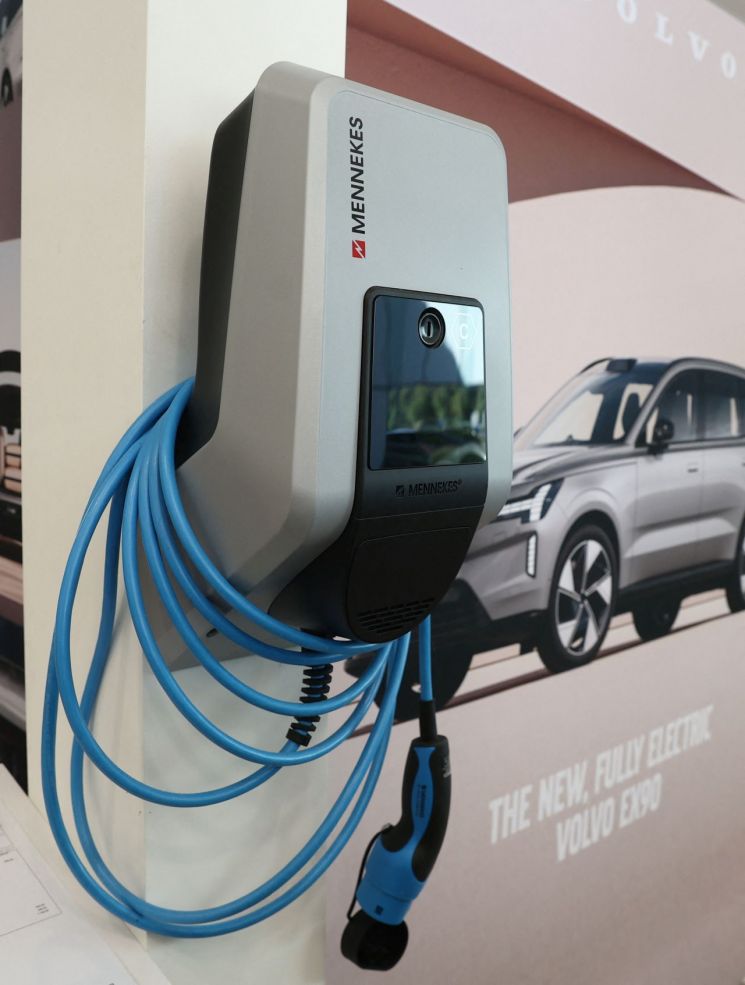
This is the recent atmosphere in the domestic finished car market. According to data from the Korea Automobile Mobility Industry Association, domestic hybrid vehicle sales from January to September this year reached 198,906 units, a 48% increase compared to the same period last year. On the other hand, battery electric vehicles decreased by about 4%. Electric vehicle sales had increased by double digits every year for the past three years but declined for the first time. Popular SUV hybrid models like the Sorento require nearly a year of waiting after ordering. This contrasts with other models, which can be received within one or two months as parts supply becomes smoother.
Other domestic car manufacturers also plan to release hybrid vehicles one after another. Renault Korea Motors is developing a mid-size SUV hybrid model aiming for release in the second half of next year. It is a vehicle that uses the same platform as Volvo Cars under the Chinese Geely Group. KG Mobility is jointly developing a next-generation hybrid system with Chinese electric vehicle and battery company BYD. They aim to release a hybrid vehicle based on the mid-size SUV Torres in 2025.
© The Asia Business Daily(www.asiae.co.kr). All rights reserved.














