Japanese Yen, Real Effective Exchange Rate 74.31
Purchasing Power Halved Compared to 1995
Household Burden Increases by 180,000 Yen if Yen Weakness Continues
Due to the large-scale monetary policy of the Bank of Japan (BOJ), the value of the yen has plummeted, causing the yen's purchasing power against major currencies to fall back to levels seen over 50 years ago. As the cost of importing raw materials such as energy rises due to the weak yen, the burden on Japanese households is increasing day by day.
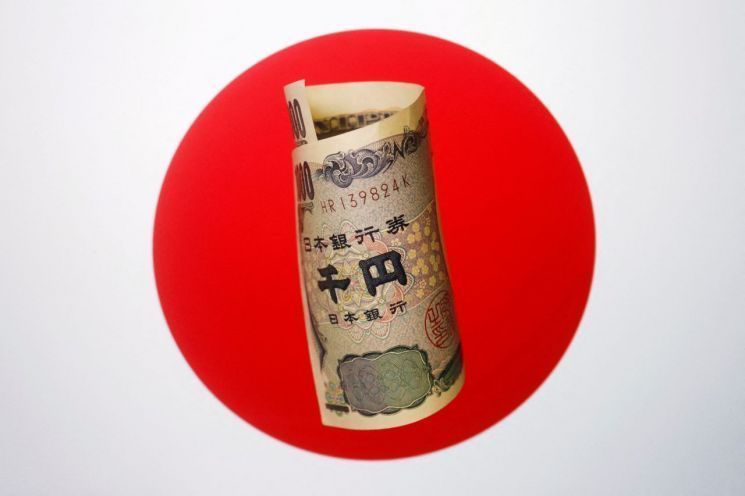
According to the BOJ on the 30th, the real effective exchange rate of the yen last month was 74.31 (2020=100). This figure is close to the lowest level in over 50 years. The BOJ publishes the real effective exchange rate based on 2020, taking 1980 as 100 (January 1, 1980, was 101.44), and the recent figure is the lowest among them. However, foreign media estimate the real effective exchange rate of the 1970s to be around the 70s based on 2020. The year 1970 was when Japan implemented a fixed exchange rate system for price stability, fixing the yen at 360 yen per dollar. The fact that the real effective exchange rate is similar to that time means that even after 53 years, the value of the yen has remained stagnant.
The highest point of Japan's real effective exchange rate was June 1995 (193.97), and compared to that time, the purchasing power has dropped by more than half. The real effective exchange rate is an indicator that shows how much purchasing power a country's currency has in real terms compared to other countries. If this figure is below 100, it means the exchange rate is undervalued.
The decline in the yen's purchasing power is also reflected in import prices. When the yen's purchasing power falls, more costs must be borne when importing goods from abroad, causing import prices to rise. Last month's import price index rose by 10% compared to the end of 2021, when the yen depreciation crisis began in earnest. Basket prices also rose significantly. According to Nihon Keizai, the prices of milk and butter increased by 8% and 10% year-on-year, respectively. In addition, the price of Italian pasta rose by 28%, and prices of European imports rose sharply.
The decline in the yen's purchasing power places a heavy burden on Japanese households. Market research firm Mizuho Research & Technologies estimated that if the yen's value remains around 145 yen per dollar starting this year, household living expenses would increase by about 188,000 yen. This statistic assumes that the Japanese government has inflation countermeasures; if the government does not implement special support policies, the burden is expected to exceed 200,000 yen. Economist Sakai Saisuke stated, "Especially among low-income groups, the burden of living expenses is expected to increase further."

Experts emphasize that to restore the yen's low purchasing power, a simultaneous rise in wages and prices must be driven. As wages rise with inflation, consumer spending sentiment revives, and companies invest more, allowing escape from deflation. Currently, Japan's consumer price index (CPI) exceeds the BOJ's target (2%) and is in the 3% range, but wages have not kept pace, causing real wages to decline for 15 consecutive months.
Nihon Keizai stated, "Japan has not escaped deflation for 30 years, resulting in significantly lower currency purchasing power compared to major countries," and emphasized, "For the yen to regain purchasing power, a virtuous cycle of rising prices and wages must be established."
© The Asia Business Daily(www.asiae.co.kr). All rights reserved.


















