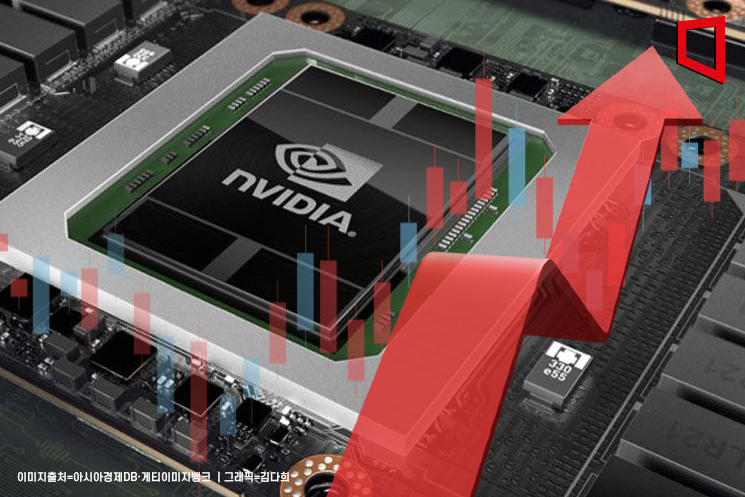
Expectations for a recovery in the semiconductor market are emerging following Nvidia's Q2 'earnings surprise' announcement, which confirmed strong demand for artificial intelligence (AI) chips. However, it is anticipated that it will take more time before Korean semiconductor companies, including Samsung Electronics and SK Hynix, show signs of earnings recovery. Although positive signals for a semiconductor market recovery have appeared in the second half of the year, it remains necessary to wait and see before an actual market recovery occurs and positively impacts the Korean economy.
On the 29th, financial information provider FnGuide compiled the consensus estimates from the securities industry over the past month regarding SK Hynix's Q3 earnings. The results forecast sales of 7.8235 trillion KRW and an operating loss of 1.6455 trillion KRW. Compared to the operating losses of 3.4023 trillion KRW and 2.8821 trillion KRW recorded in Q1 and Q2 of this year, respectively, this shows a trend of reducing losses by about 1 trillion KRW each quarter due to memory semiconductor production cuts. Nevertheless, there is still a long way to go before turning a profit. Samsung Electronics, which started semiconductor production cuts later, is in a similar situation.
The securities consensus for Q3 earnings projects sales of 67.6671 trillion KRW and operating profit of 2.9744 trillion KRW, an improvement compared to the operating profits in the 6 trillion KRW range recorded in Q1 and Q2. However, a closer look at the detailed results shows that Samsung Electronics' core semiconductor division (DS) is expected to record an operating loss in the 2 trillion KRW range again in Q3, continuing a three-quarter streak of losses. Internally at Samsung Electronics, there are concerns that optimism about semiconductor market recovery might lead to excessive expectations for Q3 earnings. Among some senior executives, there are even voices suggesting that "DS might find it difficult to turn profitable within this year."
There are also criticisms that Nvidia's 'earnings surprise' cannot be generalized as a positive signal for the entire semiconductor market.
Rather than a recovery of the overall semiconductor market, it is more accurate to interpret the situation as a scenario where demand for AI chips is lined up, supply capacity is insufficient, and only Nvidia can supply them, thus securing a lucrative position. Lee Woong-chan, a researcher at Hi Investment & Securities, said, "As big tech companies like Microsoft and Google, which have fixed budgets, pour money into AI investments, demand for general servers and DRAM or NAND may decrease." Kim Sung-geun, a researcher at Mirae Asset Securities, also expressed concerns about a 'cannibalization' phenomenon, where companies investing in data centers focus their limited budgets on purchasing AI chips, thereby reducing demand for other semiconductors.
Of course, Samsung Electronics and SK Hynix are rapidly increasing shipments of higher average selling price products such as Double Data Rate (DDR) 5 and High Bandwidth Memory (HBM) in response to rising AI chip demand. However, their share is expected to account for only about 20% of the total by the end of the year. Ultimately, a proper recovery in the semiconductor market can only be discussed when the overall demand for IT devices and general data center servers also recovers.
In fact, the semiconductor industry currently views the semiconductor market as still far from escaping the worst conditions. The Bank of Korea recently announced that the August Business Survey Index (BSI) for companies showed an 8-point drop in the electronics, video, and telecommunications equipment sector due to delayed semiconductor price recovery. In particular, small and medium-sized enterprises engaged in semiconductor equipment and PCB substrate manufacturing experienced significant deterioration in business performance.
The Korea International Trade Association (KITA) forecasted that the recovery of semiconductor exports in the Korean economy will not occur earlier than the fourth quarter of this year at the soonest. This is based on the premise that excess inventory of IT devices such as smartphones and PCs will ease and demand will recover in 2024. The Korea Semiconductor Industry Association also predicted that neither memory nor system semiconductors will see export recovery in Q3, and that positive export growth rates will only be observed starting from October in the memory semiconductor sector, continuing into November and December.
© The Asia Business Daily(www.asiae.co.kr). All rights reserved.












