BA.2.86 Added to Surveillance List
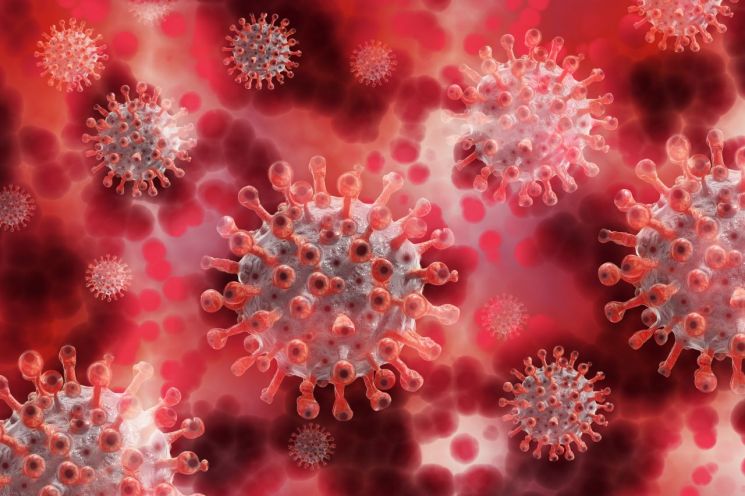
Experts are on high alert as new COVID-19 variants emerge and their potential impact on public health is assessed.
BA.2.86, added to the surveillance list by the World Health Organization (WHO) on the 18th (local time), is classified as a subvariant of the Omicron variant BA.2.
Nicknamed Pirola, BA.2.86 has about 30 more mutations in the spike protein than BA.2. The spike protein is the weapon the COVID-19 virus uses to invade the human body, and the greater the changes in it, the higher the possibility of evading existing immune systems.
Infectious disease experts are cautious because BA.2.86 has been detected simultaneously across multiple continents since early this week. Christian Andersen, a researcher at the Scripps Research Institute in the United States, wrote on X (formerly Twitter) that "(BA.2.86) possesses all the typical characteristics of variants that can cause outbreaks."
Professor Fran?ois Balloux, director of the Genetics Institute at University College London (UCL), also evaluated BA.2.86 as the most notable variant to emerge since the appearance of Omicron at the end of 2021.
So far, BA.2.86 infections have been reported in a total of four countries. Following the first confirmed case in Israel on the 13th, there have been three cases in Denmark, two in the United States, and one in the United Kingdom.
Dr. Peter Chin-Hong, an infectious disease expert at the University of California, San Francisco (UCSF), suggested that due to the herd immunity developed from exposure to various variants, a rapid surge in BA.2.86 infections may not occur. The WHO also stated, "It is not yet known what potential impact the new variant may have, and a cautious evaluation is underway."
Since its first appearance three years ago, COVID-19 has continuously mutated, producing various variant viruses. The WHO is currently tracking about ten variants, including BA.2.86, as part of its surveillance efforts.
In May, the WHO lifted the international public health emergency of international concern (PHEIC) status for COVID-19 and recommended that countries manage COVID-19 at the level of seasonal influenza. Currently, there are no COVID-19 variants designated as variants of high concern.
© The Asia Business Daily(www.asiae.co.kr). All rights reserved.











