IAEA Final Report Delivered to Japan
Likely Conclusion of 'Discharge Appropriate'
Japan Conscious of Domestic Opposition
Emphasizes Diplomatic Efforts Targeting Korea and China Backlash
Low Possibility of Discharge Plan Withdrawal
The International Atomic Energy Agency (IAEA) delivered its final report verifying the Fukushima Daiichi Nuclear Power Plant contaminated water discharge plan to Japan on the 4th, leaving only Japan's final decision on the discharge. This report is highly likely to reach the same conclusion as the interim report, which stated that the discharge is appropriate, so the Japanese government's position of "discharging this summer" is expected to be maintained. However, public opinion within Japan is gradually turning negative, which is expected to become a final variable in the Japanese government's decision.
IAEA Director General Rafael Grossi visited Japan on the same day to deliver the final report on contaminated water marine discharge to Japanese Prime Minister Fumio Kishida. At 4:50 p.m. that day, he will hold a press conference at the Tokyo Press Center on the topic of "ALPS (Advanced Liquid Processing System) treated contaminated water."
This report will be used by Prime Minister Kishida as material to determine the specific timing of the discharge. The final report is expected to include the safety of discharging contaminated water into the sea, the appropriateness of the Nuclear Regulation Authority's response, and sample investigation results. However, since the interim report released on the 1st of last month clearly stated that the discharge plan is appropriate, it is highly likely that the same opinion will be maintained in this report. From the Japanese government's perspective, with a report that can serve as the basis for discharge, it is highly likely that the timing of the discharge will be promptly finalized.
 Japanese Prime Minister Fumio Kishida (left in photo) and Rafael Grossi, IAEA Director General (right in photo) [Image source=Yonhap News]
Japanese Public Opinion: 45% Oppose Discharge... Fukushima Fishermen Pass Special Resolution
Currently, a variable that could affect Japan's decision on discharge is the growing opposition.
A telephone poll conducted by Japan's JNN Broadcasting from the 1st for two days targeting 1,207 citizens aged 18 and over nationwide showed that the proportion supporting the marine discharge of contaminated water was 45%, only 5 percentage points higher than the opposition at 40%. Compared to polls conducted by other media earlier, support has significantly decreased while opposition has increased. In a poll conducted by Yomiuri Shimbun last month, 60% supported and 30% opposed.
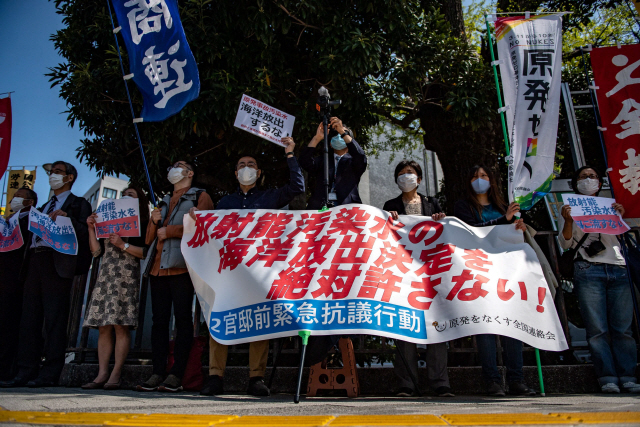 Japanese anti-nuclear activists are holding a protest around the Prime Minister's residence in Tokyo, condemning the government's decision to discharge contaminated water from the Fukushima nuclear power plant into the ocean.
Strong opposition is also emerging, especially among fishermen in the Fukushima region. The Fukushima Prefectural Federation of Fisheries Cooperative Associations unanimously passed a special resolution on the 3rd stating, "The decision to oppose the discharge of contaminated water remains unchanged."
Japanese Government Opposes 'Fake Information' Spread... Targeting South Korea and China
As domestic opposition spreads, the Japanese government is also sharpening its stance toward neighboring countries' reactions. On the 22nd of last month, the Japanese Ministry of Foreign Affairs stated, "We strongly oppose the irresponsible spread of baseless fake information." This statement appears to be aimed at South Korea and China, which have continuously raised concerns about the safety of contaminated water discharge.
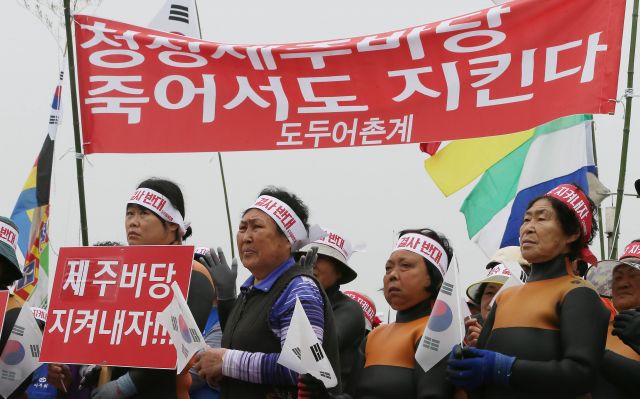 More than 150 fishery workers, including the Jeju City Dodoo Fishermen's Association and haenyeo, held a protest on the 22nd of last month against the discharge of contaminated water from the Fukushima nuclear power plant in Japan. [Image source=Yonhap News]
The Nihon Keizai Shimbun reported, "The Japanese Ministry of Foreign Affairs offered China several opportunities to explain (the safety) based on data, but these were rejected."
Japanese media also criticized South Korea and China for spreading unfounded rumors related to the contaminated water discharge. The Nihon Keizai Shimbun pointed out that South Korea's opposition parties are using the contaminated water discharge as a means to criticize the Yoon Suk-yeol administration. The media emphasized that as such false information spreads, even a salt hoarding craze has occurred in South Korea, and it is time to conduct a diplomatic campaign to prevent the spread of fake information.
Discharge Schedule May Be Delayed... Withdrawal of Plan Unlikely
As negative public opinion both inside and outside Japan grows regarding the discharge, there are also views that the discharge timing may be delayed beyond expectations.
Chief Cabinet Secretary Hirokazu Matsuno emphasized again at a press conference on the 28th of last month, "We will not implement the disposal (of contaminated water) without gaining the understanding of related parties," and "We plan to exchange opinions politely through close communication with fishermen, and the government will thoroughly prepare measures to address safety issues and the spread of rumors."
However, the possibility that the Japanese government will completely withdraw the discharge plan itself is slim. On the 3rd, Chief Cabinet Secretary Matsuno firmly stated, "The discharge timing is expected to be appropriate this summer, and there is no change to this policy."
© The Asia Business Daily(www.asiae.co.kr). All rights reserved.














