2021 Job Mobility Statistics
It was found that the wages of 4 out of 10 workers who changed jobs in 2021 decreased. The proportion of workers moving to jobs with lower wages compared to 2020 due to the employment shock caused by COVID-19 only slightly decreased.
According to the "2021 Job Mobility Statistics" released by Statistics Korea on the 8th, the number of registered employed persons identified based on administrative data from public institutions such as the four major social insurances was 25.49 million, an increase of 658,000 (2.7%) from 24.832 million in 2020.
Among them, 17.501 million workers retained their existing jobs, an increase of 310,000 (1.8%) from the previous year, and new entrants to enterprises numbered 4.026 million, up by 59,000 (1.5%). The number of workers moving between enterprises by changing jobs was 3.962 million, an increase of 289,000 (7.9%) compared to the previous year.
In particular, the job mobility rate for regular wage workers whose wages increased was 62.5%, up 3.3 percentage points from the previous year, while the job mobility rate for those whose wages decreased was 36.4%, down 3.4 percentage points.
A Statistics Korea official said, "With the easing of COVID-19, there was a slight increase in the movement of female and under-30 wage workers to jobs with increased wages."
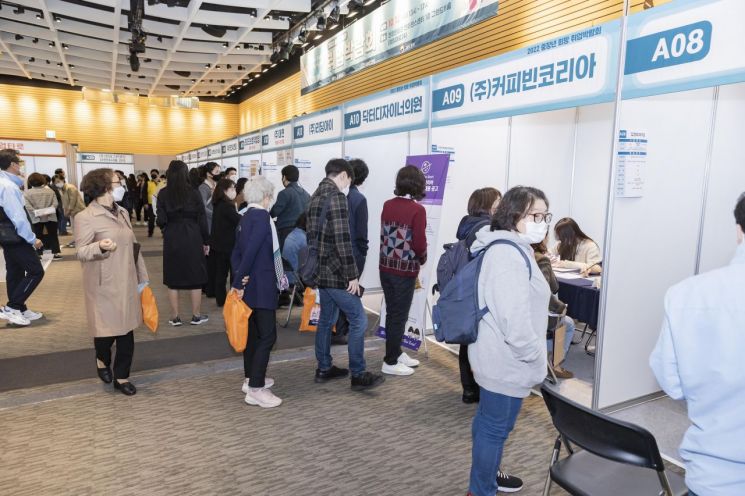
By age group, the mobility rate for those under 30 was 20.9%, and the entry rate was 34.2%, higher than other age groups. The job retention rate was highest among those in their 40s (75.9%), followed by those in their 50s (74.8%) and 30s (71.5%). Compared to the previous year, the mobility rate increased across all age groups, and the retention rate increased among those in their 50s and those aged 60 and over, while it decreased in other age groups.
The wage difference before and after job mobility for wage workers showed that the highest proportion was for wage increases of "less than 250,000 won" at 17.9%, with women (22.9%) higher than men (14.4%). By age group, the proportion of workers with wage increases of "less than 250,000 won" was highest among those aged 60 and over (23.9%), followed by those under 30 (17.7%), those in their 50s (17.4%), and those in their 40s (17.0%).
The proportion of workers moving within the same industry was 48.3% overall, down 0.7 percentage points from the previous year. The intra-industry mobility rate was highest in construction (74.2%), health and social welfare (69.5%), and manufacturing (52.1%), in that order.
© The Asia Business Daily(www.asiae.co.kr). All rights reserved.












