Seoul Metropolitan Council Expresses Deep Regret Over Supreme Court Decision That Denied Minimum Right to Rebuttal
Suspension of Enforcement of Basic Academic Skills Support Ordinance Contrary to Opinions of Seoul Citizens
Responsibility for Basic Academic Skill Deficiency Avoided; Education Office That Went to Court Will Be Held Accountable
Unprecedented Swift Decision Contrary to Court Precedents... Should Also Apply to Seoul Superintendent of Education Cho Hee-yeon’s Trial
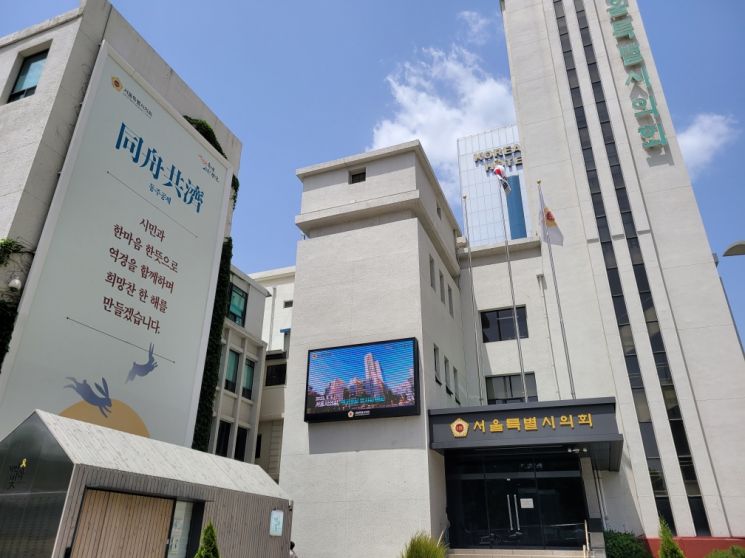
The Supreme Court Special Division 1 (Presiding Justice No Tae-ak, Justices Park Jeong-hwa, Kim Seon-su, and Oh Kyung-mi) on the 31st of last month accepted the Seoul Superintendent of Education’s request for suspension of enforcement of the “Ordinance on Guaranteeing Support for Basic Academic Skills,” filed against the Seoul Metropolitan Council.
The Seoul Metropolitan Council respects the Supreme Court’s decision and announced on the 2nd that it will refrain from taking any actions based on the establishment of this ordinance for the time being.
However, the Seoul Metropolitan Council expresses deep regret that the Supreme Court’s acceptance decision was made without guaranteeing any right to rebuttal.
While it is understood that oral arguments are not an essential process in decisions as opposed to judgments, this ordinance concerns ▲ more than one million children and teachers in Seoul, ▲ was enacted through a democratic resolution process by the representative body of citizens, and ▲ despite the opposing party, the Seoul Superintendent of Education, having no urgent reasons to rush the matter, the Supreme Court made the acceptance decision without giving the Seoul Metropolitan Council any opportunity to present its opinions.
Moreover, on the same day as the Supreme Court’s suspension of enforcement decision on the 31st, the Seoul Metropolitan Council received the complaint for nullification filed by the Seoul Superintendent of Education in the related main lawsuit, leaving the council with no chance to even exercise the minimum right to defense. Even in urgent matters such as injunctions prohibiting TV broadcasts, lower courts often listen to opinions from both parties before making a judgment.
Nonetheless, it is hard not to question whether it is reasonable for the highest court, which should make careful and weighty judgments, to make a decision after hearing only one party’s opinion through the complaint and without giving the other party even a single word or a note to state their case.
The Seoul Metropolitan Council hopes that the public perception that Supreme Court justices are lenient toward certain ideological groups is nothing more than the complaints of ordinary people.
The Seoul Metropolitan Council expresses deep regret over the anti-educational behavior of the Superintendent of Education, who neither takes responsibility for the worsening of basic academic skill deficiencies nor accepts responsibility by claiming it is a national matter.
Basic academic skills are a human right. The Seoul Metropolitan Office of Education and the Superintendent, who have ignored the human rights of vulnerable children, will pay a fitting price from the citizens. If guaranteeing basic academic skills, the foundation of public education, is not a core duty, does that mean only excellence education is the exclusive duty of the education office?
We would like to say a word about the Supreme Court’s decision. The Superintendent of Education applied for suspension of enforcement to the Supreme Court on May 22. The court’s decision came in less than 10 days. Considering the judiciary’s “slow clock” criticized by the media, this is an unusually fast decision.
In March 2013, then Seoul Superintendent of Education Moon Yong-rin applied to the Supreme Court for nullification and suspension of enforcement of the “Student Human Rights Advocate Ordinance.” This ordinance was enacted through the resolution and re-resolution of the 9th Council and promulgated ex officio by the chairperson. The legislative process was almost the same as the current “Basic Academic Skills Guarantee Ordinance.”
The Supreme Court did not make any decision until the local elections in June 2014. The legal dispute ended when Superintendent Cho Hee-yeon took office in July 2014 and withdrew the lawsuit. At that time, the Supreme Court took more than 1 year and 4 months without making a decision, but this time it made a very quick decision in about 10 days. A column in a daily newspaper on June 1 pointed out, “The judiciary cannot avoid criticism of a double standard that rushes trials against enemies but drags out trials for allies.”
The judiciary is currently conducting the second trial for Superintendent Cho Hee-yeon. He was indicted in December 2021, and the first trial verdict with imprisonment was delivered in January this year. Unlike past precedents, the Seoul Metropolitan Council will watch closely with Seoul citizens how quickly the judiciary, which swiftly handled the suspension of enforcement decision, will rule on Superintendent Cho’s trial.
Kim Hyun-gi, Chairperson of the Seoul Metropolitan Council, stated, “The council will do its best to have the validity of the ‘Basic Academic Skills Guarantee Ordinance,’ which was lawfully enacted and promulgated through democratic procedures including resolution and re-resolution, recognized in the main judgment,” and added, “The Seoul Metropolitan Council will respond to the hopes of parents who want to protect our children and see public education properly established.”
© The Asia Business Daily(www.asiae.co.kr). All rights reserved.

![Clutching a Stolen Dior Bag, Saying "I Hate Being Poor but Real"... The Grotesque Con of a "Human Knockoff" [Slate]](https://cwcontent.asiae.co.kr/asiaresize/183/2026021902243444107_1771435474.jpg)














