Construction of Plant 4 in Daesan, Chungnam
Securing 6100t Production Capacity
Expansion of Battery Capacity and Lifespan
LG Chem is expanding its carbon nanotube business, which is used as a battery material. Carbon nanotubes are used in battery cathode conductive agents and are attracting attention as next-generation materials that can increase battery capacity and lifespan.
LG Chem announced on the 31st that it has started construction of its 4th carbon nanotube plant in Daesan, Chungnam. The 4th plant will have an annual production capacity of 3,200 tons of carbon nanotubes, with operations targeted to begin in 2025.
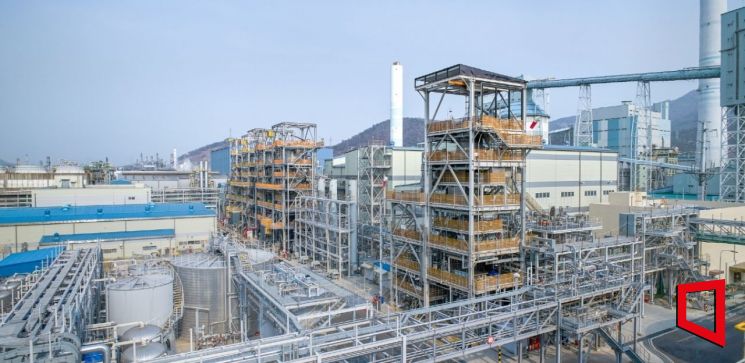
The 3rd carbon nanotube plant, which LG Chem expanded in Yeosu, also recently began operations. As a result, LG Chem's carbon nanotube production capacity has increased to 2,900 tons by adding 1,700 tons from the existing 1st and 2nd plants and 1,200 tons from the 3rd plant. With the 4th plant coming online, the total production capacity is expected to reach 6,100 tons.
Carbon nanotubes have electrical and thermal conductivity comparable to copper and strength 100 times that of steel. They can be used in various applications such as electric vehicle batteries, semiconductor process trays, and automotive electrostatic painting exterior materials.
LG Chem’s carbon nanotube plants use a self-developed fluidized bed reactor, capable of mass-producing up to 600 tons per production line annually. This is the world’s largest scale for a single line. Additionally, by using proprietary cobalt-based catalysts, the plants reduce magnetic impurities that could affect battery quality, achieving world-class quality standards.
With this expansion, LG Chem aims to secure a solid competitive advantage in the battery material carbon nanotube market. LG Chem’s carbon nanotubes will be supplied as cathode conductive agents to battery manufacturers, including LG Energy Solution.
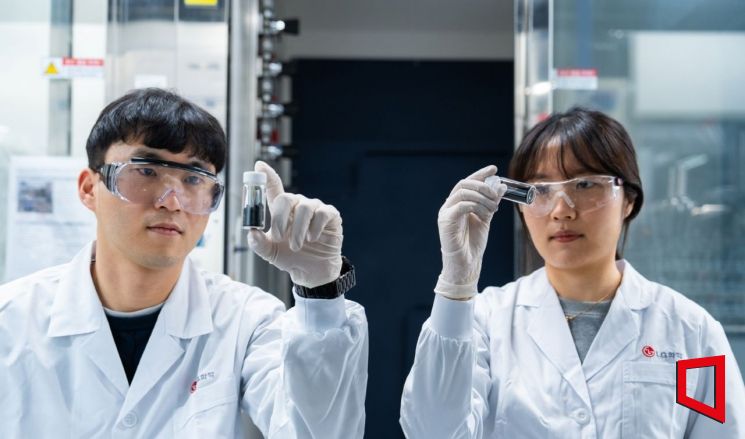
Carbon nanotube cathode conductive agents provide over 10% higher conductivity compared to conventional carbon black materials, allowing a reduction of about 30% in conductive agent usage. This reduction enables more cathode material to be filled, significantly increasing battery capacity and lifespan. They are also being considered as main conductive agents in next-generation battery fields such as anode materials and lithium-sulfur and all-solid-state batteries.
The battery industry expects the carbon nanotube market for electric vehicle batteries to grow to about 3 trillion KRW by 2030. Global demand for carbon nanotubes is projected to grow at an average annual rate of about 30%, from 14,000 tons last year to 95,000 tons by 2030.
Furthermore, LG Chem launched a task force (TF) in January to develop new applications and is expanding its customer base. Recently, it began supplying electrostatic painting plastics that can replace metals by adding carbon nanotubes to Mitsubishi Motors in Japan.
An LG Chem official stated, "With the largest carbon nanotube production capacity in Korea and excellent quality, we will secure a firm competitive edge in the electronic materials sector and actively pioneer new markets with great potential."
© The Asia Business Daily(www.asiae.co.kr). All rights reserved.













