Base Interest Rate Raised by 0.5%P... Lagarde Also Signals Further Hikes
Early Resolution Judged Due to Global Interventions Despite SVB Bankruptcy and CS Crisis
US Faces Complex Fed Calculations... Eyes on FOMC on 21-22
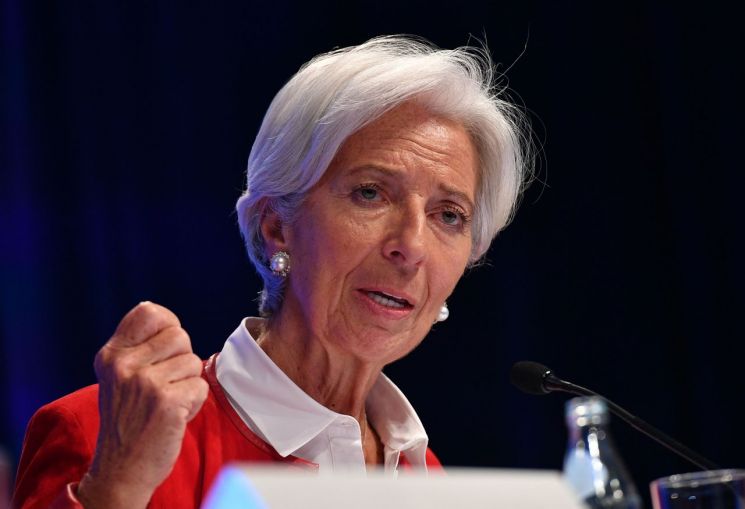
Despite the bankruptcy of the U.S. Silicon Valley Bank (SVB) and the crisis at Europe's Credit Suisse (CS), the European Central Bank (ECB) continued its big step of raising interest rates by 0.5 percentage points as announced. Even amid rising financial system risks, the focus was placed on the 'fight against inflation.' ECB President Christine Lagarde stated, "We will fight inflation firmly," and also hinted at the possibility of further rate hikes. This is expected to influence the future monetary policy path of the U.S. Federal Reserve (Fed), which is set to decide on interest rates next week.
ECB Continues Big Step... Emphasizing the Fight Against Inflation
On the 16th (local time), the ECB announced at its monetary policy meeting that it would raise the key interest rate by 0.5 percentage points to 3.5%. With this decision, the ECB has raised the key interest rate six times since starting with a 0.5% increase in July last year. The ECB explained the background of the decision, stating, "Inflation is expected to remain at a high level for a long time, so we decided on this rate hike to return to the 2% inflation target in a timely manner," and added, "The increased uncertainty shows how important it is to take a data-driven approach in rate decisions."
Markets were on edge ahead of the ECB's rate decision that day. Starting with the sudden bankruptcy of SVB on the 10th, followed by the bankruptcy of Signature Bank on the 12th, and the liquidity crisis at CS on the 14th, there was keen interest in how the recent rapid spread of fear surrounding the global financial system would be interpreted.
The ECB's big step that day is analyzed as a sign of confidence in the financial system and a clear indication that the fight against inflation is being recognized as a more urgent task. Looking at Eurozone prices, the core Consumer Price Index (CPI), excluding food and energy, rose 5.6% in February, increasing from 5.3% the previous month. Although the overall CPI inflation rate slowed to 8.5%, it still exceeded market expectations. Additionally, the swift intervention by authorities in various countries to contain immediate financial risk contagion appears to have been a factor behind the decision.
The ECB also indicated that there is room for further rate hikes. President Lagarde reaffirmed the commitment to the inflation fight, saying, "If inflationary pressures persist when uncertainty decreases, we have room for additional increases." She added, "We are monitoring tensions in the financial markets," and stated, "We are ready to take all necessary measures to maintain price stability and financial stability in the Eurozone."
The Next Player: The Fed
With the ECB's big step, attention is now focused on the Fed's decision next week. The market had speculated that the rapid rate hikes by the Fed were behind the SVB bankruptcy, raising the possibility that central banks worldwide might slow their rate hikes. However, the ECB's larger-than-expected rate increase has complicated the Fed's calculations. The market has viewed the ECB's decision as a gauge for the direction of the Federal Open Market Committee (FOMC) rate decision scheduled for March 21-22.
The Wall Street Journal (WSJ) diagnosed, "Central banks still prioritize curbing high and sticky inflation," and added, "The ECB's decision shows how major central banks, including the Fed, will respond to market crisis signals triggered by the bankruptcy of two U.S. banks."
In fact, despite financial instability, inflation shows no signs of easing. The U.S. Department of Labor reported on the 16th (local time) that new unemployment claims for the week of March 5-11 decreased by 20,000 to 192,000, below the expert forecast of 205,000. Continuing claims for unemployment benefits, which count those claiming benefits for at least two weeks, also dropped by 29,000 to 1.68 million. This confirms that the U.S. labor market remains strong. The housing market is also recovering. According to the Department of Commerce, housing starts in February rose 9.8% from the previous month to 1.45 million (annualized), significantly exceeding the expert forecast of 1.31 million and marking a turnaround to growth after six months.
However, some expect the Fed to slow its tightening pace, unlike the ECB. Rohan Kanna, interest rate strategist at Swiss investment bank UBS, analyzed, "Despite core inflation rising, the ECB did not mention the pace of future rate hikes due to financial system instability," and added, "Some may interpret this as a signal that the Fed could be less 'hawkish' at next week's meeting."
© The Asia Business Daily(www.asiae.co.kr). All rights reserved.












