USDC Price Drops Below $1
Concerns Over Bank Run Due to Cryptocurrency Sell-Off
Evokes 2008 Reserve Primary Crisis
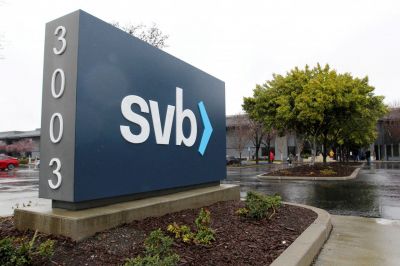
The bankruptcy of Silicon Valley Bank (SVB), which had been a major funding source for U.S. startups, is spreading turmoil even to the cryptocurrency market. The price of stablecoins, considered safe assets in cryptocurrency investments, plummeted due to the ripple effects of this incident, raising concerns that the negative impact from SVB could spread throughout the entire financial market.
According to CoinDesk, the stablecoin USDC, which had some of its reserves tied up at SVB, fell to as low as $0.86 during trading on the 11th (local time), breaking its peg to the U.S. dollar. USDC is the second-largest stablecoin by market capitalization after Tether (USDT), designed to maintain a value of 1 dollar per coin linked to the U.S. dollar. As of 9:44 a.m. Korean time on the 13th, USDC was trading at $0.98 per coin, defending the $0.9 level.
The price of USDC began to fall sharply after Circle Internet Financial, the issuer of the coin, announced that some of its funds were tied up at SVB. On the 10th, Circle revealed via Twitter that $3.3 billion, accounting for 8% of its total $40 billion (53 trillion KRW) reserves, was held at SVB.
Immediately after the announcement, there was a strong movement to sell off USDC, causing chaos in the cryptocurrency market. As investors exchanged USDC for Tether, demand for Tether increased, pushing its price above $1. Meanwhile, the stablecoin Dai, with a market capitalization of $5 billion, fell to $0.9 on the 11th, breaking its $1 peg. Bitcoin, the largest by market capitalization, dropped below the $20,000 mark on the 10th, reaching its lowest level since mid-January.
As a result, the market fears that if investors massively sell off USDC, the cryptocurrency sell-off could intensify, potentially triggering a bank run. The cryptocurrency market had already been in a general decline due to the liquidation of Silvergate, a U.S. cryptocurrency bank, and hawkish remarks from the Federal Reserve before the SVB bankruptcy news broke. The SVB incident has further strengthened investors' preference for safe assets, analysts say.
The Wall Street Journal (WSJ) explained that investors are comparing this incident to the Reserve Primary Fund redemption crisis during the 2008 global financial crisis. The Reserve Primary Fund, which invested in corporate and commercial paper, faced a flood of redemption requests after the Lehman Brothers collapse. The fund was liquidated after its net asset value fell below $1. Money Market Funds (MMFs) had been considered low-risk products, so this event led to widespread distrust across the credit market.
WSJ stated, "The breaking of the $1 peg could deliver a major shock to the cryptocurrency market, which is still reeling after the FTX bankruptcy," adding, "The decline in the value of USDC coins reminds investors of the worst moments when the Reserve Primary Fund fell below $1."
© The Asia Business Daily(www.asiae.co.kr). All rights reserved.












