Finebridge "Need to Watch Whether China's Surplus Funds Lead to Consumption"
Investors have been warned that they are overly optimistic about the consumption expansion effect following China's reopening (resumption of economic activities).
On the 8th (local time), according to Bloomberg News, Rob Hinchliffe, portfolio manager at global asset management firm PineBridge, stated, "The market quickly adjusted after China's reopening, and the opportunity closed very fast."
PineBridge has outperformed the industry average by 96% over the past three years and is a global top-tier asset manager with over 7% returns this year alone.
Regarding Chinese stocks, Hinchliffe emphasized, "Valuations are not attractive," and "Having spare money does not simply translate into consumption." He explained that they are currently in a wait-and-see mode on Chinese stocks until a recovery in consumer sentiment is confirmed. He also mentioned that they are examining a wide range of data, from employment to travel and mobility.
The Chinese stock market had been rallying since November last year but halted its upward trend last month.
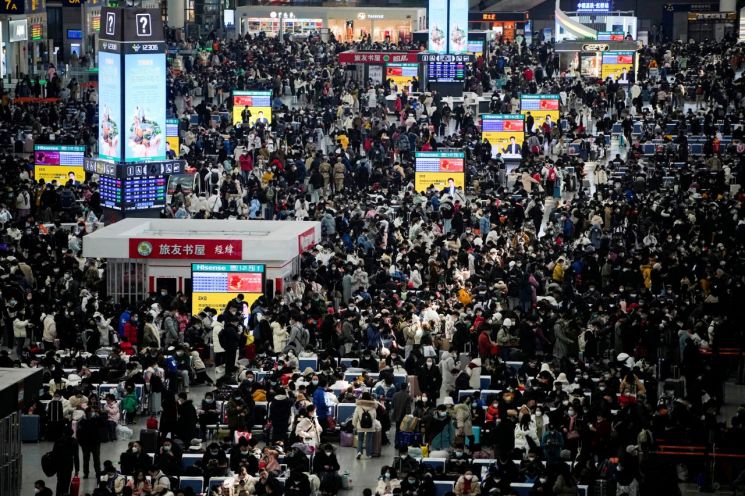
According to Swiss investment bank UBS Group, Chinese households currently hold approximately 8 trillion to 10 trillion yuan (about 1514 trillion to 1893 trillion won) in excess savings due to reduced spending during the COVID-19 pandemic. Although consumption was expected to revive with the reopening, this has yet to be confirmed through indicators. According to China's National Bureau of Statistics, the Consumer Price Index (CPI) in February rose 1.0% compared to a year earlier, falling short of market expectations (1.9%) and the previous month's increase (2.1%). This is interpreted as consumers still being cautious about opening their wallets.
Hinchliffe emphasized the need to pay attention to the increasing attractiveness of bonds due to the central bank's aggressive monetary tightening. Over the past month, traders have raised their forecast for the Federal Reserve's terminal rate from 5% in July to 5.6% in September. The yield on the 2-year U.S. Treasury note surpassed 5% on the 8th, marking the first time in 15 years and 8 months since June 2007.
Hinchliffe said, "A year ago, people were shouting 'TINA (There is no alternative)' regarding stocks," adding, "Looking at the consensus on yields, volatility, and all the ways the market can go wrong, a guaranteed 5% yield is now a true alternative."
© The Asia Business Daily(www.asiae.co.kr). All rights reserved.












