[Asia Economy Beijing=Special Correspondent Kim Hyunjung] China's population has decreased for the first time in 61 years.
On the 17th, China's National Bureau of Statistics announced that as of the end of last year, China's population stood at 1,411.75 million, down 850,000 from the previous year. With 10.41 million deaths surpassing 9.56 million births, the natural population growth rate recorded a negative (-0.6%).
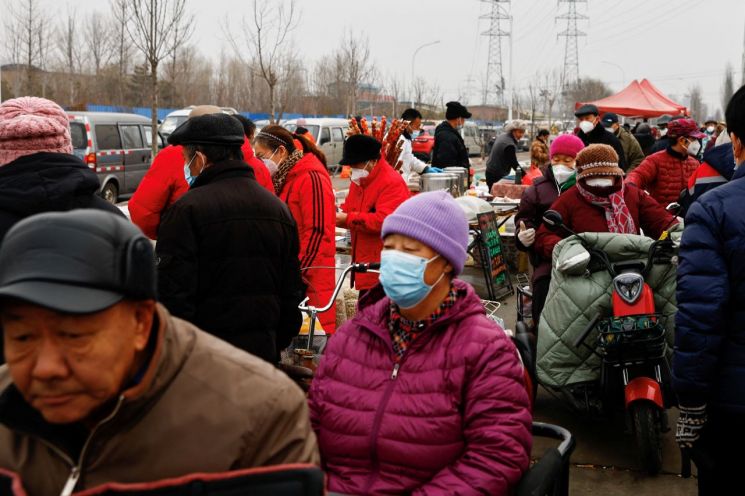
The number of births fell to the lowest level in 72 years since 1950, while deaths exceeded the average (10 million). This is the first time in 61 years since 1961 that China's population has declined. Changes in social norms regarding marriage and childbirth, along with the social turmoil caused by the spread of COVID-19 over the past three years, had a significant impact.
By age group, the working-age population aged 16 to 59 was 875.56 million, accounting for 62.0%, a 0.5 percentage point decrease from the previous year. The population aged 60 and over was 280.04 million (19.8%), and those aged 65 and over accounted for 209.78 million (14.9%). By gender, there were 722.06 million males and 689.69 million females.
The Chinese government has implemented various policy supports such as subsidies to respond to the population decline, but Bloomberg reported that these efforts were insufficient to encourage childbirth. In Shenzhen, for example, a one-time payment of 10,000 yuan (about 1.83 million won) is given for the birth of a third child, along with an annual payment of 3,000 yuan for three years. However, considering that the average housing price in the area is 58,000 yuan per square meter, it was pointed out that this amount is insufficient even to cover the cost of a single child's room.
© The Asia Business Daily(www.asiae.co.kr). All rights reserved.

![Clutching a Stolen Dior Bag, Saying "I Hate Being Poor but Real"... The Grotesque Con of a "Human Knockoff" [Slate]](https://cwcontent.asiae.co.kr/asiaresize/183/2026021902243444107_1771435474.jpg)














